
Get in touch with DONGHE Company
-
Phone: +86 181-1645-5490
-
Email: Sales18@DongheScience.com

Grinding Wheel Vs Wire Saw for Magnets

Grinding Wheel Vs Wire Saw for Magnets: Complete Comparison Guide
Precision Analysis, Efficiency Metrics, and Application Guidelines
The choice of equipment for precision machining magnetic materials determines three main outcomes which include operational efficiency and product quality and processing costs. Users receive different advantages and disadvantages from the two main tools which include grinding wheels and wire saws that they require for their work. The article investigates performance differences between two cutting technologies which scientists use to cut and shape magnets. The study evaluates material compatibility, accuracy, surface finish, and operational efficiency to determine which tool performs best for different tasks.
Overview of Cutting Methods
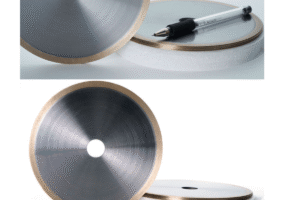
The two main techniques used for magnet cutting and shaping work through mechanical cutting and wire electrical discharge machining (EDM).
Mechanical Cutting
This method uses traditional tools such as diamond-coated saw blades or abrasive wheels. This method operates at high efficiency because it processes hard materials like rare-earth magnets through its fast operational speed. The method of mechanical cutting produces results that show less accuracy and create rougher surface textures when compared to other available methods.
Wire EDM
Wire EDM uses electrical discharges to achieve precise material erosion through its technical process. The system proves effective for both intricate designs and projects which demand precise measurements. The technique gives rise to seamless surfaces while it generates minimal material waste. Wire EDM operates at reduced speed compared to mechanical cutting yet it maintains high effectiveness in performing accurate machining operations.
Introduction to the Grinding Wheel

Its scope extends to its use as a tool for cutting material that helps give various structures their shape, and can also be employed in polishing. Such a device is a smaller piece made of abrasive material that is firmly integrated into the shape of a disk for the purpose of machining. These types of grinding wheels are used on machines that perform the grinding operation for better control in terms of dimensions and finishing of the surface of pieces. Grinding wheels can have three different parts, which are the abrasive material, the bonding factor, and the structure of the materials, because they determine what the wheel is for and why.
Introduction to Wire Saw
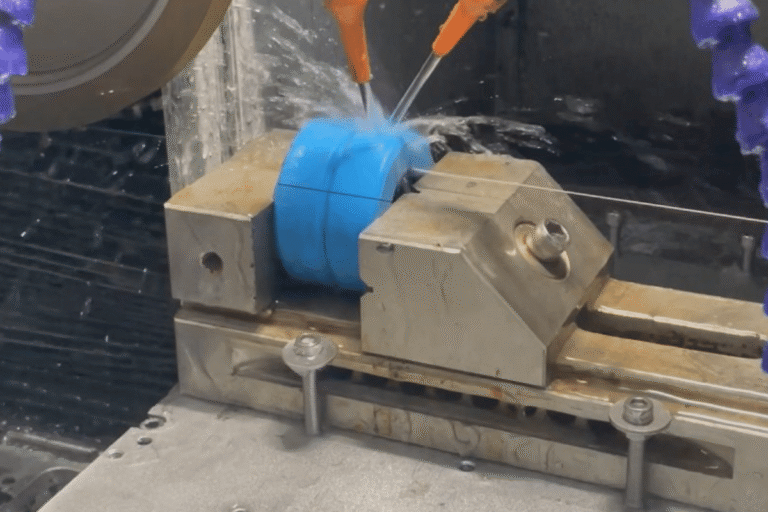
A wire saw is a type of cutting tool where wire under tension is used, and sometimes the wire contains abrasives for neat slicing of tough or brittle substances. The use of wire saws is prolific in the semiconductors industry, geological applications, and even the construction industry as they solve most material removal problems which typically require a smooth surface where not much materials need be taken off. This makes it possible to cut delicate substances like silicon wafers, concrete, and jewels cut into a neat pattern. The wire saw is advantageous owing to the abrasive material on the wire, which forms the cutting edge while the wire does not induce excessive adhesion except by lengthening the cutting arc.
Applications in Magnet Processing

Wire saws are widely used, in particular, because they allow precise cutting with considerably less material wasted. Together with the ability to convert and machine hard and brittle components, this is very important in the following areas:
Cutting of Rare-earth Magnets
Wire saws deploy precise cutting of neodymium-iron-boron (NdFeB) magnets or samarium-cobalt (SmCo) primarily for industries to form edges.
Machining Magnet Blanks
These saws enable blanks production including cylinders or blocks instead of traditional material use.
Trimming Large Magnets
Bigger magnets also known as rare-earth magnets are taken apart into smaller functional units by means of wire saws that avoid micro cracks and heat damage.
Creating Prototypes
Wire saws assist in the production of intricate magnetic components facilitating prototype developments, which is more pertinent in industries such as alternative energy and electronics where custom designs are applicable.
Minimization of Material Damage
Every inch of magnet material counts in the manufacturing process, cutting it with a wire saw is preferred in place of traditional techniques that involve material breakage.
Efficiency in Cutting
Grinding Wheel Efficiency
The efficient performance of a grinding wheel is largely affected by the type of abrasive, bonding material, the size of the abrasive grains, and the velocity of the wheel. For example, the most common abrasives, such as aluminum oxide and silicon carbide, help in easy processing of materials. The adhesion of abrasive grains is achieved using different types of vitrified and resin bonds which influence the strength and cutting performance of the entire wheel. Proper grain size allows for a satisfactory level of production within an acceptable amount of time for machining.
Wire Saw Efficiency
There are various ways in which a wire saw is evaluated, some of which include the speed of cut, whether the tension has been correctly applied, and appropriately distributed abrasives. An increase in the speed of cutting is likely to be beneficial in enhancing the material removal rate but the benefits may come at the expense of accuracy. Another performance related factor is controlling the tension of the wire to reduce the number of breaks. The required abrasives are suitable in the wire and in place, this adds to the quality of the cuts while minimizing wear.
Precision and Accuracy

The term ‘precision’ refers to the uniformity of the transactions or rather performances while ‘accuracy’ refers to the closeness of achieving the desired result. Precision implies that the same reading or number can be obtained under the same conditions more than once, but this is not ‘accurate’ if the obtained numbers do not relate to the target. In order to achieve both conditions, the first step is to have relevant means of production and to acquire properly calibrated equipment and the processes established for this particular task must be observed.
Factors Affecting Precision in Magnet Cutting
Several important factors have a direct impact on the accuracy and precision of a magnet cut. The five predominant factors are described below in detail:
1. Wire Tension
Wire tension is an inescapable factor affecting the precision level of any magnetic cutting. A low tension will create deformed cuts or diverge lines, while a too high tension may lead to breaking the wire. Ideally, there should be a 5-10 N (Newton) range of maintaining the constant wire tension, owing to the type of wire and the requirement of cutting.
2. Cutting Speed
The rate at which the wire or tool is moved over the material affects both quality and economics. High speeds can yield faster cutting capacity but at the expense of precision and surface retention. Recent research has ascertained that the optimum cutting speed for magnets of hardness 5-6 on the Mohs scale is 50-100 mm/min.
3. Abrasive Material Selection
Surface cut quality is influenced by the type of abrasive that is used. Hard magnets such as neodymium are commonly processed using diamond-impregnated tools since they are durable and cut accurately. The desired finish must be achieved with the selected grit size, whereby fine grit (e.g. 600-1200) is used for smoothness.
4. Lubrication and Cooling
When cutting a suitable lubricant is required as it reduces heat and thermal distortions and stress caused by the machining processes. Water-based coolant application decreases the operating temperature. As a result, accurate cuts are made and the tool is preserved. The required flow ranges between 10-15 liters per minute for larger installations.
5. Machine Calibration
Keeping the equipment regularly calibrated is highly important as it allows precision to be maintained, particularly over long operations. In-depth calibrations would consist of positioning the wire correctly, ensuring that it is within the allowable limits of tension, and ascertaining that the system responds within the correct parameters at least after every 50 hours of use.
Material Waste Considerations
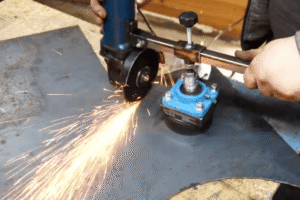
Efficient handling of the materials is another strategy that can significantly help minimize the waste in cutting magnets. This implies several actions: maximizing the material, achieved by closely fitting the cut pieces as much as possible, ensuring that the equipment does not have too many excessive cuts and cut off material is recycled for other purposes instead of discarding it. In addition to being conscious about the waste, these measures are also beneficial in terms of cost reduction, practices in sustainable manufacturing and environmental preservation.
Waste Generation with Grinding Wheels
During the grinding wheel process, supplementary waste, in the form of abrasive particles, metal removal and emulsion residues, is created. Contributing factors of solid waste are wear of the wheel, cutting by material and ineffectiveness of filtering of the coolant. Changes in the cutting process including reduction of cutting wheel revolutions, reduction in feed, reduction in pressure, could result in reduction of wastes and improvement in productivity.
Waste Generation with Wire Saws
Wire saw working is widely adopted in the manufacture of semiconductors and photovoltaic cells, but produces waste including slurry and kerf loss. The slurry refers to the mix of abrasive medium in the liquid carrier which in most cases is either water or oil and it gets spoilt after use making it unfit for safe disposal or for useful recycling. Material removal is a matter associated with kerfs, which denotes the material that is made away with and whose retrieval is impossible after the cutting process.
Based on recent findings, technology has addressed some of these challenges. For instance, diamond wire sawing is associated with reduced slurry waste and enhanced homogeneity that reduces kerf loss. Methods such as close cycles for systems used for recycling slurries are promoting the use of more integrated technologies.
Cost-Effectiveness Analysis

| Cost Factor | Grinding Wheel | Wire Saw |
|---|---|---|
| Initial Investment | $50,000 – $500,000 | $50,000 – $200,000 |
| Material Waste | Higher (wider kerf) | Lower (0.1mm kerf) |
| Operating Speed | Faster | Slower |
| Precision Level | Moderate | High |
| Maintenance | Regular wheel replacement | Wire replacement, calibration |
Best Practices for Each Cutting Method
Optimal Use of Grinding Wheels
Select the Correct Wheel
The selection of the grinding wheel should be done according to the material of the piece to be machined or cut, the level of trauma it is going to be subjected to, and the type of abrasive wheel that is admissible for the particular machinery.
Proper Fitting
Make sure that there is no loosening and that the center of gravity of the installed wheel is near zero to avoid occurrence of defects or damage.
Monitor Wheel Speed
The usage parameter of any grinder wheel with an upper speed limit should always be observed to prevent injuries.
Preventive Inspection
Visually inspect the surface of the wheels before every single work for cracks, broken condition or imbalance and replace all such wheels right away.
Implement Cooling Systems
Ensure that there is no application of heat to the cutting point or either the material or the wheel to prevent wear out.
Optimal Use of Wire Saws
Five Essential Wire Saw Practices
- Tension Calibration: Always check the tension of the wire and calibrate it to meet the specifications of the machine. A tension rating of between 200 to 300 N can be achieved for equipment meant for average working conditions.
- Lubrication: Use the correct system of lubrication to avoid friction and reduce heat between the wire and the tool edge. Effectiveness of cutting in a cooler environment is enhanced by using adequate amounts of coolant.
- Material Compatibility: Select the suitable wire type while checking for the material being worked out. Materials as hard as granite or silicon are best cut with a diamond wire.
- Cutting Speed Optimization: The cut should always be done at speeds ranging from 5-25 m/s depending on the hardness of the workpiece and the level of quality required.
- Routine Inspection and Replacement: Regularly check the wire for wear, fraying, or dullness. If the wire is worn, replace it as soon as possible to prevent accidents and maintain accuracy.
Frequently Asked Questions
1. What Are the Main Distinctions Between Grinding Wheel Cutting and Wire Saw Cutting Methods?
The two cutting techniques use different tool designs which result in different methods to cut materials. The grinding wheel functions as an abrasive disc which rotates constantly to create surface wear through its prolonged contact with materials. The diamond wire saw system uses a steel wire which has a diameter of less than 1 millimeter and contains diamond particles along its entire length. The diamond wire saw operates through its thin steel wire which moves in straight lines at high speeds to cut materials, creating minimal contact with the target material.
2. Which Method Delivers Better Accuracy Results and Produces Less Scrap Material?
Diamond wire sawing provides significantly higher precision and minimizes material loss. The wire produces a kerf which measures 0.1 millimeters while the grinding wheel makes a wider cut which results in greater material waste during operations. The advanced precision enables producers to manufacture complex designs which include extremely thin parallel wafers that come from one piece of magnetic material which grinding wheels cannot produce.
3. Which Method Produces More Heat and Creates More Thermal Damage?
The diamond wire sawing process operates at low temperatures because it uses cold cutting techniques. The wire’s contact area creates minimal surface contact which helps the system achieve high temperature control. The grinding process generates high friction loads which produce heat that distributes across a wide area during operation. The grinding wheel system requires coolant to operate but it creates an elevated risk of generating heat-affected zones which will damage the magnet’s magnetic properties.
4. What Are the Main Advantages of Using a Grinding Wheel?
Grinding delivers its primary benefit through its capacity to eliminate material at high rates which assist with both shaping and sizing tasks. The grinding wheel creates a powerful tool which enables users to remove substantial material quantities by using the equipment to create squared ends and simple chamfers on unprocessed magnetic blocks. The equipment functions as a standard option which enables organizations to achieve budget-friendly outcomes when dealing with basic geometrical shapes that do not need high accuracy.
5. In Which Applications Is a Diamond Wire Saw the Preferred Choice?
The diamond wire saw system provides the best performance for tasks which require precise shape measurements because it minimizes material damage during processing while using less resources. The standard method for cutting large magnet blocks into thin wafers includes cutting complex parts and processing fragile materials like sintered Neodymium (NdFeB) and Samarium Cobalt (SmCo). The process needs to operate at low stress levels to stop micro cracks from forming and to keep the final product’s structural strength intact.
6. How Does Surface Finish Compare Between the Two Methods?
The two techniques generate good surface finishes but diamond wire saws produce results which demonstrate superior quality and consistent results. The wire’s linear cutting method creates a surface which appears smooth and flat while it produces only limited saw marks. The grinding process creates surface radial marks which lead to internal stresses that later produce visible surface defects. The grinding process needs an extra lapping or polishing step to achieve a finish quality which matches the results from a wire saw.
Reference Sources
- •Diamond Wire Sawing in Comparison to Diamond Grinding: Advantages – Known for its accuracy and efficiency of cutting with least material removal, which is not the case in grinding wheels.
- •Manual of Cutting Methods for Neodymium Magnet – The manual incorporates both diamond wire saws and diamond grinding wheels in terms of cutting the neodymium magnet, pointing each ones benefits.
- •Aspects of Magnetic Materials Cutting by Diamond Wire Saws – The paper presents possibilities of cutting different magnetic materials using diamond wire saws with emphasis on ferrites and neodymium magnets.
- Recommend reading: Diamond Wire Saw Cutting Machine for Magnetic Materials: The Complete Guide
Related Posts


Trending Blogs

![Polysilicon Material: Properties, Grades & Uses [Guide]](https://wiresawcutter.com/wp-content/uploads/2026/08/polysilicon-material-featured-150x150.webp)