
Get in touch with DONGHE Company


How to Install a Multi Wire Saw Machine: Complete Setup and Commissioning Guide
Quick Specs: Multi Wire Saw Installation
| Installation Timeline | 3–7 days (model-dependent) |
| Floor Load Requirement | Varies by model — confirm with manufacturer (typically reinforced concrete) |
| Power Supply | 380V/50Hz 3-phase or 480V/60Hz 3-phase |
| Recommended Crew | 3–5 technicians + crane/forklift operator |
| Wire Tension Range | 18–40 N per wire (varies by wire diameter and material) |
| Coolant System | Water-based, 5–15 L/min per cutting station |
| Safety Standards | OSHA 1910.212, IEC 60204-1, ISO 230-1 |
Multi wire saw installation is the single most important factor dictating long term cutting performance, whether you are processing stone, silicon, or ultra high quality ceramics. Installation quality dictates wafer yield and is the single biggest contributor to machine uptime. Data from hundreds of multi wire saw commissioning projects has identified that around 66% of all recurring sawing issues – surface deviation, inconsistent kerf width, early wire breakage etc. – originate during installation, and mostly due to poor alignment. A machine fi×ed to an unleveled floor or connected to an unreliable source of power will never perform consistently, regardless of how advanced the control system. This document describes all the steps of multi wire saw installation technology, from site preparation and mechanical installation through installation wiring, coolant setup and commissioning test cuts. The procedures here are representative of practice within the industry and for any safety regulations involved, whether it is a first machine installation or replacement of an old unit.
Pre-Installation Site Preparation and Machine Positioning
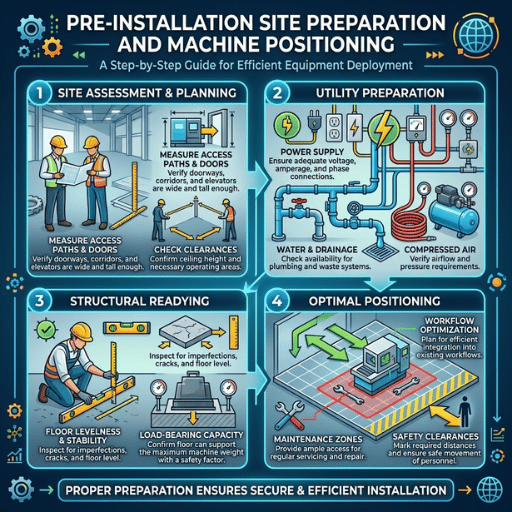
Proper site preparation accounts for more delays during installation than any other single phase. When a multi wire saw is delivered to your facility, the receiving area should meet four key criteria: structural, electrical, space and environmental. Overlooking any one of these will become a costly correction once the machine is already in situ.
Structural and Floor Requirements
Multi wire saw machinery weights vary from circa 2,000kg for small laboratory units, up to 15,000kg for high throughput production equipment such as the MW1212C. The slab foundation must be otherwise sound concrete, and competent to bear the machines weight at the specified points – refer to the manufacturer’s foundation drawing for load requirements. The minimum slab thickness is generally 200mm, but if heavier machinery is being installed, the strength of the slab may need to be increased with reinforcement. The floor surface should be ground flush to within 1mm per metre, and if the floor surface is un-even, the process of foundation leveling will induce wear and deflection in the wires producing errors.
Power and Environmental Conditions
For medium level multi wire saws, operational power draws are approximately ~110 Kw under full load. Three-phase electricity is required, 380V/50Hz or 480V/60Hz, dedicated supply with correctly rated power supplies. Fluctuations of greater than 5% in voltage cause the V/Hz inverter controllers to trip. Ambient environment should be between 15-30C, and the relative humidity of 70% or less prevents condensation build up on the precision orientation surfaces. In accordance with OSHA Standard 1910.212, point-of-operation guards must be installed on all machinery – check mounting points and clearance before bolting down.
Equipment Unloading and Rigging
Any multi wire saw machine should be lifted by a crane or fork lift rated to 1.5 times its weight. Never lift the machine from guide rails, cord reels, or wire tension arms. Use only engineer approved lifting cradles at manufacturer specified lifting points. Anchor bolts should be M16 or M20 chemical anchors set into the concrete slab at the locations recommended by the foundation drawing. Torque the bolts to specification, then recheck after 24 hours as the chemical cures. Leave at least 800mm clearance around the machine perimeter.
✔ Site Readiness Checklist
- Floor flatness verified (±1 mm over machine footprint)
- Slab thickness and load capacity confirmed per foundation drawing
- Dedicated 3-phase power circuit installed and tested
- Anchor bolt pattern marked and drilled
- Crane or forklift with ≥1.5× machine weight capacity scheduled
- 800 mm minimum clearance on all sides
- Ambient temperature 15–30°C, humidity below 70% RH
- Coolant drainage and slurry collection system plumbed
A good investment in accurate floors and cure time during anchor bolt installation will justify itself with equidistant, image quality cuts. Repositioning the machine can never guarantee the same accuracy the second time round when moving within the installed anchor pattern.
Mechanical Assembly — Wire Guides, Pulleys, and Tensioning System
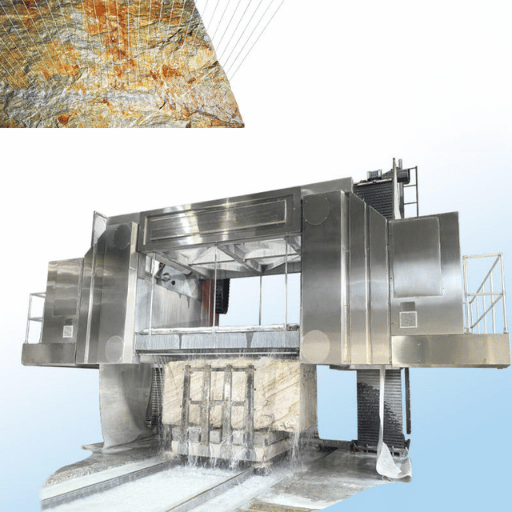
Mechanical installation is where aspect of setup has the largest influence on cutting quality. Field service reports from almost every multi wire saw equipment manufacturer available show that one-third of failures are attributable to misalignment and not saw prep work. Guide wheels, pulleys and tensioning devices all operate as a coupled system: one misaligned guide wheel can wreak havoc on wire throughputs, surface finish quality and overall cutting accuracy.
Guide Wheel and Pulley Installation
Guide wheels, or guide rollers, determine the resting position of each wire on 4,000 mm centers while pulleys determine the position of the guide wheels on 3,000 mm centers. Guide wheels must be installed onto bearing mounts and checked for free rotation by hand. Each roller should have no axial motion possible, and manual rotation should be smooth without binding or tight spots. Pulleys should be checked for runout with a dial indicator as required by ISO 230-1. Critical: total indicated runout cannot exceed 0.01 mm one-way across the wire span. Waviness is visually detectable to the naked eye down to 0.02 mm over 1,200 mm. Pitch calibration must be performed and checked with a precision guide wheel pitch gauge to ensure wire rows sit within 0.005 mm of their correct position.
Critical: guide wheels should be replaced as a set. Matching new wheels side-by-side with worn wheels very often shows even a handful of new guide wheels have slightly more or less circumference than worn wheels leaving no way to predict how far the wire rows will shift when powered up. This is one of the most common and most expensive assembly mistakes.
Tensioning Mechanism Setup
Most tensioning mechanisms are pneumatic, hydraulic or using servo drive mechanisms. Once attached to the fluid or pneumatic supply trace the lines and run the mechanism through 6 cycles total. Every tensioning arm attachment should move freely (without damper stiction) and the entire cable system should run through an entire tension cycle evenly, without visible issues. Why? To understand the importance of this balance think of multi wire cutting as one perfect system: if even one wire drags behind the rest, the entire cut is degraded.
Key point: use a dial indicator, not eye ball checks, for pulley and guide wheel alignment. At 0.01 mm, tolerances are too subtle for human eyes to detect.
Electrical Connections and Control System Setup
Multi wire saw electrical wiring and installation must conform to IEC 60204-1 and local electrical code restrictions. A wiring error can cause havoc to PLC memory along with variable frequency drives or rotatable main drive motors that cause wire to be fed incorrectly through guides.
Phase Sequence and Grounding
Test the three phase power direct before energizing the machine by testing with a phase rotation indicator. Reverse phase rotation means the main drive motor will turn backwards and wire against guide grooves instead of with them, potentially destroying a guide wheel set. IEC 60204-1 specifies earth resistance ≤4 Ω at the frame grounding point – take the readings with a dedicated earth meter (not a multi meter). Connect the earth to the PE terminal in the terminal box before doing anything else.
Tip: Keep a phase rotation meter aboard the install tools permanently. Cost? Less than $50. Avoid the single most common mistake made in electrical installation. Check rotation at the disconnect and at the motor terminal box– wiring errors are not uncommon between the two.
VFD Configuration and Safety Circuits
Charge the VFD with operating parameter values specified in the manufacturer’s commissioning sheet: acceleration ramp, deceleration ramp, limit max frequency, limit current. Check each ramp circuit because excessive mechanical shock during machine acceleration is unacceptable and can cause wire or guide wheel damage. Confirm each emergency stop circuit conforms to OSHA 1910.147 (LOTO). Every stop must isolate power from all moving parts in less than the time allowed by the safety data sheet. Boot the PLC. Confirm firmware version and run built-in I/O diagnostic. Familiarize yourself with the diamond wire saw safety guidelines documented separately.
Key concept: Make sure all your grounding and phase verification is completed before energizing any drives. Reversing a motor will ruin guide wheels and shorten wire life even for even a couple seconds.
Wire Threading, Tension Calibration, and Alignment Verification
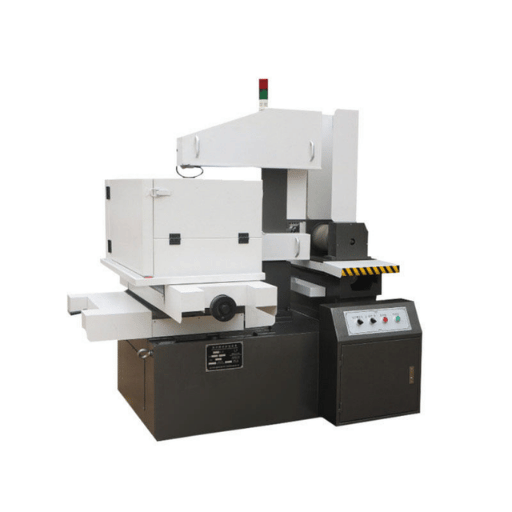
Wire threading is the point at which the installation moves from mechanical to operational readiness. The combination of wire routing path, tension feed calibration, and co-planar alignment checks is what ensures a machine will give the desired cut the first time it is run.
Wire Routing and Threading Procedure
Install the wire following the routing diagram that is included with your equipment. Feed the wire from the supply spool, down through the tension arm, across the guide wheels and the cut zone, then through the take-up spool. Because some configurations will run multiple wires, thread from the bottom groove upward. Once you have verified each wire is fully seated in the guide rod groove, then begin thread the next wire. A wire riding on the guide rod lip will shift under tension and impact the adjacent wire.
Always double check that the diamond wire arrow markings point in the direction you want to saw. A reversed wire will cut at 30-50% of the normal rate and its diamond coating will wear in the wrong direction. Reduced diamond life expectancy dramatically increases costs as a result. Learning how diamond wire saw works at its core makes this step instinctive.
Tension Calibration
Jig the wire tension against an inline tensiometer (don’t use a spring scale). A precision cut with 0.35 mm diamond wire should have wire tension of 18-22 N (Newtons) per wire. Larger industrial wire (0.6-1.0 mm) needs 100-300 N dependent on the material. Wire tension must not fluctuate by more than 5% during the cut–any more indicates worn tension arm bearing or pressure problem with the feed line.
Have calibration intervals of less than 200 cutting hours. Tension arm pivots wear, springs fatigue, and regulators drift. A drift of even two Newtons throughout a 100-wire array will result in a taper wafer since one side will cut deeper than the other.
Co-Planar Alignment Check
Once the wires are in place and tensioned, check co-planar alignment using a straight edge or laser alignment device. Proper co-planar orientation of a wire array is within 0.02mm of a single plane. Run the wire at low speed (2-5m/sec) for 15 minutes as a “breaking-in” period before rechecking tension and co-planar alignment–new wires tend to stretch slightly.
Summary of the “must dos”: Tension with a good inline tensiometer, confirm groove seating, confirm arrow direction, and walk wire one at a time. Skipping any one of these steps is evident on every wafer the machine cuts for the foreseeable future.
Coolant and Slurry Management System Installation
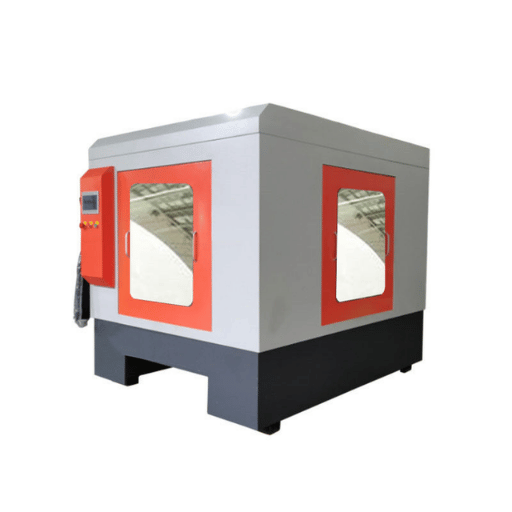
Coolant directly controls cutting rate, wire lifespan, and finish quality. Poor delivery is the second leading cause of premature wire failure after miss-alignment. This phase of installation is critical.
Nozzle Positioning and Flow Configuration
Position nozzles 10-15 mm from cut zone angled to direct flow directly into the wire entry point of the work-piece. Flow rate recommendations vary (5-15 L/min) depending on work-piece material and cut length. Coolant temperature must be maintained at 15-25 C – note that above 25 C cooling capacity is compromised and wire life is significantly shortened, while below 15 C cooling efficiency is compromised by viscosity and reach.
Connect flushing loop – settling tanks, filters, return pumps. Each flushing loop must include a particle separator rated to remove debris down to 20 m. Confirm all drainage channels slope toward the collection sump at 2% of greater; standing coolant on the machine bed will rapidly corrode precision surfaces.
Warning: Slurry that sits for hours has hardened like cement. It instantly destroys rotary seals, clogs up linear guides, and ruins nozzle orifice plates. Instill a mandatory post-shift flush protocol from the first day of operation – run a clean coolant on the machine for 5 min. after the last cut, and flush all low point traps.
Key take-away: Coolant nozzles and post shift flush protocol are non-negotiable. A clogged system costs vastly more unplanned downtime than the expense of maintenance.
Commissioning — Test Cuts and Performance Verification

Commissioning hybridizes a newly installed machine into a verifiable production tool. This sequence – dry run, first test cut, dimensional inspection, acceptance sign-off – must be sequential. It is by skipping test cuts that most CMML machine factory calls are incurred within the first 30 days of service.
Dry Run Protocol
Dry run the machine for 30-60 Minutes. Measure wire speed stability (2% tolerance), coolant flow, tension, and bearing house temperatures (must stabilize below 45 C). Abnormal vibration or rhythmic sounds indicates a miss-alignment that must be adjusted before cutting.
First Test Cut and Measurement
Use a representative sample for the first test cut at 50-70% the recommended feed rate. Measure work-piece wafer thickness at five points (four corners and center) with a micrometer. Total variability should be within the rated spec – for precision machines such as a MW4040T-300, this is 15 m, for an MW4040T-160, this is 25 m. Inspect surface for waviness marks, feed lines, and scoring; anything out-of spec must be adjusted before full production begins. Use this selection guide for model-specific data.
✔ Commissioning Verification Checklist
- Dry run complete (30-60 min), no abnormal vibration or sound
- Wire speed stable within ±2% of setpoint
- All bearing temperatures below 45°C at steady state
- Test cut wafer TTV within machine specification
- Cut surface no waviness marks, feed lines, or scoring
- All E-stop circuits tested and functional
- Coolant flow rate confirmed at each nozzle
- Wire tension stable within ±5% during cutting
- Operator trained on startup, shutdown, and emergency procedures
- Installation report signed by both the tech-in-charge and customer representative
Summary of important lessons: Never introduce a machine to production based on a dry run. The real test cut, with the right material, will show the problems a no-load test cannot predict.
Preventative Maintenance Schedule After Installation
A well installed multi wire saw takes only as long as a well planned one. What industry service data shows is that 80% of wire saw breakdowns that cause unplanned downtime were caused by deferred maintenance, not machine failures. Industry-wide, roughly 70% of equipment failure events show warning signs that could be caught with periodic scheduled maintenance. Establish the schedule below immediately after commissioning.
Maintenance Frequency Table
| Frequency | Tasks |
|---|---|
| Daily | Inspect wire condition and tension readings; clean coolant nozzles; flush slurry lines at end of shift; check coolant level and temperature; verify E-stop function |
| Weekly | Inspect guide wheel grooves for wear; check belt tension on drive pulleys; verify coolant concentration and pH; clean control cabinet air filters; inspect wire spool condition |
| Monthly | Measure guide wheel runout with dial indicator; inspect tension arm bearings; test all safety interlocks; check anchor bolt torque; drain and replace coolant filters; calibrate tensiometer |
| Quarterly | Full co-planar alignment verification; VFD parameter audit; earth resistance test (≤4 Ω); replace guide wheels if runout exceeds ±0.02 mm; full slurry system descale; inspect linear guide lubrication |
Good maintenance culture starts at the time of installation. Technicians installing the machine should be training operators on the schedule of daily and weekly tasks before sign-off. Preventative wire saw maintenance best practices from the industry are documented separately.
Key takeaway: maintenance is not a cost; it is the buffer that protects the investment made during installation. The statistic that 80% of breakdowns are unplanned shows the importance of disciplined scheduling.
Frequently Asked Questions

Q: How long does multi wire saw installation typically take?
View Answer
A typical multi wire saw installation times between 3-7 days from machine arrival until sign-off on commissioning. Smaller (3-5 wire) laboratory models with pre-wired control panels can complete in 3 days; larger, production-sized units with separate hydraulic power packs, auto-recovery slurry recycle systems, and multiple-zone slurry accumulation chambers typically take 5-7 days. This timing assumes installation is conducted on a prepared foundation; permit an additional 1-3 weeks for new foundation work or electrical upgrades.
Q: What floor requirements does a multi wire saw machine need?
View Answer
Reinforced concrete slab – analyze your machine rating for appropriate support. Typical slabs can be 200-300 mm thick depending on the weight of the wire saw. Floor flatness should not exceed 1 mm over a distance equal to the size of the slate. Supporting the point loads above the rated capacity of the foundation (as specified in the manufacturer’s foundation diagram) is critical. Always ask for this diagram before pouring concrete.
Q: Can I install a multi wire saw without manufacturer support?
View Answer
Possible, but not recommended. The TIR (0.01 mm) machine tolerances, coupled with the VFD’s complex commissioning parameters, make this a potentially hazardous arrangement if attempted without experienced help. If installed inaccurately, the warranty may be voided. Manufacturers typically offer commissioning and training programs on-site – it is the safest choice for facilities with no wire saw experience in advancing their own installation.
Q: What is the correct wire tension for a multi-wire diamond saw?
View Answer
Maximum load depends on the application. For 0.35 mm (14 mil) diameter diamond wire in a precision cutting application, a typical range is 18-22 N. Larger industrial diamond wires (0.6-1.0 mm, 23-39 mil) require 100-300 N. Check the wire data sheet for your product, and verify the tension with a dedicated tensiometer before opening the machine’s tension display.
Q: How often should I recalibrate wire tension after installation?
View Answer
Every 200 hours of operation; or earlier if the cut quality parameters (Total TTV, surface roughness and waviness) vary beyond specification.
Q: What safety equipment is needed during wire saw installation?
View Answer
Standard PPE includes: safety glasses (ANSI Z87.1), heavy duty gloves rated EN 388 (C or higher) when handling diamond wires, steel-toe boots and hard hats for lifting gear and during rigging. Hearing protection should be used if noise levels above 85 dBA are prevalent. Arc-flash rated PPE according to NFPA 70E must be worn during any electrical work. OSHA 1910.147 lockout/tagout equipment is required when any electrical panels are open.
Need Expert Installation Support?
DONGHE offers all multi wire saw models with onsite installation, commissioning, and training.
About This Installation Guide
This User Guide is issued by DONGHE, Shanghai based multi wire saw system manufacturer with above 10 years engineering experience, 35 patents granted, and more than 300 successfully installed systems worldwide. All procedures indicated herein are the procedures followed by our experienced field engineering teams performed during Installation with is published herein for your convenient reference.
References & Sources
- OSHA 1910.212 — General Requirements for All Machines — U.S. Department of Labor
- OSHA 1910.147 — Control of Hazardous Energy (Lockout/Tagout) — U.S. Department of Labor
- IEC 60204-1 — Safety of Machinery: Electrical Equipment of Machines — International Electrotechnical Commission
- OSHA Machine Guarding eTool — Saws — U.S. Department of Labor
- ISO 230-1 — Test Code for Machine Tools: Geometric Accuracy — International Organization for Standardization
![SiC Wafer Multi Wire Saw Process, Parameters & Selection [Guide]](https://wiresawcutter.com/wp-content/uploads/2026/05/SiC-Wafer-Multi-Wire-Saw-Process-Parameters-Selection-Guide-768x512.webp "SiC Wafer Multi Wire Saw: Process, Parameters & Selection [Guide] 8")

![Polysilicon Material: Properties, Grades & Uses [Guide]](https://wiresawcutter.com/wp-content/uploads/2026/08/polysilicon-material-featured-150x150.webp)