
Get in touch with DONGHE Company
-
Phone: +86 181-1645-5490
-
Email: Sales18@DongheScience.com

SiC Crystal Wire Saw Cutting Complete Guide

Considering their outstanding features, such as high resistance to wear, excellent heat dissipation, and resistance to chemical reactions, silicon carbide (SiC) crystals are on the cutting edge of modern materials because of these properties. Nonetheless, because of the very nature of SiC crystals, the process of cleaving them is quite precise and calls for the use of special tools and techniques. The purpose of this guide is to provide a thorough introduction to the wire saw cutting technology of SiC crystals for business and university professionals, respectively. More to that, it will give practical ways in terms of cutting. It will not only demonstrate the mechanics of wire saws but also strategies to help cut better by answering popular problems that practitioners face. Or perhaps you are in search of solutions to the SiC crystal, in which case this comprehensive guide will suffice. It provides details on cutting SiC crystals to the refinement available currently.
01
Introduction to SiC Wire Saw Cutting
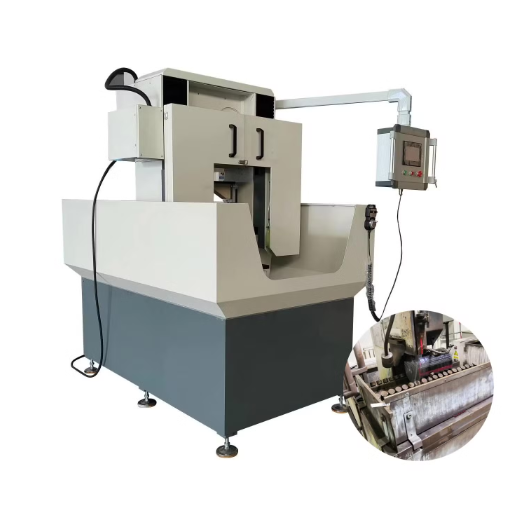
Silicon carbide (SiC) wire saw cutting technology is acquired to enhance accuracy when slicing SiC crystals to produce thin wafers, used, for instance, in the semiconductor and power conversion sectors. This process is made possible due to an ultra-fine-coated diametric wire, which ensures high-quality cuts with minimal kerf losses. Cutting control factors such as tensile force in the wire, sag, cut width, and type of abrasives are also quite profound for assessing the quality of cut and process effectiveness. Optimization of the above factors leads to reduced time consumption and ensures no compromise of the mechanical properties of SiC wire saws.
Overview of Silicon Carbide (SiC) Crystals and Their Applications
Silicon carbide (SiC) crystals are silicon and carbon-based covalent compounds with phenomenal mechanical, thermal, and electrical properties. SiC has a wide band gap, high heat dissipation, chemical inertness, and remarkable tolerance to high electric fields and temperatures, which allows its use in cutting-edge technology. In the world of electronics, SiC is employed in the construction of devices such as MOSFETs, diodes, and inverters, where the harsh operating conditions demand technically efficient and long-lasting units.
In automotive, aerospace, and renewable energy systems, the SiC crystals are crucial as well. For example, electric vehicles use these materials for the high-performance parts production, such as power modules, which contributes to energy saving – energy conversion becomes better, and energy loss becomes smaller. However, in the case of extreme temperatures in the presence of a gas turbine or a heat exchanger, the thermal stability of SiC makes it more appropriate. Outside electronics, SiC wires are also used for their intrinsic hardness in abrasives and cutting tools, in addition to their structural reinforcing properties in producing materials for LEDs and solar cells. It promises to become even more popular as technology advances and the demand for stronger and more energy-laden materials grows.
| Industry / Sector | SiC Crystal Application |
|---|---|
| Electronics | MOSFETs, diodes, and inverters for high-temperature, high-field operating conditions |
| Automotive / EVs | High-performance power modules for better energy conversion and reduced energy loss |
| Aerospace | Gas turbines and heat exchangers leveraging thermal stability at extreme temperatures |
| Renewable Energy | LEDs, solar cells, and structural material reinforcement |
| Abrasives & Tools | Cutting tools and abrasives exploiting intrinsic SiC hardness |
Purpose and Significance of Wire Saw Cutting in SiC Manufacturing
Cutting said SiC wafers with a wire saw comes in handy and is one of those integral processes in wafer manufacture. The earlier mentioned wire is, in most cases, abrasive and is coated with a cutting steel wire, and this wire cuts into the layer of the SiC board as a wafer, which is cut to an even thickness. The advantage of the wire saw technique is that the SiC is preserved, the kerf is minimized, and smooth surfaces are produced, eliminating the need for such extensive polishing after cutting. Moreover, it offers a very high rate of production, making it a cheap, scalable option for the market demands of the electronics and energy industry. This allows for a stable and high wafer production, the SiC wire saw plays an integral part in the development of SiC-based devices.
How Wire Saw Cutting Compares to Other Cutting Methods
All in all, wire sawing as a probable method of cutting has its own significant advantages, such as high accuracy and cost-efficiency. It is different from blade sawing, which leads to massive wastage of material and rough cutting; in wire sawing, the percentage of kerf loss is low. This is because the wire to cut is very thin. On the contrary, wire sawing, as compared to laser cutting, is less likely to destroy the material thermally, which helps in maintaining the material’s structural and morphological attributes, such as those of the SiC wire saw. There is a need to challenge the efficiency of electrical discharge machining (EDM) when it comes to producing large quantities of wafers, especially since hard material is easy to cut using it, but slow and expensive to initiate the process. Wire sawing eliminates these worries because it is very practical, can accurately cut fragile materials and finish the surface to a high degree of precision without any defects, and hence is preferred in bulk manufacturing of wafers.
| Method | Kerf Loss | Thermal Risk | Throughput | Best For |
|---|---|---|---|---|
| Wire Sawing | Low | Low | High | Bulk wafer production, fragile/hard materials |
| Blade Sawing | High | Moderate | Moderate | General-purpose cutting, less critical applications |
| Laser Cutting | Very Low | High | Moderate | High-precision, low-volume specialty applications |
| EDM | Moderate | Moderate | Low | Hard materials in small-volume or specialty cuts |
02
Understanding the Basics of Wire Saw Technology
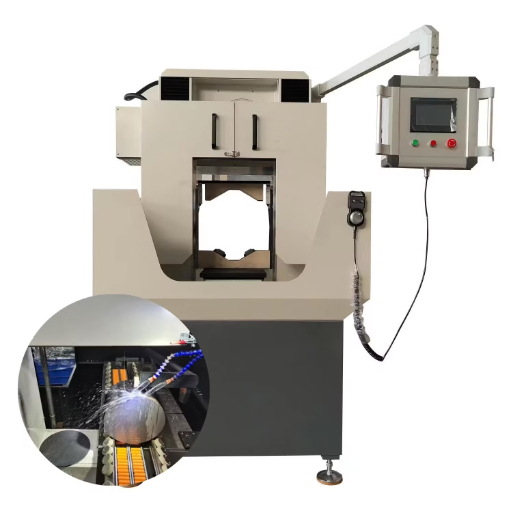
The SiC wire saw does not make use of a particular material for the blade; it works with a specially designed thin cable that is pulled tight and coated with abrasives, hence a cutting process. This is because most processes involve cutting hard materials, which require control of the wire tension, speed, and the supply material. This enables the wire to move optimally so as not to put too much strain on the cut material and make a clean cut without breaking the wafer. Cutting is also facilitated by the desirable nature of the cut surface. These advantages put the wire saw technique forward for any number of processes where high accuracy and high quality are defining characteristics of the process. This is especially the case when working on semiconductor wafers.
What Is a Wire Saw, and How Does It Work?
This tool, which is extremely accurate, is commonly used to cut hard or brittle materials without damaging them by using a thin and flexible wire on which abrasive particles are attached. The wire is steadily moved across the surface of the material as it is kept in tension with the application of either an abrasive slurry or fixed abrasives, for a neat cut. The cutting process is fundamentally based on the abrasive action of the wire, which generates a material removal process that has a strict tolerance of extra heat generation and stress to the component being cut. SiC wire saws are generally used in areas of work and industries that include the production of semiconductors that demand surfaces after cutting to be exquisite, as well as in stone cutting and even in advanced material usage applications. Such applicability makes it a necessity in every activity that requires segmentation of materials with high precision.
Key Components of Wire Saw Machinery
🪡
The Wire
Much like the metallic core that encases diamond blades of low-impact wire saws, the wire provides excellent strength when wound around a carrier such as stainless steel or tungsten by embedding diamonds, silicon carbide, and other abrasive grains. This is supplemented by the fact that the wire is coated with different abrasives, as this affects the precision of the cut, wear and tear, as well as the performance of the wire in various industries and applications.
⚙️
Wire Tensioning System
This device secures the wire under the proper strain and maintains it in a restricted position. Proper cutter performance and the extended lifespan of the wire require correct tensioning of the rope, which is extremely important.
🔁
Pulley System
The wires are attached to pulleys, which serve not only to guide the movement of the wire but also facilitate its operation. These have properties for maintaining their fatigue life performance in harsh and hostile environments that enable reliable service and lower the costs of maintenance of the equipment.
💧
Abrasive Feeding & Coolant System
For better cutting capabilities and less heat production, abrasive slurries or coolants are supplied to the cut region. Clogging of the cut region is also avoided by this system, thereby preserving the accuracy and retaining the wire and the workpiece.
🖥️
Mechanized Power & Control Mechanism
The wire’s position and speed are adjusted by the drive mechanism, which in turn is powered by an electric motor. A power supply is used to enable smooth operations as well as adjustments of working conditions in accordance with the necessary cutting criteria.
Such features are incorporated together as a medium to enhance SiC wire saw performance, especially in the case of highly demanding industries such as semiconductor and high-specification materials.
Challenges in Cutting Hard Materials Like Silicon Carbide
It is very difficult to machine hard materials, especially when cutting silicon carbide (SiC), because of its highest hardness, brittleness, and thermal conductivity. These features always cause tool wear, poor cutting quality, and propagation of cracks within the material during the cutting operation. Cutting tools normally do not remain sharp for a long time in the presence of SiC, and diamond or similar materials are used as cutting tools. More so, such high cutting forces produce enormous amounts of heat that the materials, as well as the equipment, must be kept cool to avoid heat destruction. Doing so, however, requires much care to optimize such parameters as feed, speed, and coolant to prevent all these issues, including obtaining the best possible finish or ensuring that the structures of the material are left intact; no chipping or micro-cracks.
03
Key Factors That Influence SiC Wire Saw Cutting Efficiency
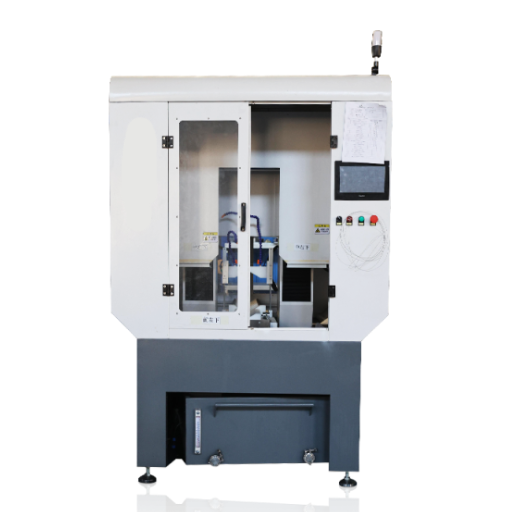
| Factor | Role in Cutting Efficiency |
|---|---|
| Tension and Speed of the Wire | Ensuring steady wire tension and appropriate cutting speed is important for accuracy and material control |
| Quality of Abrasive Grain | Cutting efficiency and surface quality of silicon carbide depend on grain size, hardness, and distribution |
| Use of Coolant | Sufficient coolant flow mitigates heat generation and lessens thermal stresses that could damage wire and SiC |
| Cutting Force | Sufficient cutting force should be employed to facilitate material removal without overusing the wire |
| Material Characteristics | Any changes in SiC constituents or density may alter the cutting approach, requiring parameter variation |
⚡ Key Takeaway: Only by taking care of these issues can the cutting operation be made better in terms of both precision and performance.
Impact of Wire Tension and Speed on Cutting Precision
A couple of parameters affect the efficiency and accuracy of the wire cut: the wire is subjected to tension and is translated at a certain velocity. Wire tension must be within certain limits to avoid excessive deflection of the wire for enhanced sharpness. However, if there is too much tension, the danger of wire fracture is enhanced; on the other hand, if there is laxity, then the wire may cut inaccurately due to the vibration of the wire.
The same goes for the speed of the wire, as it is likewise of the essence in the process of cutting materials and disposing of heat. Increased wire speeds in general help give more efficient cuts as heat build-up within one point is avoided, which may result in deformation of the workpiece. Nevertheless, very high velocities may cause the cut to be just too coarse, and the wire will wear off rather quickly. In contrast, working at lower rates of wire speed can enhance the stability of the process at the expense of its output. As a general rule of thumb, wire tension and wire speed in SiC wire saw cutting for maximum accuracy must be thoroughly controlled, depending on the material that is subject to cutting as well as the expected results.
The Importance of Abrasive Particles in the Cutting Process
Particles that are abrasive in nature make cutting in specific settings best, as they aid in the rapid removal of material. The abrasive particles define the effectiveness, accuracy, and completion rate of the cut. The hardness, form, and size of the particles affect how the cutting takes place, how the surface would perceive the action, and how the tool would be worn down. Hard substances like diamond are preferred when cutting hard materials, while softer and finer grains are preferred to give rough materials’ smooth surfaces. Furthermore, the location, or arrangement, of the particles, abrasive in nature, in the cut also determines how well the material is taken out of the sheath, and in wrong use, it can result in hard or uneven surfaces caused by the use of the abrasive. Therefore, it is critical to choose the correct type and size of abrasive particles to realize successful precision wire cutting using a SiC wire saw.
Cooling and Lubrication During Cutting
The precision cutting process requires efficient cooling and lubrication in order to control wear, deformation, and adverse superficial changes of the tool. During the cutting of Hadfield steel, a significant amount of heat is generated as a result of the ramming action between the tool and the sample. The heat causes expansion of materials, changes in the microstructure, or even damage to the tool. Coolants, which in most cases are water or oil-based fluids, absorb heat by reducing the rate of temperature increase at the cutting zone. In comparison, lubricants reduce the rate of friction and make it possible for a protective layer between the working tool and working surface to be formed. A basic wire saw is the most preferred method of precision cutting for tough abrasives and brittle materials.
As important considerations for an efficient cooling and oiling process, the matters of flow rate, pressure, and the type of fluid used are vital. A system built for high flow ensures that enough heat is dissipated. However, selecting a proper coolant or oil depends on a few factors, including material, cutting speed, and tool design, among others. New cooling methods have been developed, and they are widely used in many precision industries where MQL and even cryogenic lubricating and cooling are necessary due to the performance achieved and the reduced negative effects on the environment. In the case of silicon carbide (SiC) wire saw cutting, high-end machine tool usage is also expected.
04
Advantages of Using a Wire Saw for SiC Crystals
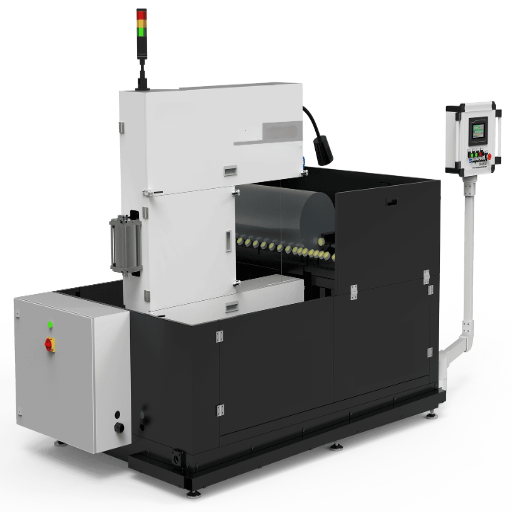
The incorporation of wire saws during the handling phases of silicon carbide (SiC) crystal material greatly improves the efficiency of operations because of the precision offered and the three-dimensional motions enabled without any excessive cutting out of the material. The thin wire inside these saws permits precise cutting without variation in the dimensional sizes of cut layers with diminished kerf loss in the ultra-expensive SiC material. Moreover, the wire saw system helps in the smooth finishing of cut surfaces, which in turn reduces the amount of cut surface that needs to be polished longer or finished by grinding after cutting. Their capacity to introduce sophisticated coolants in the cutting process also helps control effective heat dissipation, making sure no mechanical damage is induced to the crystal structure, as well as limiting the extent of micro-crack formation in the material being cut. All these reasons confirm that the use of SiC wire saw is integral in the manufacture of SiC crystals for the semiconductor industry.
🎯
Enhanced Precision & Reduced Material Wastage
Contemporary wire saw technique highly refines cutting with its ability to provide adequate and even tension and movement for optimum cutting. Such accuracy aids in reducing kerf as much as possible, and hence, maximum preservation of the SiC is possible. Some of the more sophisticated wire saws contain such types of fine abrasive particles that have a small kerf width and less material loss than sawing. It is further observed that the harvest is enhanced by saving on defects such as chipping and/or edges that are not smooth. Altogether, the manufacturers’ capabilities allow the products to increase in volume produced while containing costs, which is critical when supplying the high standards of the semiconductor industry.
🔬
Suitability for Thin Wafer Production & Large-Scale Cutting
When making thin wafers, advanced cutting techniques, including those using lasers or dicing saws, fit the need. These techniques entail the possibility of working with thin wafers without much anxiety over damaging the wafer or the carrier substrate in some parts, as this is important to keep the thin materials from damage. These technologies are scalable for very large cutting operations, thus allowing many wafers to be produced at the same time, with the same accuracy for high-volume operations. There are also new technologies, such as SiC wire saw with active control modes, and the automation of wafer positioning, which allows the exact slicing of the wafer to be replicated within the tolerances, which are very high for electronics and microelectronics. More advanced technologies that allow for this kind of performance improvement do not compromise or change the level of quality that is expected in manufacturing processes.
05
Technical Considerations for SiC Wire Saw Cutting
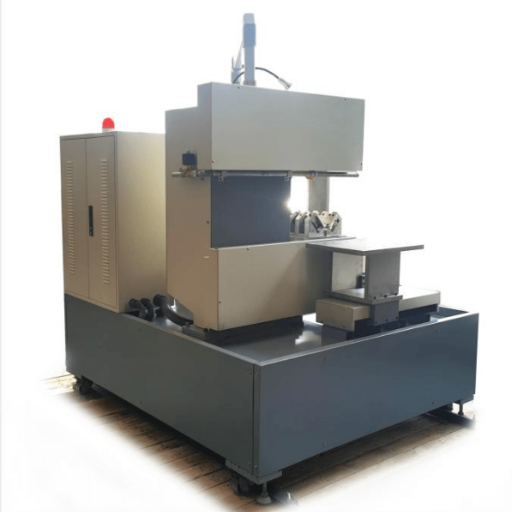
1
Abrasive Process
Proper selection of appropriate abrasive materials is very important since it dictates the ability to achieve. For instance, silicon carbide abrasives are commonly used due to their rigidity and versatility to SiC wire saw carbide bases.
2
Tension and Speed of Wire
It is crucial to maintain the right tension of the wire and the cutting speed in order to maintain evenness of the cuts as well as to avoid wire breakage and defects on the surfaces.
3
Application of Coolant
The use of coolant helps in decreasing the unwanted heat and hence minimizes the thermal effects on the material, and increases the durability of the cutting wire.
4
Surface Finish
The adjustments made in the cutting process, which include a fraction of the cutting parameters such as the size of the grit or the rate of feed, should be appropriate to the required level of surface finish needed so as to avoid unnecessary post-process activity.
5
Calibration of the Equipment
The wire saw is used to cut the wire to the exact length and dimension needed, and to maintain this, regular service and calibration of the equipment are important to contain the dispersion of cutting precision between operations.
Specifying the Appropriate Wire Type and Abrasive Materials
When assessing the best wire for a certain cutting application, the key factors to consider include material hardness, material thickness, and the expected level of precision when cutting. Diamond wire, which is a wire commonly found in cutting silicon, ceramics, and other hard metals, is very precise as it is solid. On the other hand, stainless steel wires or coated wires can be used for soft or non-abrasive materials with a certain level of cost-benefit.
The choice of abrasive materials also depends on the type of material to be cut and the finish required in the process. Diamond abrasives are particularly effective in cutting hard and brittle materials such as silicon wafer, while silicon carbide or aluminum oxide abrasives are common for softer materials. Abrasive material grit size is important as actually finer grits help achieve a final smooth finish, but typically places constraints on the rate of cutting, whereas coarser grits increase the speed but leave the surface rough. By selecting the appropriate combination of these key factors, effective management of the cost-output tradeoff is possible.
| Wire / Abrasive Type | Best For | Key Property |
|---|---|---|
| Diamond Wire | Silicon, ceramics, hard metals, SiC | Maximum hardness and precision |
| Stainless Steel / Coated Wire | Soft or non-abrasive materials | Cost-effective for lower hardness applications |
| Diamond Abrasives | Hard and brittle materials (SiC, silicon wafers) | Superior material removal in the hardest substrates |
| SiC / Aluminum Oxide Abrasives | Softer materials requiring a smooth finish | Good versatility and surface quality |
| Fine Grit Abrasives | Applications requiring a smooth surface finish | Better finish; slower cutting rate |
| Coarse Grit Abrasives | High-speed bulk material removal | Faster cutting; rougher surface finish |
Optimal Wire Saw Settings for Different SiC Crystal Grades
As I am trying to figure out the best way to manipulate wire saw cutting parameters to achieve undisrupted slicing of various SiC crystal grades, I pay great attention to these parameters to help me delineate the optimum cutting condition of each type of crystal. In fact, with higher grades of SiC crystals that do not have any defects, the feed rate should be very fine, and the abrasive should be very fine to avoid comet-shaped voids. However, for lower grades of crystals with a greater number of defects, I tune up the feed rate and, in certain cases, increase the coarse abrasive size in order to enhance cutting efficiency while still maintaining a reasonable surface finish. In addition to this, the wire tensions and rotation speeds also need to be adjusted according to the hardness and brittleness of the crystal so that the desired grades are adequately sliced by a SiC wire saw.
| SiC Crystal Grade | Feed Rate | Abrasive Size | Key Goal |
|---|---|---|---|
| Higher Grade (Defect-Free) | Very Fine | Very Fine | Avoid comet-shaped voids; preserve surface integrity |
| Lower Grade (More Defects) | Higher | Coarser (as needed) | Enhance cutting efficiency while maintaining a reasonable surface finish |
Summary
Key Takeaways: SiC Wire Saw Cutting
- ✔
Wire saw cutting delivers superior kerf efficiency, surface quality, and scalability over blade sawing, laser cutting, and EDM for SiC wafer production. - ✔
Five key components — wire, tensioning system, pulley system, coolant system, and control mechanism — must all perform in harmony for optimal SiC wire saw output. - ✔
Wire tension and speed must be precisely balanced: too much tension risks fracture; too little causes vibration and imprecise cuts. Too high a speed causes coarse surfaces; too low reduces throughput. - ✔
Diamond wire and fine-grit abrasives are best suited for high-grade, defect-free SiC crystals; coarser settings are more appropriate for lower-grade material with higher defect density. - ✔
Advanced cooling methods — including MQL and cryogenic lubrication — are increasingly adopted in SiC wire saw applications to minimize thermal damage and meet environmental standards.
Reference Sources
Fixed-Abrasive Diamond Wire Saw Slicing of Single Crystal SiC Wafers
Published by the University of Michigan, this study explores the use of diamond wire saws for machining single-crystal SiC wafers, focusing on experimental setups and results.
Fixed Abrasive Diamond Wire Saw Slicing of Single Crystal SiC
Published by North Carolina State University, this research investigates the effects of process parameters like wire speed and rock frequency on diamond wire saw machining.
Process Modeling of a Wire Saw Operation
Published by the University of Maryland, this paper models the wire saw operation, including the use of SiC particles in the slurry for machining silicon ingots.
Frequently Asked Questions (FAQs)
What are the distinctive features of the sic wire saw from the diamond wire saw?
Slicing of silicon carbide ingots and, if necessary, silicon carbide wafers is a special case where we apply the technology of diamond wire saws with some modifications that result into sic wire saw. The diamond wire saw has its cutting edges embedded in the matrix metal, which creates a layer of such a wire and cuts out the material attached. This is true for the wire made for cutting SiC ingots, and this is why such a cutting instrument is sometimes called sic wire saw. Its design allows it to cut the hard, brittle SiC material as well as other hard, brittle materials, such as ceramics or metals, readily cut with these tools. There is an increasing interest in reducing the kerf waste produced by conventional ID-insertion blade tools and abrasive slurry-type saws, as diamond-inlaid wire saws and endless wire saws provide the ability to fabricate so-called thin wafers of uniform thickness for the needs of semiconducting and other actuator materials, which are being developed, for example, power diodes and field effect transistors.
What is the mechanism by which diamond wires facilitate the cutting of hard and brittle materials such as sapphire and quartz?
Tough and delicate materials (for instance, sapphire crystal, quartz crystal, engineering ceramic materials, aluminum nitride, or germanium in mono crystals) require the diamond stretchable cords, and cutting them with diamond particles saves a lot of time and is much easier. Manual work is replaced with thinning cutting. It cuts without mechanical shock or vibration. This prevents internal defects of the bulk or external microcracks in such delicate materials. Most of the subsurface damages and waviness of the surfaces that come due to lapping shall be restricted by optimizing the diameter of the wire used, its tension, coolant (glycol-based or water), and feed speed.
Is it possible to use a multi-wire saw and an endless diamond wire saw system for silicon wafer cutting in large volumes?
Yes. Large-scale production of SiC wafers and silicon wafers requires specific sawing techniques. One of them is multi-wire saws, and the other is endless diamond wire saws. Multi-wire saws mean slicing several wafers at one go and therefore maximizing productivity while at the same time cost per wafer. Endless diamond wire saw cutting, on the other hand, is very fast, with better thickness control and minimized kerf loss, which is pretty significant considering the expensive nature of SiC material. Incorporation of various systems into the operations, such as mechanization, tension structures, and process control, makes these techniques viable for large-scale production of semiconductors and power devices in the future.
How do diamond wire older (spark erosion) methods manage to reduce the risks of cracking and guarantee the surface of the wafer in the case of friable materials?
Several combinations of settings have to be established in order, for instance, to prevent the occurrence of cracks and damage to the surface of the wafer. These include, but are not limited to, the following: particularly the optimum diamond particle size and wire diameter; tension control on the wire tension; the proper use of cooling agents or water-based insanity for post-cutting purposes; also, the optimal feed rates for accurate cutting with minimal stress. The yielding height saving plays a very important role in the manufacturing process, where these are epitaxial and device-based processes. This is because there is a decreasing need for grinding, lapping, etching, or polishing out and/or beyond slicing due to reduced subsurface damage as well as surface roughness.
Once cut, what are the post-cut processes, such as grind, lap, or polish, that are needed in wafers that are cut using diamond sic wire saw?
There are different ways of treating the wafer after cutting. The requirements, however, depend on the application. In cases of manufacturing most semiconductor wafers, or most SiC wafers, little grinding or lapping is usually done as the diamond wire saw produces shallower subsurface damage and superior surface finished properites. Nevertheless, there may still be fine polishing or chemical etching to remove damaged layers for better surface finishing and getting the wafers ready for epitaxial growth or die cutting. The use of diamond wire saws facilitate minimization of these processes, which in turn increases productivity and lessens the cost of materials and processing.
Related Posts

Trending Blogs

![Polysilicon Material: Properties, Grades & Uses [Guide]](https://wiresawcutter.com/wp-content/uploads/2026/08/polysilicon-material-featured-150x150.webp)