
Get in touch with DONGHE Company
-
Phone: +86 181-1645-5490
-
Email: Sales18@DongheScience.com

Wire Saw vs Laser Cutting for Glass

The selection of tools and methods for glass cutting determines the operational efficiency and cutting accuracy and final results. The two main cutting techniques in this field which include wire saw cutting and laser cutting provide different advantages to their users but show distinct differences in their operational procedures and technical abilities and resulting cutting performance. This article presents a detailed analysis of these cutting techniques through an investigation of their operational processes and their respective advantages and disadvantages and their optimal application scenarios. The information analysis will enable you to select a solution which meets your requirements for production process improvement or maximum accuracy achievement or budget-friendly solution discovery. Stay with us as we explore the nuances of wire saw and laser technology in the domain of glass cutting.
Introduction to Glass Cutting Technologies

Current glass cutting technologies for manufacturing use advanced methods which deliver superior accuracy and operational adaptability compared to older techniques. The industry predominantly uses wire saw cutting and laser cutting as its two main operational methods. Wire saw cutting uses a thin wire that has abrasive coating to cut glass materials with minimal waste because it operates through mechanical slicing. Laser cutting uses focused light energy to create heat which enables the separation of glass materials while producing smooth edges and fast processing times. The two methods each provide their own specific benefits which people choose according to material characteristics and thickness measurements and their manufacturing needs. The technologies have established industry standards which apply across multiple fields including electronics and construction.
Wire Saw Technology
The process uses a thin wire which has an abrasive coating to create precise material cutting. The process serves as a standard method to process materials which include silicon, quartz, glass and advanced ceramics because of their brittle and hard characteristics. The wire operates in two different patterns because it either moves in a continuous loop or moves back and forth while its surface remains coated with abrasive particles which create a perfect surface finish and result in tiny material waste.
Laser Cutting Technology
Laser cutting technology uses a laser beam that has extreme focus to achieve precise and efficient cutting and engraving and etching results on different materials. The process relies on intense heat generated by the laser to melt, burn, or vaporize the material, which enables operators to achieve precise and clean cuts. The method demonstrates its ability to work with various materials which include metals and plastics and wood and composite materials.
Importance of Choosing the Right Cutting Method
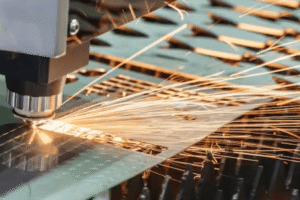
The selection process for cutting methods needs to pinpoint the precise method that will create the desired manufacturing outcomes through effective and economical production. The selection of a cutting technique determines how materials can be used together with the speed of production and the quality of cuts and the expenses to run operations.
Five Main Selection Factors
1. Material Type and Thickness
Various cutting techniques show different performance levels when applied to distinct materials which have different thicknesses. Laser cutting demonstrates its best performance through its ability to cut sheet metal materials which have thin dimensions whereas waterjet cutting achieves maximum effectiveness when applied to heavyweight materials which include stone and composite materials.
2. Cut Quality Requirements
Laser cutting offers precise detail work which requires high accuracy and produces little need for additional work. Flame cutting produces edges which require extra processing because they create rough surfaces that need to be trimmed down for less complex tasks.
3. Production Throughput
Plasma cutting operates at high speeds to process large materials which meets urgent operational needs. Waterjet cutting operates at a slower pace which makes it better for projects that need precise results.
4. Operational Costs and Efficiency
Each method has different costs for consumables and maintenance needs and setup requirements. Laser cutting requires a high upfront cost but it delivers long-term savings because it produces minimal material waste. The low cost of flame cutting comes with hidden expenses which arise from the need to clean and finish work.
5. Environmental and Safety Considerations
Waterjet cutting exists as an environmentally friendly method because it does not create heat-affected zones which increases its safety for important uses. The efficient operation of plasma and flame cutting systems creates dangerous fumes and heat, which requires facilities to implement special safety systems and exhaust systems.
Precision in Glass Cutting
Precision of Wire Saw Cutting
The wire saw cutting technique has earned a reputation for high precision, especially for its ability to cut materials with minimal waste production and smoothness of the surface. This is achieved by employing a very thin wire, with an abrasive material ensemble attached to it, to create scratch-like procedures to cut through hard materials, for instance, silicon, ceramics, or even metals. By employing a uniform force and limiting the cutting speed, wire saws produce neat and precise outcomes without posing any danger to the material. This degree of accuracy finds particular application in fields like semiconductors and photovoltaics, where flawless cutting is fundamental. It is important to ensure that the wire is well maintained and the system is properly calibrated to promote constant efficiency.
Precision of Laser Cutting
Laser cutting is a popular material fabrication technique that uses a concentrated beam of light to cut a material with remarkable precision and quality of the cut. It is, for instance, very accurate up to ±0.1 mm but may vary depending on the material properties and also when that material is being processed. Perfect laser cutting is due to the laser’s potential or ability to make use of heat energy to slice every tiny spot and make every edge cutting immaculate while not losing too much material. The equipment offered on the market today has got to the advanced levels of automation and the cut itself is also facilitated and complex shapes are believed to have referenced their forefathers or history and developed from the present.
Impact of Precision on Product Quality
Key Quality Impact Areas
1. Dimensional Precision
Ensures components form easily without grabbing fit between components, reduces valuable time involved in assembly and consequently leaves room for mistakes. In the automobile industry, mechanical elements exceeding tight tolerances of ±0.05mm increase repair needs by 25%.
2. Surface Roughness Control
Surface roughness is controlled by high accuracy processes which ameliorate the product both visually and functionally through friction reduction. Parts machined to Ra less than 1.6 μm perform 15% more effectively in abrasive cases.
3. Material Wastage Reduction
Precision processing reduces the amount of scrap and helps in efficient use of raw materials. In electronics industries, 30% of material wastage is avoidable through precision cutting systems.
4. Repeatability and Consistency
Low tolerances enable joining parts made at different times, necessitated by mass production and quality control. Laser cutting processes maintain repeatability variation of less than 0.1 μm.
5. Structural Integrity
Prevents formation of fine cracks and stress lines in components subjected to loading. Durability tests show aerospace assemblies made within maximum permissible accuracy extend life by an additional 20%.
Material Waste and Efficiency
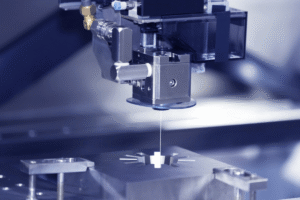
One crucial aspect of manufacturing that needs to be taken into account is the issue of materials waste, as a good rubbish disposal method lessens the environmental burden and concomitant financial issues that arise. Therefore, methods and techniques should be employed for machining and design to ensure that there is little or no waste. This is characterized by turning the waste materials into useful components during the process of manufacture, where up to 95% of wastage can be restored. Hence, this technique increases the effectiveness of the system to a considerable extent as well as stops any wasteful approaches and helps fight the depletion of resources.
Material Waste in Diamond Wire Saw Cutting
The process of using a diamond wire saw comes with waste considerations. An object is cut by the wire and in doing so leaves behind material that can be collected and potentially recycled. Proper control of cutting parameters including feed rate and wire tension helps minimize material loss while maintaining cut quality. Furthermore, slurry recycling systems are implemented wherever possible to ease the burden on disposal costs and maximize resource efficiency through collection and filtration processes.
Material Waste in Laser Cutting
Material waste occurs in laser cutting because the process vaporizes material in order to cut it. The type, as well as the thickness of the material, the power of the laser, and the speed of cut also determine this waste. This wastage can be minimized through accurate laser positioning to avoid unnecessarily vaporizing material. Moreover, modern smoke extractors capture particulate emissions before they enter the environment, which reduces waste and enables proper material management.
Thermal Stress Considerations
Excessive temperature fluctuations may lead to distortions, microcracks, or even cohesion loss, which is particularly dangerous in certain undertakings such as welding and thermal cutting which entails the use of high temperatures. Heat management during processing prevents structural damage to materials. Proper control over thermal expansion helps alleviate residual stress on components. These thermal effects can be minimized through using materials with appropriate thermal properties and proper process control.
Thermal Effects of Wire Saw Technology
- Heat Generation from Friction: Despite using cold cutting methods, friction generates heat along the cut line. Thermal stress in these areas can endanger material structure by causing micro-cracks. This issue can be addressed through effective cooling solutions.
- Wire Wear Effects: Temperature differences across the tool cause rapid loss of cutting wire material, resulting in shortened wire working life. The wire becomes blunt and loses cutting capacity within a short time without proper cooling.
- Material Expansion: Materials expand and contract due to temperature changes. Non-uniform heating causes non-uniform expansions that lead to material shape changes.
- Surface Quality Impact: If the process remains hot longer, there is possibility of surface oxidation or material property changes. Both deteriorate surface roughness and reduce cutting quality.
- Cooling System Performance: Upon failure of cooling systems, heat output increases dramatically. This necessitates proper cooling system maintenance to ensure overheating prevention.
Thermal Effects of Laser Cutting
- Heat-Affected Zone (HAZ): The focus of laser heat creates a narrow heat-affected zone. Temperature gradients may result in structural changes, grain structure expansion, or phase alterations. These changes can affect characteristics such as hardness or strength.
- Material Distortion: In thin materials, thermal expansion from laser heating can cause warping or distortion. This may require additional straightening operations and more precise fixturing.
- Surface Oxidation: During laser cutting, surfaces undergo heating at high temperatures which may result in oxidation, especially for materials like carbon steel or stainless steel. These oxide layers may require additional cleaning or surface management.
- Thermal Cracking: Some materials, mainly ceramics and brittle metals, face cracking phenomena since they are subjected to intense heating and cooling cycles which develop thermal stresses. This places limits on material usage requiring careful thermal management.
- Recast Layer Formation: The layer that was heated and then solidified on the cut surface forms a recast layer. This is undesirable in high-precision applications such as aerospace or medical components where different mechanical and metallurgical properties require removal through additional machining or grinding operations.
Mitigating Thermal Stress in Glass Cutting
Appropriate cooling methods address thermal stress in glass cutting processes, and proper laser parameters are also important. Fine cooling systems such as water jets or fans control thermal stress at critical points. Appropriate power, timing and velocity of the laser allows for uniform energy distribution without creating thermal concentration points. Alternatively, stress can be normalized through annealing or tempering before cutting to prevent material breakage during operations.
Industry-Specific Applications
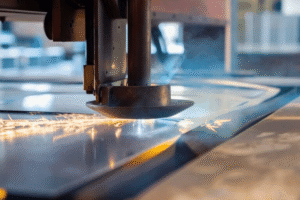
Applications of Diamond Wire Saw in Optical Glass
1
Wafer Slicing
Diamond wire saws are used in making thin and even wafers needed in optics such as lenses and prisms. This slicing method minimizes wastage of costly optical glass with ultra-high material efficiency and very thin kerf.
2
Large Optical Blocks
For large optical surfaces such as windows or mirrors, diamond wire saws cut precise shapes with smooth surfaces. This minimizes further treatment such as polishing.
3
Optical Blank Shaping
Enhanced material waste reduction enables shaping lenses to complex forms consistent with design intent, meeting different dimensions of optical blanks.
4
Fiber Optic Components
In manufacturing fiber optic wiring, optical glass rods undergo cutting with diamond wire saws which assists in productivity management while ensuring safe, reasonable results free from micro-cracking.
5
Microscale Elements
Within modern optics employing very small components, diamond wire saws enable accurate cutting of small elements, with care taken not to distort surfaces required for performance.
Applications of Laser Cutting in Stained Glass
High-Level Detailing
Sophisticated machinery enables drawing very detailed patterns and cutting difficult designs which were practically impossible with hand devices. Such detailed ornaments add better artistic value to stained glass designs.
Shape Variation
Laser machines enable cutting with precision into any shape and size, providing freedom to designers and producers to create stained glass of any particular form, eliminating embedding challenges.
Material Wastage Reduction
Laser technology compared with traditional manual cutting greatly minimizes material loss. This brings reduction in production costs and creates environmentally conducive practices.
Edge Quality Enhancement
Laser-cut objects result in clean edges without need for additional machining or edge finishing. This is necessary for ensuring leak-proof and functional construction of stained glass panels.
Production Rate Enhancement
Accuracy of laser cutting and machine automation provide remarkable advantages as production times are greatly reduced compared to conventional methods. This enables higher product generation while maintaining quality standards.
Use in Solar Industry
Comparative Analysis
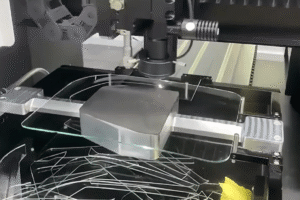
In the process of glass manufacturing, consideration must be given to effectiveness and expenses although they differ with different cutting methods. Wire saws provide excellent precision for thick materials and minimize material waste through their narrow kerf width. However, processing speed may be slower than other methods. Laser technology enables absolute precision with minimal material contact, creating smooth edges with exceptional detail capabilities. The main consideration is that laser methods require higher initial investment and careful thermal management. The selection depends on specific application requirements, balancing precision needs, production volume, material characteristics, and budget constraints.
Reference Sources
- Which Way to Cut Optical Glass: Endless Diamond Wire Saw or Laser? – Geninsen – Explains why a diamond wire is better than a laser when handling very thick sections of glass or producing sections with very tight dimensional requirements.
- Endless Diamond Wire Saw Or A Laser Cutter? – Highlights the easiness of use of the laser cutter and the accuracy of the diamond saw with specific use cases.
- Breaking Down Crystalline Silicon Solar Cells: Is Diamond Wire Loop Better Than Laser Cutting? – Discusses advantages and disadvantages of diamond wire loop cutting of solar cells over laser cutting. Recommend reading: Precision Glass Cutting Wire Saw for Industrial Excellence
Frequently Asked Questions
1. What Is the Essential Distinction Between Wire Saws and Laser Cutters Concerning Their Cutting Techniques?
The primary distinction exists because the two methods use different approaches to remove material. The diamond wire saw operates through mechanical “cold cutting” using a thin wire with diamond abrasive material to grind the glass. This method depends on friction and abrasion. Laser cutting operates through thermal and photo-chemical processes using a high-energy light beam to melt, vaporize, and produce controlled thermal shock that separates glass material. The laser functions as a contactless tool whereas the wire saw requires direct material contact.
2. Which Method Is Superior for Cutting Thick Glass Blocks or Ingots?
Diamond wire sawing provides the best solution for thick materials. The wire functions as a physical blade enabling the system to maintain straight cutting through deep material sections extending beyond several inches of glass thickness. Laser cutting has beam focal depth limitations which restrict cutting capacity because material thickness increases beyond 3 to 6 millimeters for standard lasers. The beam starts to diverge creating tapered cuts while required cutting energy may break glass due to thermal stress differences.
3. How Do the Methods Compare Regarding Heat-Affected Zones (HAZ) and Thermal Stress?
Laser cutting creates heat entering material through its system while producing a Heat-Affected Zone (HAZ) except when using special ultra-short pulse lasers. Localized heating can develop residual stress creating micro-cracks near the edge. Wire sawing operates as a cold procedure requiring liquid coolant for operation. The process produces minimal heat preventing thermal shock and HAZ creation. Wire sawing provides security for glass types needing heat protection and situations requiring total edge stress control.
4. Which Technology Offers Better Dimensional Precision and Tighter Tolerances?
Both methods demonstrate high precision with different operational strengths. Lasers produce better results with thin materials creating extremely small focus points enabling detailed 2D designs with cutting widths between 20 and 50 microns. Wire saws produce better flatness and straightness when cutting deep materials. Modern precision wire saws achieve tolerances within ±0.01mm but their wire diameter (0.1mm to 0.3mm) creates wider kerf than laser. This precision meets requirements for optical and semiconductor industries.
5. How Does the Surface Finish of the Cut Edge Differ?
A laser-cut edge produces surface finish reaching exceptional smoothness. The edge appears flame-polished because the process melts or vaporizes glass. The laser type determines whether the system produces recast layers and micro-cracking. A wire-sawn edge exhibits matte ground finish showing fine striations resulting from the abrasive process. The wire-sawn surface shows higher roughness but maintains consistent surface lacking thermal imperfections. This quality makes it suitable for precise grinding and polishing operations.
6. What Are the Cost Implications of Each Method?
Laser cutting systems need higher upfront capital expenditure investment because they use more expensive equipment. Ongoing costs for materials become cheaper because equipment lacks physical blades requiring replacement. Wire saws require smaller initial investment but operational costs increase because users must purchase new diamond wire requiring changes after usage. The choice between options depends on production volume and material value being processed.
Related Posts


Trending Blogs

![Polysilicon Material: Properties, Grades & Uses [Guide]](https://wiresawcutter.com/wp-content/uploads/2026/08/polysilicon-material-featured-150x150.webp)