
Get in touch with DONGHE Company
-
Phone: +86 181-1645-5490
-
Email: Sales18@DongheScience.com

Future of Crystal Cutting Technology: Technology Trends

Precision used in factories, especially those dealing in electronics or high-end products, is setting the bar ever so higher, and crystal cutting is no longer what it once was. The objective of this write-up is to paint a picture of the significance of technological and methodological advancement in the industry, looking at how basic laser cutting has come to be replaced or integrated with intelligent technology. In doing so, the audience within which this paper seeks to penetrate will understand the future of crystal cutting technology in terms of performance, levels of aggressiveness in work, and the environment.
⚡
Advancements in Laser Technology for Crystal Cutting

It is more important than ever to reform how many crystal operators are manufactured, and the use of lasers has caused a true revolution in the domain, as the latter has made it far easier to cut crystals with more accuracy and less wastage of materials. Ultra-short pulse laser systems with femtosecond and picosecond lasers permit cuts with high precision while preventing undesired heating of the material. This precision results in less material usage and better quality, which is very important in the electronics and optics industries. In this vein, some recent developments have focused on reducing the number of axes in laser machines, making it easier and possible to cut more complicated designs or shapes than traditional cuts. These improvements increase both effectiveness and honesty in companies, as such, since they would be grounded in the principles of not utilizing finite resources. Therefore, they support the future of crystal cutting technology.
Overview of Laser-Based Cutting Mechanisms
Lasers used for cutting material do so by directing a concentrated beam of energy to a certain area or section of the material, allowing for the heating, melting, or even the vaporization of the material. Among these approaches are:
🌫️
Vaporization Cutting
Turns the material into a gas for precise material removal.
💨
Melt & Blow
Melts the material with a laser, then uses high-pressure gas to eject the melted material.
🔥
Thermal Stress Cracking
Predominantly for brittle materials such as glass; relies on thermally expanding specific regions to initiate fractures at precise locations.
These modern systems also have either Continuous Wave (CW) or Pulsed lasers designed for optimal energy consumption based on the materials and the cutting resolution. These technologies have been made possible by industrial lasers, a precision tool that greatly reduces the heat-affected area when making cuts, and hence is suitable for use in the fabrication of small components in the aircraft, automotive, and electronics industries.
Recent Innovations in Laser Precision and Efficiency
Recent advances in laser technology present improved degrees of efficiency and precision than ever before. In fact, it is facile to say that developments of idioms have contributed a lot, such as ultrafast laser systems in the form of femtosecond and picosecond lasers, in which some very short pulse energy is provided. The kind of system reduces damage and waste very well because it limits the amount of thermal diffusion, generating heat-affected zones that do not exist. Moreover, various beam shaping technologies, such as diffractive optical elements, also known as DOEs, have been created to help one access various beam shapes that may be desirable within certain industries, for example, higher precision cuts and speeds.
- Another significant progress is the adoption of control systems based on artificial intelligence in laser machines. Machine learning controls the power supply, predicts defects, and allows autonomous control of parameters in this equipment.
- Advancements in the design of fiber lasers offer improved energy consumption and higher-powered lasers, which are more aimed at large contents and where speed is crucial.
- Developments in multi-beam systems enable the processing of many different areas by a laser at the same time without degradation of accuracy, finding application in semiconductor, medical device, and microelectronics manufacturing.
Impact on Production Scalability and Cost Efficiency
The advancement in laser processing technology allows for enhanced production scalability since the new techniques improve the rate of processing as well as the achieved accuracy. Multi-beam systems or intensified beam power density have enabled multiple operations to be carried out at the same time on different components. This significant reduction in cycle time helps solve one problem in mass production industries that has been plaguing numerous industries, including, but not limited to, semiconductor manufacturing and the medical industry, where high throughput is necessary.
| Cost Factor | Traditional Cutting | Advanced Laser Cutting |
|---|---|---|
| Material Waste | High | Significantly Reduced |
| Energy Consumption | High | Optimized & Lower |
| Post-Processing Work | Extensive (polishing, cleaning) | Minimal |
| Machine Longevity | Moderate | Enhanced & Longer-Lasting |
| Repair Frequency | Frequent | Less Frequent |
Looking into costs, the inventions aim at reducing the amount of materials wasted, the electricity consumed when operating lasers due to more efficient lasers, unlike before, and the amount of work done during post-processing, for instance, polishing or cleaning. Modern lasers are also rugged and accurate, which translates to less frequent repairs and enhanced longevity of relevant machinery. All of these efficiencies together translate to cost savings in the operations of the business and contribute to further investment practice, which makes laser processing an even more viable option for industrial operations.
🤖
The Role of AI and Machine Learning in Crystal Cutting

AI and machine learning are moving crystal cutting processes to a more advanced level of precision, efficiency, and automation. This is made possible by the fact that machine learning algorithms can be used to help analyze and interpret vast datasets to determine and come up with optimal working parameters, namely cutting speed, angle, and power of the cutter, for every possible crystal. They also have the capability of making sure that machines are maintained before they break down or malfunction, thereby reducing working hours that are lost due to such failures. Moreover, quality control using AI could enable real–time identification of micro defects, which could help detect if a crystal does not meet some given specification. The fusion of AI and machine learning makes production faster and less wasteful in regard to materials, so that the practice of crystal cutting becomes more environmentally friendly as well as economical. These measures ensure that the manufacturers have the capability to manufacture products without deviation, resulting in achieving a competitive advantage in the marketplace.
Applications of AI in Precision Modeling
Artificial intelligence benefits all domains where high precision modeling is necessary, as it improves efficiency, cuts out waste, and facilitates completion of the task. Artificial intelligence techniques are extremely useful in the field of predictive analytics and have improved on traditionally used statistical techniques by not only selecting past trends but also drawing conclusions about the future based on the available data. As an example, the use of AI has enabled aerospace engineers to carry out stress distribution and material behavior simulations due to the availability of precise parameters within virtual environments.
- In the medical field, AI supports and shortens the process of drug development, or aids in the creation of complex implants or prostheses that fit individual patient’s needs. Machine learning algorithms provide such solutions by analyzing patient data and designing the optimum functional corrective devices.
- In architecture and urbanization, AI has revolutionized the modelling process. Designers and planners create complex models integrated with a large number of factors, like the impact on the environment and budgetary constraints, as well as technology.
- Thanks to neural networks and computational technology, effective soft design for shells and corrosion buckling reduction is possible — improving laboratory efficiency and enhancing environmental sustainability in the construction of structures.
Predictive Maintenance in Crystal Cutting Machinery
A crystal cutter is a machine that cuts crystals that you mount on a plate. When this equipment is operated at full efficiency, it should be appropriate for all crystal structures cut from the same plate. Here, there lies the potential which can be explored through intelligence. Intelligent crystal cutting technologies are attributed to the use of predictive maintenance for basic equipment, which includes delicate sensor technology with Internet of Things and artificial intelligence, for the purpose of assessing the conditions of the equipment and providing early warnings even before the problems occur. The anomalies foreseen beforehand render the effects in terms of reducing the operating hours and extending the operating life of the excavated source, and in particular, the excavating equipment. Real-time alarms help in detecting the defects in the work precisely thereby aiding to pre plan maintenance efforts. It lessens the disruption of the operations and better employment of extracted components and resources, enhancing the quality of cutting crystals.
Optimization of Cutting Techniques with Machine Learning
Optimizing cutting methods through machine learning has taken center stage as large data sets have facilitated the extraction of patterns and the craftsmanship in digital platforms. In crystal cutting, helping engineers even more, cutting models look at factors like rotation speed, density of the materials, and temperature to attempt an optimal change. It will result in lower waste levels, with the edges looking well cut and the process being more efficient. The advanced prediction technologies have also brought about a continued system learning, which enhances performance over time through analysis of the past operations and outcomes. Enhancing processes using machine learning has helped industries maintain the quality consistently in all cuts, more economically in terms of resources, and economically friendly to the working budgets.
💎
Innovative Materials and Their Influence on Cutting Techniques
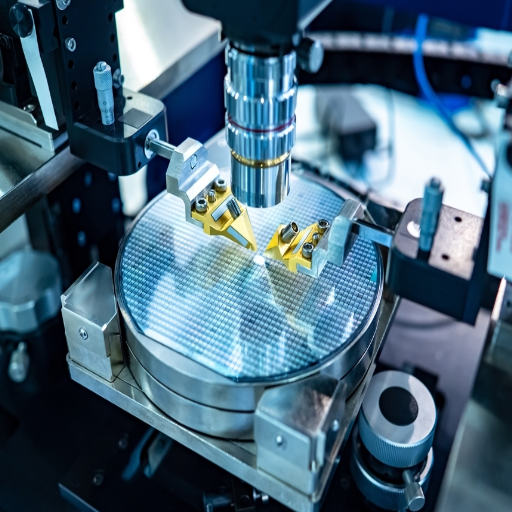
Improvements in material design have altered the cutters existing today. Cutting tools have become precise and encompass several technologies because a wide range of materials have to be cut and worked on. Simple and easy-to-machine materials have been phased out with rougher materials such as alloys, composites, and ceramics, which require more sensitive cutting system counterparts. For example, when new CNC equipment came onto the scene, these were only known as the diamond-coated cutting tools which could cut hard materials, including ceramic reinforced matrices or carbon fibres. In the same way, methods such as laser-based and water-based cutting provide the advantage of non-contact material working, which eliminates all concerns of material damage and thermal distortion. It further achieves the goal of making the process of cutting materials complex in terms of structures of the processed material, the goal being to execute this process effectively in the face of even the most advanced materials of today and of the future. Crystal cutting technology may also see new technology trends where it may not carry any additional pre-cutting tools.
New Materials Used in Crystal Processing
The challenges faced by the processes of cutting crystals have been dramatically altered by some recent technological advances. Among these is the extensive use of artificial diamond templates in a variety of conventional engineering scenarios. From making semiconductors to optical components, such materials play a crucial role.
| Material | Key Properties | Primary Application |
|---|---|---|
| Artificial Diamond | Extreme hardness, thermal stability | Semiconductors, optical components |
| Gallium Nitride (GaN) | Thermal stability, electrical characteristics | Energy conversion electronics |
| Silicon Carbide (SiC) | High durability, thermal resistance | Power electronics |
| Lithium Niobate (LiNbO₃) | High piezo-optic & electro-optic properties | Integrated photonics |
Challenges Posed by Unconventional Materials
⚠️ Key Challenges
- High Processing Costs: The price of the materials and the processing is too high, which may cause limitations on their possibilities of broader utilization in various industrial fields.
- Special Instruments Required: Processing sometimes involves furnaces that reach high temperatures and laser cutting facilities.
- Scalability & Uniformity: It has been a difficult task to produce excellent crystals within the same dimensions, minus any distortions, especially for opto-electronic or power electronics components.
- Material Brittleness: Some lesser-known materials are brittle and thus liable to break or be damaged during the machining process or when being assembled in devices.
Overcoming these hurdles is essential so as to make use of these advanced material systems to the best of their ability.
Tools and Techniques for Adaptable Cutting
Effective strategies and precise techniques for the machining of cutting-edge materials are required in view of the problems related to the heterogeneity, friability, and stringent tolerances of materials.
- 01
Laser-Assisted Cutting
Uses laser-controlled heating and cutting to produce tool and die components that exert very little forces on the brittle material during the cutting process. Ultrafast enhanced lasers give clean and damage-free results with no microcracks or heating zone damage — making it suitable for advanced photonic electronic component manufacture. - 02
Waterjet Cutting
Involves forcefully emerging a narrow high-pressure water stream containing abrasive particles in it in order to cut the material without causing any heat induced distortions. This technique does not overheat the ceramic or composite materials and cause them to crack. - 03
Wire Saws
Replace monolithic structures with their robust and adaptable design, making them the best option for cutting materials that are hard and easily damageable, such as hard minerals and ceramic-like silicon carbide. They integrate diamond wires to generate homogeneous thin slices with utmost precision and no waste generated, with automated control systems that enhance accuracy.
In general, the selection of the cutting process or technique is influenced by the physical properties of the material, the required tolerances, and the purpose of the components. This is Ground Zero if engineers want to build in cutting-edge materials and components for the future of crystal cutting technology, which is structural and highly superior after the modifications of these newfound technology trends, tools, and skills, and therefore will lead to more advancement.
🌿
Sustainability and Eco-Friendly Approaches in Crystal Cutting

In the current era, the main focus in discussions about the improvement of crystal cutting also touches on the question of environmental sustainability to protect the environment. Some of the ways of achieving these include, in addition to energy-saving machines, recycling of water resources, and the usage of green energy-powered machines, among others. Additionally, cutting-edge technologies have been embraced, such as using laser or ultrasonic cutting machines rather than traditional cutting for most solid materials. Also, for cleaning and finishing the parts, rather than using harsh solvents, an effort is being made towards plant-based solvents that are less harmful. In conclusion, all of the above green approaches help to minimize the emissions of greenhouse gases and improve the overall clean production agenda while meeting all the stringent requirements of accuracy in production.
Reducing Waste Through Advanced Cutting Techniques
The use of advanced cutting techniques is an important factor for increasing efficiency and decreasing waste in most of the industries. Use of cutting techniques that include laser cutting, water jet cutting, or plasma cutting, focuses on precision cutting to minimize the amount of off-cuts or scrap, and thus enhances material utilization. Of all these, laser cutting is the most common process as it uses focused light beams to generate extremely fine cuts with relatively small kerf sizes in relation to most other cutting processes; hence, overall material loss is minimized. In the same vein, waterjet cutting, where abrasive particles are dispersed within a high-speed jet of water, enables the formation of complex patterns on different work pieces without creating any heat-affected area, hence protecting them from levels of material impairing releases.
Furthermore, CAD facilitates these practices through nesting, ensuring closer proximity of parts to the cutting edge in order to minimize the overuse of the material. To increase efficiency and effectiveness, industrial manufacturers are incorporating computerized systems that will regulate the cutting settings and process parameters in real-time control. Manufacturers benefit from such technologies as they do not have to use a lot of raw materials, which is expensive and promotes waste production, hence decreasing emissions, which is environmentally friendly.
Energy-Efficient Machinery Trends
In recent times, energy-efficient equipment is proliferating with regulatory requirements, policy cost-cutting initiatives, and, in addition to the environmental conservation policy, sustainability.
- Increased adoption of variable frequency drives (VFDs), which can be used to adjust motor speed according to the operating conditions, therefore saving energy, represents one of the most pronounced changes.
- Real-time analytics through sensors and the IoT has reshaped the performance of systems by providing insights and enabling predictive and preemptive repair, as well as reducing outages.
- Replacement of fossil fuel power sources in any industrial equipment with electric and hybrid ones, hence mitigating pollution as well as the utilization of fuel.
- The concept of lighter and friction-reducing structures of systems, which most of the manufacturers are applying in their sophisticated mechanical systems, is to conserve energy.
The pervasiveness of such technologies indicates a desire to manufacture products that are economically advantageous and, at the same time, consume relatively less energy in line with the requirement to reduce energy consumption worldwide.
⚙️
Automation and Robotics in Modern Crystal Cutting
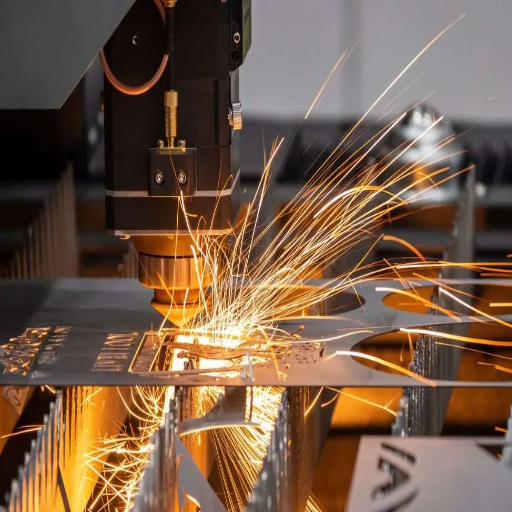
By automating and deploying robots in the crystal-cutting process, manufacturers have been able to achieve better efficiency, precision, and scalability. Robots that come equipped with high-end sensors and cutting logic software allow even the most elaborate designs and the most irregular shapes possible to be achieved in ways that were impractical with the use of human labor before. These advancements transmit the repetitive and mistake-prone operation to the robots and thereby try to increase productivity and avoid variations from one part to the next. Also, automatic cutting machines can have sensor feedback so that modifications may be made during the shaping process due to any variation in the quality or nature of the material that is being used. In the context of modern crystal-cutting industries, with the development of processing technologies, the amount of waste material and the usage of resources have decreased thanks to the functions of automation and robotics.
Integration of Robotics for Precision and Speed
By integrating robots into gem shaping, you widen the precision as well as the efficiency through the use of sophisticated algorithms and machine learning. The AI-based, robotic equipment has gained the capability of performing delicate and repetitive operations, with the accuracy level being in microns, and thus lessening the dangers associated with manual operating. Also, such systems make it possible to use technologies such as CNC (also known as computer numerical control) and multiaxis systems, allowing for performing various intricate and uniform cutting operations. What is more, robotics makes it possible to perform these operations at a higher rate than usual without harming production, as downtime is reduced to a strict minimum, as robots are designed to operate in a nonstop manner with little or no upkeep required.
Examples of Fully Automated Production Lines
In the discussion around full-automatic production lines construction, it is noticed that the enterprises which are involved in the semiconductor manufacturing, the drug packaging sector, and the automotive production industries. Such innovative applications of engineering use the robots of the latest generation, accuracy to value, and controlling software with artificial intelligence to do such delicate jobs like cutting the wafers, closing the drugs in capsules, and welding cars with an extraordinary accuracy and speed like never before.
🔬
Semiconductor Manufacturing
Wafer cutting with AI-controlled precision
💊
Drug Packaging
Automated capsule encapsulation systems
🚗
Automotive Production
Robotic welding with extraordinary accuracy
❓
Frequently Asked Questions (FAQs)
How can the fabrication of quartz crystals change the future of crystal cutting technology by 2026?
The future developments in quartz crystal fabrication and cutting processes will be brought about by 2026 due to an upsurge of quartz crystal products, especially in electronics, automobile, and aerospace manufacturing. The suppliers upstream, in a bid to address gaps in supply chain management, will improve the execution of their operations on TCXO, OCXO, and VCXO resonator production by incorporating smart systems of PDCA. Cutting in the near future will introduce new processes that integrate rotation into motion control, active drives into mechanical linkage, as well as microkerfes, among other technological improvements. This is done whilst ensuring that the processes offer more and better precision, less mechanical stress and energy consumption, and more enhanced reduced phase noise performance.
What are the development and technology trends related to high-precision cutting for crystal oscillators?
Technological advancements have made it possible to further improve such processes, such as laser cutting, water-jet, and other sophisticated or mechanical cutters for tight-tolerance crystal oscillators. The lasers and their active gas assist allow for superior precision and minimize the development of cracks; waterjet cutting does not impose much heat onto sensitive types of crystal oscillators. All this is in line with the specific technological trends, which are a decrease in phase noise and increasing reliability, which is essential for such applications as the IoT and 5G, and a necessity to increase production without generating more waste and ensuring the sustainable exploitation of natural quartz stone.
What role will the cutting machine play in the production process and in improving its efficiency?
Machine cutting systems of today combine AI and IoT devices to allow horizontal scaling of operations while ensuring proper alignment and exposing anomalies. With the mechanization of manufacturing and computerized cutting in production, designers can include in machines adaptive patterns of cutting, monitor their health most of the time, and make it completely automatic, making manufacturing even more efficient and energy-saving. Lasers find application typical of any yield-optimizing device, for example, in semiconductor manufacturing and engineering structures. The more usual applications use very clean contours to engrave silicon or polymers into usable devices such as acoustic sensors for oscillators.
In what way is laser cutting employed in the manufacturing of quiet oscillators in demanding concentric wire in duct applications?
One of the critical pieces in attaining the required level of precision in low-noise crystal oscillators for telecommunications, 5G infrastructure, and aerospace is laser cutting systems. This is because there is little or no mechanical stress in ablation, resulting in high precision, especially in control of resonator geometry, as well as phase noise, and that is why laser systems are preferred. Using laser cutting in connection with sensor feedback and process control driven by artificial intelligence will improve uniformity and increase opportunities in fields that require high-performing oscillators.
What are the changes or enhancements likely to occur in the future cutting systems or AI-tooling that could affect manufacturers?
It is crucial that further integration of artificial technology trends with cutting technologies is achieved to allow for real-time optimal cutting and allow for cutter self-calibration. While sensors and Internet of things base-on-communication modeling will be implemented to ensure better process control, eco-friendly approaches will be adopted and assemblies made, where fabrication will be heavily reduced. The future of crystal cutting technology presages exciting times as it all high precision supply chain proliferation and innovative CAGR-defining growth opportunities to 2026 and after.
Reference Sources
Current status in, and future trends of, ultraprecision machining and ultrafine materials processing
This study explores ultraprecision machining techniques, including crystal cutting, focusing on overcoming atomic bonding forces within crystals. It highlights advancements in precision mirror cutting machine configurations.
A study on the mechanism of nano-cutting single-crystal silicon
This study investigates the nano-scale cutting behavior of single-crystal silicon, focusing on the mechanisms involved in diamond cutting techniques.
Related Posts

Trending Blogs

![Polysilicon Material: Properties, Grades & Uses [Guide]](https://wiresawcutter.com/wp-content/uploads/2026/08/polysilicon-material-featured-150x150.webp)