Get in touch with DONGHE Company
-
Phone: +86 181-1645-5490
-
Email: Sales18@DongheScience.com

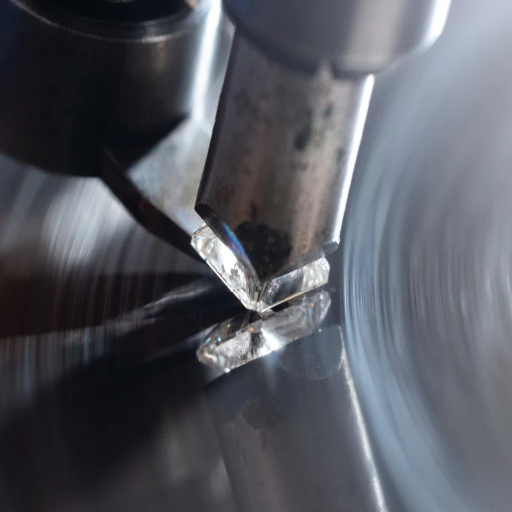
Optical Crystal Processing with Wire Saw Technology

The exacting and perfecting of optical crystals in a variety of structural activities is more important with the increase in the use of high-performance devices in vehicles, photonics, and the development of quantum systems. In this regard, one technique that has revolutionized the manufacturing of these substrates is the wire saw or diamond wire cutting technology. It cuts into the thin slices in an unprecedented manner compared to the conventional techniques. This paper aims to analyze the importance and function of optical crystals as well as their production by wire saw technology. At the end of this analysis, it will be evident to the audience why the technique is essential for optical component fabrication. This extensive explanation will also be informative to professionals or novices who are intrigued by this technological advance, and where it places itself in the field of precision mechanics in manufacturing engineering.
Introduction to Optical Crystal Processing

The cutting using optics crystals is commonly referred to as a cutting techniques that solve problems associated with their basic geometry. They help to shape, finish, and polish crystals so that they can fit into particular applications for later membered applications. In particular, the level of clarity and surface finishing surfaces with minimum imperfections is very crucial in such applications as lasers, microscopes, high-precision sensors, and devices. Since ultra-fine grinding and chemical polishing are employed, high-quality components of a certain durability and optical performance are possible, and therefore, such advances are widely considered. This sector is, in fact, very essential for purposes of facilitating the development of medical, information, and space-related technology.
Overview of optical crystals and their applications.
Optical crystals are materials that are designed to control light in one way or another by refracting it, transporting it, refracting it or diffusing it. Materials like quartz, calcite, lithium niobate, and others are known as optical crystals due to their birefringence, nonlinearity, or high transparency to certain wavelengths. They are essential components necessary in many of the sophisticated technologies we seek. For example, in the case of laser systems, there are nonlinear optical crystals that facilitate the process of changing the frequency to obtain a particular wavelength of operation. Other optical crystals that are birefringent are in use for ‘polarization manipulation’ and beam-splitting optics. Furthermore, optical crystals such as calcium fluoride and sapphire are used in high end lens and windows, particularly for ultrafast optics in aerospace, biomedical imaging, and micro-lithography, due to their extremely low scattering and cleavage phenomenon. The precision and performance of such devices are dictated by the durability and quality of the optical crystal cutting lenses found in all these diverse industries.
Importance of precision and accuracy in processing optical crystals.
There are some industries, such as that of optical crystal cutting, where the two attributes, precision and accuracy, are a necessity, as they are directly proportional to the optical system of a high standard with very high reliability. There are many requirements, such as surface flatness, surface polishing, and scratch and dig, that will need to remain within acceptable limits for the intended use, since any small inaccuracies will interfere with the signal or create optical distortions or other inefficiencies. Technologies such as CNC machining, precision polishing, or measurement through a sighting scope may be applied to be consistent with the stated parameter. Also, it is key to produce items in secure areas to avoid all possible pollutions and defects. High-quality optical crystal fabrication allows meeting all operational quality requirements of, for instance, aerospace, telecommunications, and medical imaging industries, in which high reliability is sometimes a matter of life or death.
Key technologies used in optical crystal processing.
The method of optical crystal cutting consists of many modern technologies enabling the desired quality of the optics. The principles of chemical vapor deposition or CVD, which lay uniform layers with the needed chemical makeup is among the most important techniques, as is ultra precision diamond turning that generates surfaces of well below a micron in tolerance – characteristic very much relevant to optics. Laser micromachining also finds wide application due to its capability of removing material and building intricate structural patterns without affecting the bulk materially at the micro level. These technologies are designed based upon customer’s need, and they do not disappoint in performance design of optical elements as well as their protection against copying in case of need. In addition, the functionality of optical instruments is confirmed, and the reflective and transparent surface is brought to geometric precision within narrow limits, thanks to metrology and other features like interference and scanning spectral techniques. In this way, all relevant activities and equipment ensure the demands of sectors such as photonics, defense, or biomedicine are met.
Principles of Wire Saw Technology

The core of the design of the wire saw system is a technique that implements a thin metal abrasive-wearing cord, which allows cutting various materials with great precision and little kerf. and accuracy. The primary basis of wire cut technology is linear movement for cutting and tension for holding the wire in position during cutting. The working edge of the wire is always supplemented with diamond abrasive or abrasive materials embedded in the wire itself to remove the core material efficiently, including hard materials such as silicon, ceramics, or metals. As the process is occurring, there is often a flow of liquid, such as a lubricant/cooler/slurry, to reduce the rise of temperature in the material, stretching, and increasing the incidence of cutting. If fine tolerances, a smooth finish of the materials, and less waste of the material are the specifications required for a job, wire saws are used. This is because such jobs include but are not limited to the slicing of semiconductor wafers and the cutting of solar cell wafers.
How wire saw technology works.
Everything known about wire saw technology is reliant on the notion of abrasion with the help of a very thin flexible wire – normally diamond-coated – to excise the materials with very high precision. The wire is put in tension and then wrapped and directed around energy transmission pulleys or rollers, therefore creating a cutting path that can be controlled. In the course of cutting, there is a speedy motion of the wire, and an abrasive medium, such as a slurry of silicon carbide or diamond drops, is used to facilitate cutting and cooling of the wire. With this formula that consists of mechanical stretching, abrasive organic granulation, and motion, the wire saw is able to perform cutting in a very clean manner with a minimum amount of kerf loss. Also, improving the technical aspects, wire tension, wire speed, slurry flow, and other parameters are monitored and automatically corrected by automatic systems useful in optical crystal cutting, and wire saw for precision purposes, where such precision cutting of material is required.
Advantages of wire saws in cutting optical crystals.
There are many benefits to using wire saw technology for optical crystal cutting, which explains its popularity in several sectors where utmost care and efficiency are paramount. For one thing, wire saws allow for minimal wastage and precision cutting due to their thin kerf, which is very much necessary in the cutting of such materials as optical crystals, which are not only costly but delicate as well. This also minimizes waste as well as the cost of production. Next, the technique offers a clean surface free of any deep scratches, reducing the materials that require additional processing, including the polishing of the crystals, so as to retain their transparent properties. Moreover, wire saws can also be very beneficial for cutting materials that are very fragile or brittle because the machine operates with less stress on the material as compared to other cutting devices. This prevents the appearance of fractures, preventing the crystal from being damaged. Lastly, since most current wire saw machines can be designed for automation, they are able to produce durable, faster, and more scalable products, even on a small scale or large scale production, particularly in the photonics industry and the electronics industry.
Comparison with other cutting methods, like laser cutting and mechanical saws.
The wire saw cutting is more efficient for cutting and maintaining accuracy in brittle materials compared to laser cutting. This is because laser cutting is precise with intricacies, but usually comes along with a lot of heat in the cutting zone, and this can be destructive to delicate materials like silicon or glass by causing microcracking or thermal damage. Therefore, whenever the chances of damaging the material are unacceptable, wire saw cutters work better. They contribute more to such applications.
Nevertheless, using an optical crystal cutting saw that depends on an abrasive blade undergoing a high-pressure functionality causes mechanical stress, chipping, and surface deformation, all of which can affect the final quality of the workpiece. All these written concerns are reduced in the wire saw technology. The reason is that the workpiece is cut using abrasive wires or abrasive sands, in which the contact pressure is very low, and also diamond or sand particles are used, giving a better finish to the surface, and also providing high precision control of the dimensions. Slight chip formation can be seen in the wire saw cutting process, and the saw cutting improves material usage; otherwise, mechanical saws incur a waste of materials.
However, laser cutting has the edge of being faster and more versatile than others, and will be a better option when the material to be cut is relatively light or fast prototyping is required. The same mechanical saws will, however, be useful where the general cutting operation is required with no emphasis on very high tolerance or excellent finishing. Although all methods may be applicable for similar applications, compensations have to be done with other parameters. However, wire saw cutting has the clear advantage in cases where material amounts need to be preserved along with precision and minimization of material (waste).
Material Properties and Their Impact on Cutting

It is possible to make a correlation between the techniques used to cut a given material’s mechanical properties. Key components include the hardness, brittleness, thermal conductivity, and homogeneity of the crystal’s structure. In this regard, hard materials are usually cut through the use of abrasives such as diamond wire saws to ensure nothing goes out of shape, while keeping tool life in check. When it comes to materials characterized as brittle, they tend to chip easily, and therefore, methods like laser and waterjet cutting, which cause zero mechanical pressure, are preferred. As for materials having high thermal conductivity, they may cause heat to spread out rapidly; thus, laser cuts lose their effectiveness. Again, the mechanical strength and surface finish of a layered isotropic crystalline structure are affected by both the homogeneity and the crystal structure of the material being cut, as isotropic materials lead to non-alterable cuts and extensive wear of cutting edges. In this way, it is imperative to examine their characteristics to improve optical crystal cutting techniques.
Physical and chemical properties of common optical crystals.
Natural optical crystals, including quartz, sapphire, calcium fluoride, and non-hygroscopic BK7 glass, have certain unique properties important for their uses in optics. The thermal stability of quartz, particularly its hardness of 7 on the Mohs scale, without forgetting its ability to transmit light over a wide range of wavelengths, are the qualities that make it effective in the production of lenses and prisms. That aside, it is the hardness of sapphire that takes the cake on the Mohs scale, measuring 9, the melting point that is quite high, approximately 2030 degrees Celsius, and its thermal conductivity that makes it adaptable to otherwise destructive environments, like in spinning lasers or flying optics, etc.
A chemical compound, calcium fluoride (CaF2)- fluorospar/in its processed form is invariably used in optical sections, including ultra-violet and infrared lenses, as it shows very little retraction and covers where the refractive index remains more or less constant within the wavelength bandwidth ~0.13 – 10 microns. The optical window requires careful attention to detail since it is soft and therefore easily cut, polish and scratched. Primarily, the revised BK7 glass is the borosilicate crown (crown) type of glass, greatly enjoyed for its high homogeneity and low dispersion (Abbe’s number is a little more than 60), excellent chemical stability, which is why it is popularly made into lenses and glasses.
Considering such characteristics, performing optical crystal cutting due to its shortcomings or others, such as resistance to heat, weight, and optical quality, varies greatly and becomes easy.
Challenges posed by brittleness, hardness, and other material characteristics.
BK7 glass is very brittle, and this is a big disadvantage when it comes to high-impact conditions or when working in rigorous stress conditions. Its scratch resistance is greatly enhanced by its high hardness; the fracture toughness is quite low, too, leading to the material’s easy breakage under a point load. Other problems include excessive sensitivity to heat, with fast temperature changes possibly leading to thermal cracks. What is more, it is very challenging to produce and shape BK7 glasses given their hardness, which makes them difficult to grind or polish. In any case, these factors must receive great attention when it comes to using them during the design process, so that the chances of failure are minimized, and the output efficiency is Maximized.
Optimizing cutting parameters based on material properties.
An efficient selection of cutting parameters starts with proper consideration of the individual workpiece and its material. When it comes to BK7 glass and similar workpieces, the hardness of the material, its brittleness, and susceptibility to heat require more attention in machined operation. Relevant recommendations include slower cutting speeds, avoiding excessive cutting forces in order to prevent the formation of surface cracks, or more expensive diamond-coated tools that enable their cutting as they have very high hardness levels and are wear-resistant. Most of the time, coolants and lubricants are necessary during machining to carry away the heat and reduce the friction. Minimization of surface pre- or post-processing and an increase in material removal rates may also be achieved with the aid of such techniques as ultrasonic-assisted cutting, which is also known to improve optical crystal cutting capabilities. Strict parameter selection, based on the properties of the material, leads to less tool wear, better quality of surface finish, and a more certain process.
Common Applications of Optical Crystal Cutting

The practice of optical crystal cutting is common in many sectors where accurate and good-quality parts have to be made. Some of the most common include the manufacture of lenses, prisms, and optical windows utilized in sophisticated imaging systems, scientific apparatus, and laser devices. In particular, these components are used in microscopes, telescopes, and spectrometers, which require optical perfection. Furthermore, the method is used to fabricate custom optics for aerospace, military, and communication purposes, where high precision and reliability in harsh environments are very crucial. In every case, there is a particular requirement that must be met in order to achieve a high level of light transmission without any disruptions.
Use cases in electronics, photonics, and telecommunications.
For the progress of electronics, photonics, and telecommunication, precision optics is of great importance. Cameras with high resolution, optical sensors, or display systems in electronics lead the way in the introduction of precision optics, where adequate manipulation of light is paramount. In laser systems and their implementations, as in the case of LiDAR in driverless cars, in fiber optical communication, and in optical data storage, all such photonics rely on precision optics. Telecoms, on the other hand, use precision-molded lenses and prisms to help maintain the integrity of signals in optical fibers because it aids the transmission of light, and the degradation of the signals is adequately minimized. Such uses call for strict compliance with quality assurance protocols and the development of materials that operate in tough and different operating environments.
Examples of processed materials include quartz, sapphire, and lithium niobate.
Materials that have undergone some form of treatment, like quartz, sapphire, and lithium niobate, exhibit impeccable characteristics that have been primarily exploited for very high-end uses. Quartz, famous for its piezoelectric qualities, is useful in higher technology devices such as precision tuning and resonance control devices and sensors. Its extreme hardness alongside optical transparency is why sapphire is used for making a lot of optical components, led substrate, and even abrasive eyeglasses for harsh conditions. On the other side, lithium niobate, in which its electro-optical and non-linear properties are high, finds its uses at modulators in telecommunications and may even be used at frequency converter or any other form of advanced photonics. These materials undergo immense optical crystal cutting and reshaping processes to obtain the level of clarity, precision, and functionality required for modern-day science.
Customized solutions for industry-specific requirements.
Different industries are catered to differently by coming up with specific materials to fit labor-intensive applications. For example, in the aerospace sector, very strong optical components that can withstand strong thermal and mechanical forces are used. In the same vein, the need for high-performance electro-optic and low-drift light modulation materials, such as lithium niobate, in the telecommunications industry is increasing. Biocompatible materials and hyper-pure materials are paramount in the manufacture of medical devices, especially diagnostic and surgical instruments. All these customization strategies employ a high level of engineering, quality testing, and awareness of the requirements of industries in order to provide durable and effective systems.
Challenges in Optical Crystal Processing with Wire Saw Technology
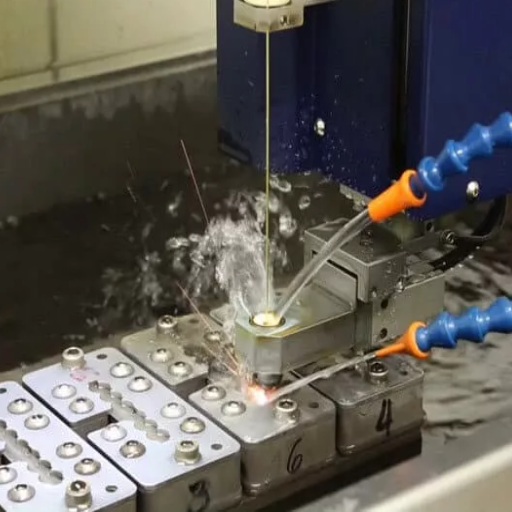
Wire saw is a technology known to slice optical crystals quite efficiently, but it also carries with it several problems that have to be dealt with in order to achieve the best processing results. One of these issues is microfissures and damage to the surfaces, which take place while the materials are being cut, and which adversely affect the optics. Another problem with optical crystal cutting relates to the loss of material and the need to minimize this so that optical-grade crystals, which are normally expensive, can be used effectively. There are also difficulties in controlling cooling and lubrication because, if handled improperly, the crystal surface can be thermally damaged or contaminated. Lastly, the issue of tool wear and maintenance is crucial in order to preserve the accuracy of the cuts so that the crystal’s dimensions do not become distorted. The approaches for overcoming the details of these problems involve the use of technology materials, excellent quality tools, and good control systems to provide cut optical elements that do not differ from one another.
Issues such as surface damage, cracks, and material loss.
Defects such as surface damage, cracks, and material loss in optical components have to be dealt with carefully. Surface damage is usually due to wrong handling or improper machining. This can be prevented by adopting ultra-precision machining and anti-abrasive coatings to avoid abrasions. Cracks are caused by high mechanical strain or temperature Differentials and can be averted by the use of a closed environment and annealing for stress relaxation. Loss of material during cutting and polishing operations is a function of such phenomena as tool wear, cutting forces, and environmental factors, and it is welcome to optimize these factors and adopt contactless machining with lasers to achieve good material retention. Application of these measures allows obtaining a better effect in practice and preserves the operational properties of the working optical system.
Methods to minimize waste and defects during processing.
To minimize waste and defects during processing, I focus on precise calibration of equipment, adherence to standardized procedures, and the implementation of real-time monitoring systems. By prioritizing high-quality raw materials and maintaining stringent environmental controls, I ensure optimal processing conditions. Additionally, I leverage advanced techniques such as predictive maintenance and non-destructive testing to identify and address potential issues before they escalate, reducing material loss and enhancing overall efficiency.
Innovations addressing these technical bottlenecks.
In order to solve the technical shortcomings that had been encountered, several ideas have been integrated into different sectors. Today, there are advanced production systems that utilize AI-based analytic tools, improving the work schedules as well as predicting any possible breakdowns in equipment or other tasks, which in turn minimizes the idle time. There is also a use of green materials and such processes, as energy consuming, to comply with environmental standards without compromising efficiency. Messaging capabilities provided by cloud-based apps allow for inter-team and inter-network communication in real time these days. There is also a widespread use of rapid prototyping, for instance, in optical crystal cutting and molding of parts. Such progress in technologies allows to eliminate the drawbacks of the traditionally implemented approaches in terms of efficiency, sustainability, and scaling-enhancing.
Reference Sources
Development of Speckle-Free Channel-Cut Crystal Optics
Hosted by the Harvard ADS (Astrophysics Data System), this source discusses advanced methods for fabricating crystal optics using plasma chemical vaporization machining.
Curves and Optics in Nontraditional Gemstone Cutting
Published by the Gemological Institute of America (GIA), this document explores the optical effects of various gemstone cuts, including their impact on light behavior.
Frequently Asked Questions (FAQs)
What distinguishes the cutting of optics from the cutting of general glasses?
The cutting of optics is a manufacturing procedure that is highly specific. It requires that optical objects such as glasses, crystals, and lens prisms be cut into different shapes, such as linear blocks and circular thin wafers, with the highest precision in terms of the shape and surface of the component. Unlike other procedures of glass cutting, optics cutting to mitigate clearances, stress, particle and minimization regarding cuts are extravagant. The processes available in the market, such as the diamond wire saw, wire saw cutting, and technology based on lasers, have been used for efficient, clean cuts of paper-thin, even divisions that are necessary for technical optics and microscopy.
What technique should I apply for cutting with regard to the optical glasses?
The choice of an appropriate sawing technique is usually dictated by the type of alloy system in use, the thickness of the layer to be supported, and the smoothness of the surface edges, in addition to the volume of production. When thin and clear components need to be produced, diamond wire or infinite diamond wire scribing saw provides low roughness and high cooling. A laser or blade system with high-accuracy motion instead would be impractical in such cases, where extreme or tiny components exist. The other lastly important factors are the machine maker’s reliability, the capability of the machine to generate particles, and whether or not the consumer needs an abrasive wire or clean equipment. Some companies, like Ensoll and factories they work with as well, help by optimizing the design or fabrication in view of the optical properties and economics of the component.
What advantages do endless diamond wire cutting landscape optical crystal cutting machines provide the user?
Machines for optical crystal cutting work with endless diamond wire cutting equipment to provide maximum efficiency of the cutting machine and high efficiency of sawing, even with a reduction of the kerf width. The key advantages of the endless cutting band lie in the fact that artificial abrasives are set in the matrix of the wire very homogeneously, which enables making very thin cuts with a smooth edge and control of thermal and stress impact on light transmitting workpiece. Such machines are intended for use in a production line, and they are capable of significantly decreasing process yields for lenses, prisms, and block lenses, with resulting high finish quality and little/minimal polish post-processing.
Why is it necessary to keep the temperature and stresses in check when cutting optics?
Due to the implications of the heat produced and the stress exerted when cutting, micro-cracking, index shift, and reduced transmission may occur, affecting optical quality. Wire saws or diamond wire saws, for example, reduce heat generation over some blade or laser-based processes, thereby minimizing stress and preserving the optical quality of the components for a microscope, lenses, and delicate optics. Proper cooling, feed rates, and proper abrasive (whether diamond or other particles) selection are essential to achieving the desired cut.
What is the principle of operation of a diamond wire saw, and why is it used in optical crystal cutting?
A diamond wire saw is an option that passes a wire running under tension with diamond abrasive particles fixed in it that cuts through optical glasses, crystals, and ceramic blocks. The abrasives remove the material with ease and create a beautiful surface finish with negligible damage beneath the surface. The endless diamond wire shall allow for continuous cutting of the material as its abrasives are always active, therefore, enhancing the efficiency within the operation cycle. It is helpful when dealing with thin, brittle, high-tech optical devices that need to be shaped carefully, have smooth edges, and remain highly clear.
Can the use of diamond wire that is endless help to avoid contamination with particles, improving the surface properties?
Sure. The purpose behind the creation of continuous diamond wire systems is to apply an abrasive medium without a change of its configuration towards its purpose of performing the expected operation. It gives better results in terms of reducing wear and tear on the surfaces, for example, at the edges of the surface, micro-crack formation, and the likelihood of these aggressive processes is minimized under relatively mild conditions. Adequate application of the filter and maintenance of the coolant prevent particles from propagating further, therefore, facilitating the hygiene in the making of the refractive parts used in microscopes and very high-quality lenses.
Which values determine cut quality in optical crystal cutting, and in what ways are these determined?
When it comes to assessing successful optical crystal cutting, factors include the quality of edges, subsurface damage, flatness, parallelism, and surface roughness. All these can limit the transparency and transmission of the machined parts. These things are controlled using microscopy, interferometry, and surface profilometry to the very tightest of tolerances. For lenses, prisms, and thin optical components, a very thin kerf, perfect thickness geometry, and lack of any stress-generated birefringence are essential requirements. The best possible results are obtained with proper cutting options, such as the use of a wire saw, cutting with suitable abrasive, and appropriate feeding speeds.
Apart from using diamond wire, what kinds of materials can be used to cut optical glass, and in which cases are they applicable?
Various methods exist, such as using lasers, saw blades, and water jets. Laser cutting is efficient for making complex shapes and does not touch the workpiece while cutting, but it has some thermal effects that may be quite undesired and hence need thoughtful mitigation. Blade sawing is an economical option for thicker blocks that are not so brittle; however, it results in coarser surfaces and has a larger depth of penetration of subsurface damage. The most basic but effective and used method of cutting thin optical materials is wire sawing with abrasives, particularly diamonds. For optical crystal cutting, this choice is influenced by factors such as the level of accuracy, the shape of the component, how many pieces have to be made, and whether there should be no post-polish after cutting.
Related Posts
Trending Blogs

![Polysilicon Material: Properties, Grades & Uses [Guide]](https://wiresawcutter.com/wp-content/uploads/2026/08/polysilicon-material-featured-150x150.webp)