
Get in touch with DONGHE Company
-
Phone: +86 181-1645-5490
-
Email: Sales18@DongheScience.com

Graphene Wire Saw: Complete Guide for Precision Cutting

Make no mistake, technological developments have been very instrumental in achieving a high degree of precision cutting, especially in the electronics, aerospace, and medical devices sectors. One of the most potent tools in precision cutting, however, is the graphene wire saw. The combination of graphene, which is famous for its strength, flexibility, and conductivity, novel materials, and engineering, makes this tool a game-changer in the precision industry. This article aims to demystify the limitations of the graphene wire saw, its uses and benefits, thereby drawing attention to why the use of these tools in cutting increases. Sit calmly in expectation as this novel instrument increases the efficiency of processes but also enhances constraints of sustainable and effective high-precision activity.
Introduction to Graphene Wire Saw Technology
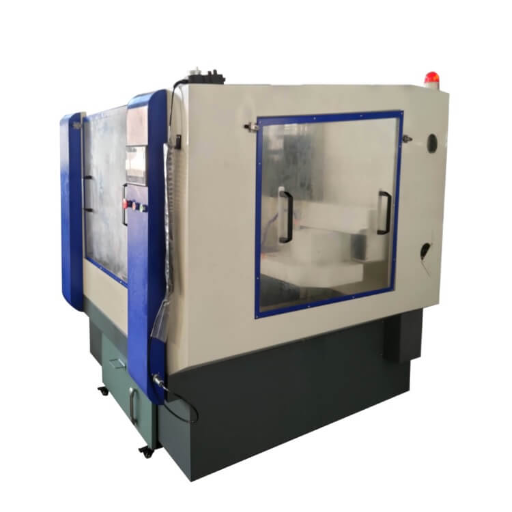
The Graphene wire saw technology makes use of this strong, flexible, and conductive nanomaterial to achieve a high level of accuracy in both motion and cutting actions. A saw that is most efficient when a wire that is either coated with or made of graphene to maximize its hardness and precision for cutting hard materials, such as silicon, ceramics, semiconductors, etc., is called a wire saw. This additive material is preferred because it helps to prevent waste of material, saves energy, improves the process of cutting, and is used in industries that deal with high precision fabrication, like electronics, aerospace, and solar energy.
Overview of graphene and its unique properties
The wonder material graphene, a monolayer of carbon atoms packed in the honeycomb structure, is world-renowned for its impressive mechanical and chemical attributes. Graphene, which is reduced to a single layer of atoms, has the lightness of paper, but it is very strong, not less than 200 times stronger than steel. It is a superb conductive one with free-flowing electrons, enabling it to find a very wide application in the field of sophisticated electronics and very high tech. Graphene is also very conductive and can be bent, and hence, perfect for both electric current control and stress-bearing materials. It does not absorb light and has adjustable optics, ensuring applications in optoelectronics and even in solar power. This situation, along with a high degree of chemical stability and gas impermeability, makes graphene wire the most promising material or innovation that can find applications in many sectors, from electrical energy to the pharmaceutical sector.
Explanation of graphene wire saws and their application in precision cutting
Graphene wire saws record a new phase of accuracy cutting, which exploits the excellent properties of graphene in order to give a very high efficiency and precision in their operations. The fact that graphene wires are very thin with a high tensile strength and good heat conduction makes it easy for them to cut very small areas while at the same time saving on building materials. This is essential in sectors like semiconductor producers, where care or attention is required in almost all aspects, and most importantly, conserving materials is a key factor. The crucial strength and resilience of the graphene wire saw obliges clean, precise cutting even of solid materials like silicon, ceramics, and advanced composites, which find their place in the production of microelectronics, cells for photovoltaics, or medical equipment. And as graphene has excellent heat conduction properties, it takes away the heat from the process of cutting, helping to protect sensitive parts from excessive heat. This makes graphene wire a tool that is essential in the attainment of the highest manufacturing and precision techniques in various high-technology sectors.
Importance of this technology in modern manufacturing processes
The incorporation of graphene wire saw technology represents a major advancement in manufacturing that alleviates important issues – namely, accuracy, speed, and waste. This is made possible by its incredible strength and thinness for precision cutting at microscopic levels, which is especially useful in the likes of semiconductors and photovoltaics, where tolerances are very tight. In addition to this, its heat conduction properties prevent overheating of any temperature-sensitive parts, hence reducing defects caused during manufacturing. Kerf loss is also mitigated with graphene wire saws; the technology uses fewer resources than conventional processes, hence cutting down costs significantly. For that reason, this paradigm also helps support the expansion and acceleration, assuring the sustainable production that most, if not all, industries have embraced.
The Science Behind Graphene Wire Saws
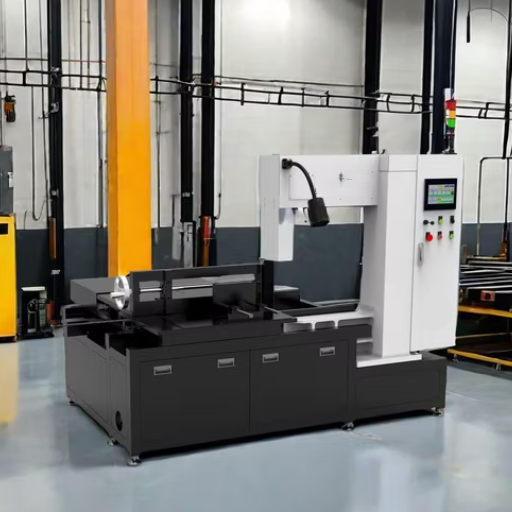
The mechanism of the graphene wire saw revolves around the extraordinary characteristics of graphene, which is an allotrope of carbon in a two-dimensional space with a single atom layer thickness. Graphene possesses an extremely high length-to-width aspect ratio and high compressive strength in comparison to steel. In wire saw technology, these unique molecules offer a means of facilitating ultra-fine cutting-edge resolution. The ability to conduct heat leads to higher effectiveness, allowing the user to cut with such tools without causing any deformation due to excess mechanical load. Therefore, such qualities render the graphene wire saw as a very effective and green form of material technology, which is characterized by enclosure tolerance.
Molecular structure and properties of graphene
Graphene is a flat, monocrystalline carbon compound, where carbon atoms are closely packed in a honeycomb arrangement. Such a molecular structure implies robust covalent bond interactions between basal carbon atoms, which impart very high mechanical strength and durability. Graphene has notable characteristics; for instance, its tensile strength is more than a hundred times that of steel (about 130 GPa), it has a high elastic modulus, and is very ductile. This is because it conducts electrons very well, with its mobility reaching in excess of 200,000 cm²/V·s at its best. In addition, thermal conductivity in graphene also counts as one of the highest, approximately 5,000 W/m·K. These characteristics, together with considerable transparency and total gas impermeability, provide an edge in the use of graphene wire saw in building hardware, nanotechnology development, and electronics.
How graphene’s tensile strength enhances cutting precision
The tensile strength of Graphene is among the highest of materials ever produced, with figures reaching nearly 130 GPa. Such uniqueness, alongside the thinness at an atomic level and flexibility, allows for the cutting precision at a nanoscale to be exact. When applied as a cutting tool, such as a blade, its graphene’s robustness ensures that hardly any wear or deformation occurs, meaning it stays sharp for longer periods. The smoothness on the atomic scale structure reduces the friction while cutting, hence a clean incision can be carried out. Such features of graphene make it one of the most attractive candidates for its applications in various areas of industry, such as electronics, medicine, or materials processing, where the highest level of precision is required, including sawing with a graphene wire saw.
Role of graphene’s thermal conductivity in reducing cutting flaws
The notable thermal conductivity of graphene, which is more than 5000 W/m·K, allows the reduction of cutting defects through the effective distribution of heat during cutting. Ordinary heat generated in conventional cutting processes may cause distortion, stress from heat, or cause uneven cuts. Meanwhile, the rapid heat flow and distribution by graphene ensure that there are no high spikes of temperature in one location, and the material being cut remains intact. This is suitable especially in fields that require high precision since the performance is highly controlled, efficient cutting is enhanced, and minimal damage is done to the tool and the work being cut.
Applications of Graphene Wire Saws Across Industries
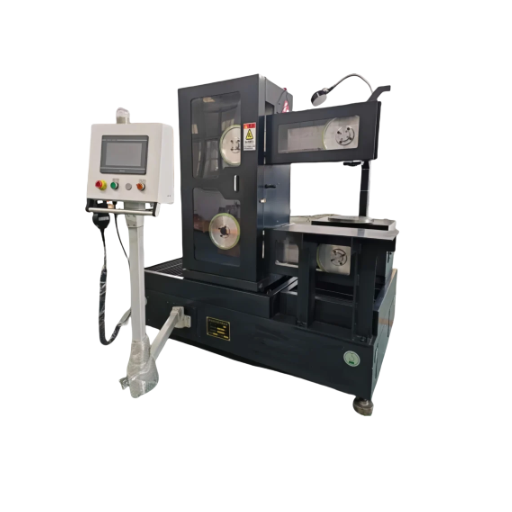
Due to the precision, tenacity, and thermal properties, graphene saw has wide uses.
The electronics industry: Uses the semiconductor saw for cutting material such as silicon in very precise cuts, which is useful to make microchips and other high-quality components without generating too much waste.
Aerospace sectors: Needed for cutting composites and metals in manufacturing airplanes and space vehicles, which cuts perfectly without causing wear and tear in the materials.
Manufacturing of medical instruments: Applied in the formation of complex parts used in surgical instruments, tools, and implants, where precision and dependability are essential.
Solar energy: Applied for efficient wafer dicing of wafers to use in solar cell manufacturing, thus increasing the energy conversion rates and decreasing the expendable loss of the materials.
All these applications are particularly elaborated to show the contribution of the graphene wire saw to the innovative development of essential industries for their mother earth, providing optimum savings.
Semiconductor and electronics manufacturing
The use of the graphene wire saw is one of the most efficacious recent technologies that have much advanced the primary goals of semiconductor and electronics processing, which is zero defects. This is for the reason that these monolithic ground machines can make use of extremely thin blades, which can result in such devices being ground with fewer and or acceptable micro-cracks and/or other defects. The level of accuracy with which these blades operate also affects the efficiency and effectiveness of the process, as it aids in optimization of a given resource (cost effectiveness) and also helps eradicate waste during the process of wafer fabrication. Besides, the option of doing a more precise cut is always welcome in today’s advancing technology, particularly within such a fast-paced electronics sector that keeps demanding components with better performance capabilities in lighter, smaller, and thinner sizes. This new approach facilitates manufacturing operations and efficiency activities while not compromising the rigorous action plans envisaged in both electronic and semiconductor manufacturing.
Use in solar panel and battery development
Graphene wire saw represents one of the many useful Instrumental Technologies to improve productivity and scalability for both photovoltaic and battery enterprises. Talking about the photovoltaic modules, a graphene wire saw comes in handy for the purpose of subdividing silicon blocks into thin pieces called ‘wafers,’ so wastage in material is considerably diminished, and the output is rather more than before. This strategy helps in the fabrication of photovoltaic modules with superior efficiency in converting sunlight into electric current. Along these lines, tools like wire saws are used in batteries where they serve the purposes of forming and cutting key battery parts like the electrodes, which have to be very precise. This helps in making way for developed batteries that have more energy density, a longer lifespan, and better performance. The capability level of the wire saw allows fit manufacturing in line with manufacturing schedules that are affordable, as well as the quality and precision levels demanded by the renewable industry.
Cutting-edge applications in the aerospace and medical fields
Multifunctionality, for many industries, is not achievable for a long time, especially within the sphere of microelectronics and electromagnetic equipment, where cable cutting machines play the most important role. The aerospace industry, however, has incorporated the use of wire saws in cutting-edge materials, including composites and metallics such as titanium and nickel superalloys, which are used in manufacturing components with higher performance levels, e.g., turbine blades and other structural components. Thus, any backlash against asbestos-free cuttings, no-sew tapes, wrinkles, and events explains the quasi ‘mass weight’ or heavy-duty styles adopted in the industry.
In the medical industry, proper equipment developed for cutting and treating materials like stainless steel, cobalt-chromium alloys, ceramics, and other biomedical materials, just like wire saws, is also used in manufacturing precise engineering devices such as stents, bone screws, and prosthetic limbs. The wire saws used in the medical field allow machining of biocompatible materials such as stainless steel, cobalt-chromium alloy materials, and ceramics with exceptional detail for an appropriate application in particular cases. Furthermore, wire saws permit new avenues in microfabrication – a key factor in the production of microinvasive surgical instruments as well as implantable objects. That level of control and flexural capacities is what makes wire sawing technology so indispensable to the more complicated requirements that these more sensitive industries impose.
Advantages of Using Graphene Wire Saws
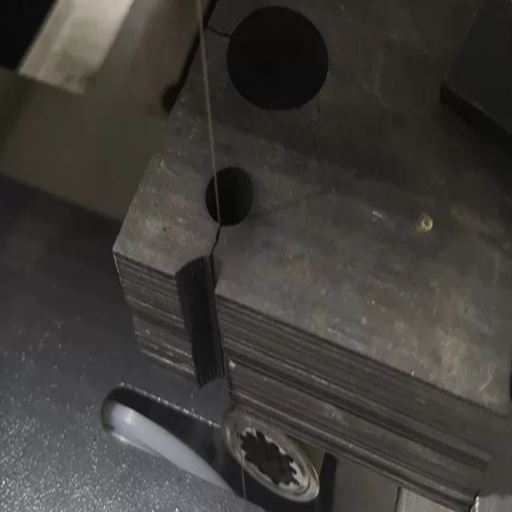
Superior Strength and Longevity
There is no denying that these wire saws made of graphene are too strong and durable in comparison with conventional materials. They wear down to a lesser extent, and therefore, the service life of such wires is quite high.
Accurate Cutting
The dimensionless and shape-sunken sea of graphene cuts parts into extremely precise dimensions, minimising losses and saving valuable parts for making any complicated manufacturing elements.
Resistance to High Temperatures and Chemically Aggressive Deformations
Due to its enhanced thermal conductivity and extreme chemical inertness, graphene can be applied in fields with harsh conditions and multiple types of materials.
Cost-Effectiveness
Graphene wire saw limits the overall cost of production since material losses are minimal, and operational efficiencies are high.
Flexible
Also, the use of the graphene wire saw is done in many other existing technology that covers the semiconductor industry and even the manufacture of medical devices.
Unmatched precision and reduced material loss
Traditional methods of cutting materials can’t match the graphene wire saw when it comes to efficiency, thanks to its unique theory of the atomic scissors for its power, elasticity, and light penetration. Because even slight outward deviations are possible in any cuts since the construction thickness is very low, the precision of the cut extends also to the micro and nano levels. This reduces raw material wastage as less gets damaged in the step of cutting and shapes more of the appropriate boundaries. In addition, being able to withstand wear and tear is not mandatory for graphene, as it is completely functional and its temperature does not change, is vitrified, etc. This is why the final cut not only adds to precision but also enhances material conservation cost-effectively and sustainably for the purposes of industry practice, where precision is highly important.
Enhanced durability and energy-efficient operations
The need for increased longevity in the harsh conditions of an industry is achieved as a result of innovative designs and materials. For example, the use of modern technologies, extreme materials like graphene, metal matrix, or advanced ceramics enables the maximization of the life time of components since their wear resistance properties, corrosion, and prevention of high temperature stress properties are augmented. It all reduces the cost of operation, since the work equipment will not need to be repaired or replaced often.
The operational reality in energy efficiency is powered by the application of new technologies such as precision automation systems and optimum design of machinery and equipment. This is made possible with improvements in motor performance, energy recovery systems for non-motor parts and motion parts, and new high-performance lubricants. Further, interactive systems of real-time monitoring help to locate potential wastes in a time frame, allowing solutions before the addition of extra resources. This set of solutions provides sustainable operations with long-term stamina at reduced costs of energy and environmental footprints in various industries.
Comparison with traditional cutting technologies
Each of the conventional cutting devices, including the mechanical saw and any form of drilling machine, requires the tool, which causes wear, and the workpiece to encounter each other physically. They generate more vibrations, consume much power, and are not as precise as the present solutions. On the other hand, modern cutting methods such as the laser, abrasive water jet, or plasma cutting use either non-contact techniques or high precision techniques, which do not strain the material so much. Thus, in laser cutting, very high precision is achieved by applying heat in a predefined way, whereas water jet cutting allows to produce precise and cold cuts without any heat operation in the process. Also, such modern operations incorporate automation, which improves the quality of the work and allows for efficient manufacture of very complex shapes. With the emerging cutting techniques, higher efficiencies, better material utilization, and less downtime than with conventional methods.
Development and Challenges in Graphene Wire Saw Production
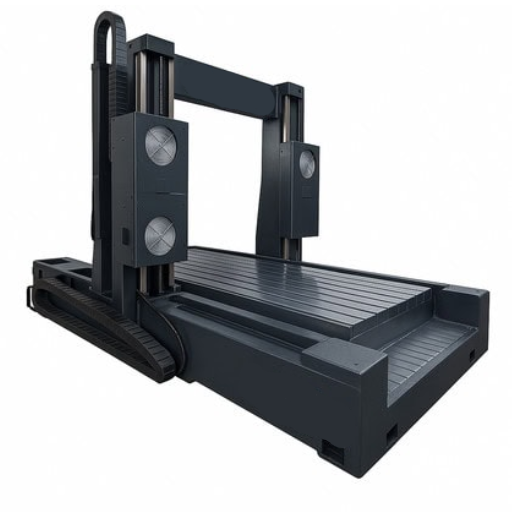
The innovative work done on the production of graphene wire saw has been hinged on its mechanical properties useful in WIRE machining—its strength and flexibility, and the useful application of its thermal energy in cutting. Nowadays, industry experts are faced with the task of aligning the quality of the graphene produced, and consequently the tensile properties, on eye-sized wire saws for use in hard materials like semiconductors and hard crystals.
There is an urgent need to address a number of issues that limit the greater use of the technology. The main barrier is linked with graphite and concerns scalability during production processes; another concern is pure technology – maintaining quality levels throughout the manufacturing process, as well as the economic costs of raw material – graphene. Moreover, attention should be paid to the wear characteristics of graphene wires, especially when subjected to prolonged abrasion in processes. To resolve these issues, more progress should be made in the field of materials science, inexpensive fabrication techniques, and polymer science by also improving fabrication controls.
Current advances in graphene manufacturing techniques
During the period under review, graphene manufacturing facilities have been improved to increase the scale of production, lower capital expenditure, and also enhance the quality of the commodities. The most recent advancement in this field is the invention of methods of chemical vapor deposition (CVD), i.e., the ability to produce high-quality, large-area sheets of graphene on different substrates. Such advancements in this particular technique have led to aims of generating more income from it and less waste of the commodities in the process, hence making it more economically practical. Another revolution in graphene development is the development of electrochemical exfoliation, which is a less hazardous and economical technique of surface modifying graphite and obtaining graphene. On the other hand, efforts are being made to develop roll-to-roll graphene production systems so as to synthesize this material in bulk quantities suitable for use in electronics and many other gadgets that are made using this material. These approaches, therefore, have made great strides in combating some of the spill-over effects of filling the void of enhancing research in the graphene wire saw fabrication.
Challenges in scalability and affordability
Maintaining production quality at large scales and cheap manufacturing have always been challenges in my estimation. Among other reasons, it has been because fabricating more than one quality layers requires advanced machinery, which is very expensive. The roll-to-roll process of fabrication has shown some successes; however, the problems of cost reduction and multifunctionality of the material make the industrial application of the graphene wire saw impossible. These factors need to be addressed through research and development aimed at improving manufacturing processes and materials.
Ongoing research and prospects
Graphene remains one of the most vital materials currently being developed from a research point of view, as there continues to be significant interest as to how this particular material can be developed cheaply and on a massive scale. This has brought about the exploration of production techniques like chemical vapor deposition (CVD), liquid-phase exfoliation, and electrochemical synthesis, which have been in existence since the inception of graphene. The focus of studies within these techniques, however, is mainly on improving or refining them for use in industry. Research groups have also embarked on the identification of hybrid or composite materials that possess the goal to utilize the useful features of graphene in specific industries such as advanced composites, flexible electronics, and energy storage, among others.
Graphene is a material with great potential, and it is expected to help make great strides in such areas as alternative energy, for instance, by making solar cells and storage devices more efficient, or biomedical sciences, such as targeted delivery or biosensing components, or even in the manufacture of next-generation electronics, having reduced and enhanced components. Some obstacles still exist because some problems need attention, like the advantage of upscaling the production and making it inexpensive, however, with accelerative progress in materials and nano-technology, it may be safe to assume that in the next few years, the technologies will be in a mature stage and it can be half a decade from now that graphene wire saw achieves the status of a material of the balms.
Reference Sources
Multilayered graphene grafted copper wires
This study demonstrates that graphene can protect copper wires from thermal degradation and enhance their mechanical and electrical properties. The addition of graphene layers improves the durability and performance of copper wires.
Advancing Copper Wire Technology: Graphene/Cu Composites for Superior Conductivity and Strength
This paper explores the use of graphene oxide (GO) in copper composites to achieve uniform dispersion and enhance conductivity and strength. It highlights the potential of graphene in advancing wire technology.
Frequently Asked Questions (FAQs)
What exactly is a diamond wire saw, and how does it operate in machines used to slice graphite?
The diamond wire saw is a particular type of abrasive cutting process that uses a diamond-impregnated wire in a loop to accurately cut hard materials like graphite, ceramic, and silicon. In graphite and diamond wire cutting machines, however, the diamond wire travels at a high speed over the desired location in the workpiece, while the coolants help to keep waste heat to a minimum and also clean debris off the surface. Machines operating with CNC wire saws enable efficient cutting of profiles to the desired degree of accuracy and high reliability, which is the reason why graphite and diamond block cutting in a precise manner is carried out using them instead of other tools with low waste and sharp edges.
What should I go for for slicing the graphite blocks with high precision: a diamond saw with one wire or with endless wires?
High-efficiency cutting with endless diamond wire saws and optimal utilization of materials should be easy. The wire-driven high-precision graphite and graphite blocks cutting machine is characterized by a continuous wire, thereby achieving constant kerf, and vibrations are negligible. Such cutting machines are lined up automatically in the production process and able to cut even big blocks with the similar advantage of less weight and enhanced efficiency than with abrasive blades or even electrical discharge machining. Precision, velocity, and effective coolants for such machines are traits most requested by manufacturers to enhance the form of the processes and protect the components from thermal hot spots, significantly enhancing thermal stresses.
How does the performance of the diamond wire cutting machine compare to other cutting methods in cutting brittle materials?
Diamond wire cutting machines are optimally suitable for cutting graphite, quartz, ceramics, silicon, and other brittle materials, as the diamond particles on the wire remove material through abrasion and not fracturing. In comparison with sawing, milling, or electrical discharge machining, the use of diamond wire cutting results in less kerf loss and less chipping or burrs. In ceramic production as well as in the manufacturing industry, topographic diversity is achieved efficiently via this method without generating much heat and without any tendency for highly cumbersome and highly accurate profile cutting.
Will advanced CNC-driven wire saw machines help improve precision, along with automated graphite operations?
Indeed, this incorporation of CNC allows the wire saws to switch to any complex cutting profiles at a repeatable high precision, which engineers can control. Also, engineers can program the shapes and profiles for cutting electrodes or the manufacture of complex components from graphite blocks or different elements at once if they have programmed several different profiles. The CNC wire saw machines can also increase productivity as it is programmed with feeding parameters, wire speed, and tension, and reduce the operator’s effort to a large extent, which perfectly meets the requirements of the high technologies sector.
For what type of cutting processes are such diamond wire saw cutting machines usually utilized, or in which markets are they used?
Use of diamond wire saw cutting machines is widespread in as many industries as metallurgy, semiconductor compound fabrications, ceramics processing, and even graphite. Electrode cutting, slicing silicon wafers, cutting graphite cubes, carborundum quartz, and machining hard ceramic are common. Due to their very high level of adaptability and efficiency in cut they are the most preferred processes of most companies that seek the best cutting equipment for precision and high production processing.
What is the comparison between endless wire cutting technology and diamond wire cuts in terms of durability and productivity levels?
The usage of endless diamond wire for cutting operations eliminates the need to change consumable parts. This, in effect, promotes consistently higher cutting efficiency as there is less downtime. The lifespan is dependent on the wire quality, diamond concentration, and appropriate use of coolant. In order to improve the shelf-life and smooth operation of the saw machine, more advanced diamond wire compositions are employed, and a proper wire saw machine tension is maintained. On the other hand, the endless wire system from a leading brand is efficient in heavy-duty sectioning of graphite or any other type of blocks, as it offers high-speed cutting while producing less waste and frequent overhauling of the slicer.
When operating a diamond wire saw, what are the parameters that influence the degree of accuracy, kerf widths, and cleanness of cut?
A variety of elements affect kerf tightness and cutting precision: the size of the diamond grains, as well as that of the steel wire; linear structures of the frames; CNC aggregator base; tension (stretching of the processed or cut surface); the rate of applying pressure while cutting; and efficient use of coolant for saw blades. Mechanical wire saws, which are precisely scaled and prototyped to accomplish more efficient cutting, along with adequate coolant flow through the ingenious design, significantly decrease temperature rise and avoid chipping with narrow kerf walls having neat entry edges after cutting. One has to not only take the proper cutting fittings – wires in this case – but also to adjust them with the cutting parameters in order for the reduction of profile details as well as complex geometric figures to be produced with high accuracy.
What measures do diamond wire saws employ during operation to cope with temperature, coolants, and waste materials cut off?
Diamond wire saw systems have a controlled direction of coolants so they can cool and lubricate the cut zone, as well as rinse away abrasive slurry and pieces of material. Good coolant management reduces temperatures, thus preventing both thermal damage and loss of wire. The majority of contemporary machinery is equipped with different filtration and recycling mechanisms to ensure that the coolant is clean for the duration of the process and the cut is not affected in any way, therefore increasing productivity in the industrial cutting practices of graphite as well as ceramics.
What factors should the manufacturers and designers take into account when selecting diamond wire cutting systems?
The workpiece’s material, be it graphite, ceramics, or silicon, the accuracy needed in the end product, the number of components, and the thickness of the cut must all be addressed by the manufacturer. Perhaps, the selection of an appropriate diamond wire (in terms of grit, bonding) or machine configuration (vertical or horizontal CNC capacity), or the degree of automation required and the extent of optimization that the respective manufacturer offers, comes into question. Good machines for cutting using a graphene wire saw have an optimal ratio of speed, efficiency, and costs; however, they perform well, as it is expected, in the industrial sector, making or processing parts.
Trending Blogs

![Polysilicon Material: Properties, Grades & Uses [Guide]](https://wiresawcutter.com/wp-content/uploads/2026/08/polysilicon-material-featured-150x150.webp)