
Get in touch with DONGHE Company


Single Wire Saw vs Multi Wire Saw: Which Diamond Wire Cutting Machine Fits Your Application?
A competitor analysis comparing a single wire saw to a multi wire saw touches every aspect of precision processing from cut quality (precision surface roughness) to production throughput to long-term cost per part. Both machine types cut hard and brittle materials with diamond-impregnated wires, but one uses a flexible path to carve a narrow trail, while the other takes the entire forest. This has a side-by-side breakdown of the quantifiable variances across 6 dimensions and corroborated research data, so you can evaluate which wire saw machine will ultimately satisfy your cut specification.
Quick Specs: Single Wire Saw vs Multi Wire Saw
| Wire Count | Single: 1 diamond wire loop | Multi: 16–1,000+ parallel wires |
| Wire Diameter Range | 0.10–0.50 mm (diamond-impregnated or electroplated) |
| Typical Kerf Width | 0.15–0.30 mm per cut |
| Surface Roughness (Ra) | 0.13–0.82 μm depending on material and parameters |
| Materials Cut | Silicon, SiC, sapphire, ceramics, glass, graphite, advanced composites |
| Production Scale | Single: 1–5 cuts/run | Multi: 100–1,000+ wafers/run |
What Is a Diamond Wire Saw and How Does Wire Saw Cutting Work?
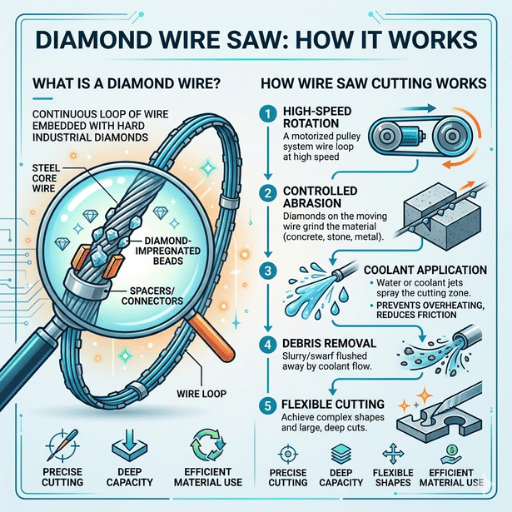
A diamond wire saw is a precision cutting machine that uses a continuous diamond-impregnated wire to slice through hard and brittle materials. Unlike traditional blade saws that rely on rigid disc geometry, diamond wire saw cutting works by pulling a thin wire — typically 0.10 to 0.50 mm in diameter — embedded with diamond particles across the workpiece surface. The diamond abrasive does the material removal while the wire acts as the carrier.
Single-wire machines run one continuous loop of diamond wire through a guided cutting path. Operators reposition the workpiece or change cutting angles between runs, making these machines well-suited for irregular shapes, prototypes, and small-batch precision work. Multi-wire machines stretch dozens to over a thousand parallel wires across a wire web frame. All multiple wire paths cut simultaneously during each pass, producing hundreds of uniform slices from a single ingot or block.
All diamond wire cutting systems operate with three precisely modulated variables: wire speed (m/min), workpiece feed speed, and wire tension. As shown in a 2024 peer-reviewed publication in the journal Materials (MDPI), decreasing wire speed while increasing feed speed simultaneously increases top surface roughness and subsurface micro-cracking damage depth (SSD). This relationship governs the cutting process for both configurations, and operators must account for different sets of cutting parameters in single-wire versus multi-wire setups.
Both types of wire saw machines support the same semiconductor and advanced materials — silicon, silicon carbide, sapphire, optical glass, ceramics, and graphite — but they differ in cutting speed, cutting accuracy, and long-term cost per part for material processing applications.
Single-Wire vs Multi-Wire Saw at a Glance
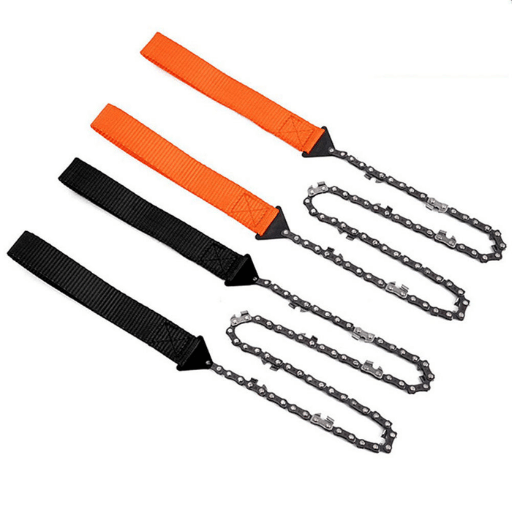
Below is a comparative overview of how the single-wire and multi-wire run. These characteristics are the critical purchasing criteria in this investment because they are of measurable value to the user.
| Parameter | Single Wire Saw | Multi Wire Saw |
|---|---|---|
| Wire Configuration | 1 continuous loop | 16–1,000+ parallel wires |
| Cuts per Run | 1–5 pieces | 100–1,000+ wafers |
| Surface Roughness (Ra) | 0.13–0.53 μm (tighter control) | 0.27–0.82 μm (wire-to-wire variance) |
| Kerf Width | 0.15–0.25 mm | 0.15–0.30 mm |
| Setup Time | 15–30 minutes | 2–4 hours (wire web threading) |
| Cutting Flexibility | Complex shapes, angled cuts, curved paths | Straight parallel cuts only |
| Machine Price Range | $15,000–$80,000 | $145,000–$300,000+ |
| Best Application | R&D, prototyping, small-batch precision | Mass production, wafer manufacturing |
Absolute values rather than relative comparisons appear below because engineering procurement decisions require numbers, not adjectives. Each of the following six sections explores one dimension in detail, with source references for every data point.
Cutting Precision and Surface Quality Compared
Surface finish quality is often the deciding factor when selecting between a single-wire and multi-wire diamond wire cutting machine. Measurable differences come down to wire tension control: a single-wire system manages tension on one wire, while a multi-wire system must maintain uniform tension across every wire in the web simultaneously.
Published research confirms the precision gap. A National Institutes of Health study on monocrystalline silicon sawing recorded surface roughness values of Ra 0.53–0.82 μm under standard multi-wire conditions with 120 μm diameter wire at feed speeds of 0.18–0.54 mm/min. A separate MDPI study on silicon nitride ceramics measured Ra 0.27–0.38 μm using controlled single-wire cutting parameters. For sapphire substrates, researchers achieved Ra as low as 0.128 μm using rocking-mode single-wire saw technology — a 55.6% improvement over standard reciprocating cuts.
| Material | Single Wire Ra (μm) | Multi Wire Ra (μm) | Source |
|---|---|---|---|
| Monocrystalline Silicon | 0.27–0.53 | 0.53–0.82 | PMC / MDPI 2024 |
| Silicon Nitride Ceramic | 0.27–0.38 | 0.40–0.60* | Micromachines 2023 |
| Sapphire (rocking mode) | 0.128 | N/A (not typical) | Solar Energy Materials 2020 |
*Estimated range based on multi-wire tension variance factors reported in literature.
Subsurface damage matters equally. Predictive modeling (SSD = 21.179 Ra4/3) shows that even a small increase in surface roughness leads to disproportionately deeper microcrack damage beneath the cut surface. For semiconductor applications where wafer integrity determines chip yield, single-wire systems generally maintain tighter tolerances because the operator controls exactly one wire tension variable instead of managing variance across hundreds of parallel wires.
📐 Engineering Note
Wire tension tolerance directly governs cut accuracy. Single-wire machines typically hold tension within ±0.5 N across the cutting zone. Multi-wire systems with 500+ wires may experience ±2–5 N wire-to-wire variance, which translates to thickness variation of ±5–15 μm across the wafer batch. Reference: ISO 4287 defines Ra measurement methodology for machined surfaces.
Throughput, Production Capacity, and Cutting Speed

Multi-wire saws dominate high-volume production because they perform hundreds of parallel cuts in a single pass. A production-grade multi wire cutting machine for silicon wafering runs wire speeds exceeding 2,400 m/min and can produce over 25 wafers per minute during continuous operation. Single-wire machines, cutting one piece at a time, cannot match this volume — their strength lies in cutting efficiency per job changeover rather than raw volume.
1–5
Cuts/Run (Single Wire)
100–1,000+
Wafers/Run (Multi Wire)
2,400+ m/min
Multi Wire Speed
But throughput alone does not always favor multi-wire. It takes 2-4 hours to set up a multi-wire machine to cut the same wafer type in lots of dozens or hundreds. Wire threading and tension calibration across the full web eat 2–4 hours before the first cut begins. That’s fine for continuous operation of whatever wafer type is standard at that line, but for flexibility in Job Production Lab, the setup costs detract from actual throughput instead of enabling it.
💡 Pro Tip
Less always more. For single prototype runs, complex shape cutting, rapid material change stops and start, a single wire saw with a single spindle completes the task quicker than a multi-wire machine thread its wire web. Base throughput figures on actual job content not peaks.
In semiconductor manufacturing, multi-wire saws handle the bulk of silicon ingot slicing where cutting efficiency is measured in wafers per hour across production shifts. In R&D labs, aerospace sample preparation, and medical device prototyping, single-wire machines deliver more flexibility for complex cutting paths and rapid material changes without the production overhead of multi-wire calibration.
Kerf Loss, Material Waste, and Cost per Cut
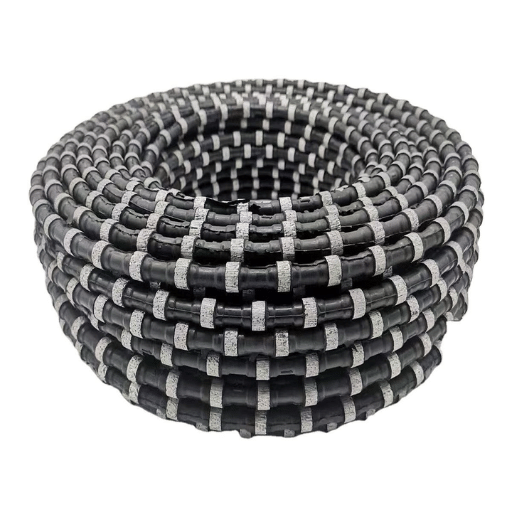
Every cut destroys material. The amount of that destruction—the width of what is a narrow gutter (called a “kerf”)—comes straight out of the usable input stock. diamond wire cutting technologies have kerfs only 0.15-0.30 mm wide, which is a tenth of the width of conventional blade saws (1.0-1.5 mm) or band saws (0.8-1.2 mm). This minimal material loss is one reason that single-wire and multi-wire saws have become the default equipment for cutting hard and brittle materials such as silicon carbide or sapphire.
| Metric | Single Wire Saw | Multi Wire Saw | Conventional Blade |
|---|---|---|---|
| Kerf Width | 0.15–0.25 mm | 0.15–0.30 mm | 1.0–1.5 mm |
| Material Yield (m²/m³) | 50–55 | 50–55 | 38–47 |
| Material Saved vs Blade | 60–70% | 60–70% | Baseline |
| Cost per Cut (wire only) | $0.03–$0.10 | $0.001–$0.005 | $0.50–$2.00 |
Per-cut cost differences between single and multi-wire saws widen dramatically at scale. diamond wire consumables cost roughly $1,000 for every 30,000 meters of wire. If a multi-wire machine divides that wire over 500 simultaneous cuts, the average cost per piece is one that single-wire machines can’t touch in production. If your output is ten to fifty pieces—not ten to fifty thousand—the difference can be buried in startup labor overhead.
One 2025 study in Measurement journal developed a predictive model for excess kerf loss caused by lateral wire vibration, achieving prediction accuracy within 7% of experimental results. Controlling wire vibration is simpler on single-wire systems (one wire to monitor) but more critical on multi-wire systems where one vibrating wire can affect adjacent cuts through the dense cutting network.
Machine Investment, Maintenance, and Return on Investment
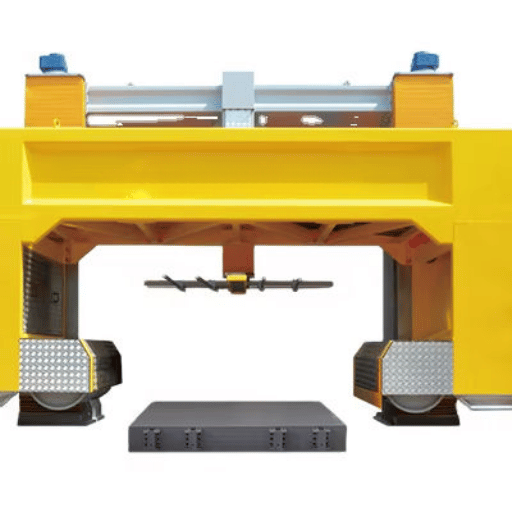
Up-front capital spans an order of magnitude between single-wire and multi-wire saws. Entry-level single wire saw machines start at $15,000–$30,000 for laboratory-grade units, with production-capable models reaching $50,000–$80,000. Semiconductor-grade multi-wire saw machines command $145,000–$300,000+, and fully automated configurations exceed $500,000.
| Cost Category | Single Wire Saw | Multi Wire Saw |
|---|---|---|
| Machine Price | $15,000–$80,000 | $145,000–$300,000+ |
| Annual Wire Consumable | $2,000–$8,000 | $15,000–$50,000 |
| Operator Skill Level | Trained technician (1-week training) | Specialist engineer (multi-week training) |
| Floor Space | 2–4 m² | 8–20 m² |
| Typical Payback Period | 6–18 months (at >200 cuts/month) | 18–36 months (at >5,000 wafers/month) |
Maintenance requirements differ in complexity, not frequency. Single-wire machines need regular wire tension calibration, guide wheel inspection, and coolant system monitoring — tasks a trained operator completes during routine checks. Multi-wire machines add wire web alignment verification, multi-channel tension balancing, and coordinated wire replacement scheduling. Diamond wire wear rate depends on the material being cut, wire speed, feed rate, and coolant quality, so maintenance schedules must be calibrated to actual cutting parameters rather than fixed time intervals.
ROI Calculation Framework
- Monthly output—how many cuts or wafers do you need each month?
- Material value per item—sapphire, SiC, etc.—higher value material justifies tighter kerfs
- Number of material changeovers—more than 3 a week favors single-wire
- wire consumption + labor per cut—calculate total early amortized cost including setup labor
- Breakeven point — Machine price ÷ (revenue per cut − cost per cut) = months to payback
Which Wire Saw Should You Choose? Decision Framework
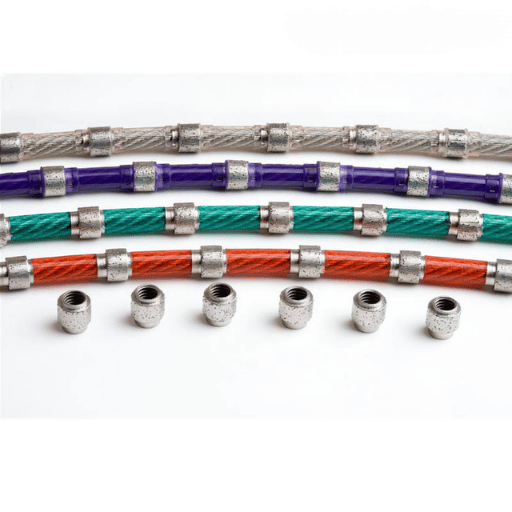
Selecting the right machine depends on four variables: production volume, precision requirements, material type, and budget constraints. This decision framework maps each variable to a clear recommendation.
✔ Single Wire Saw Advantages
- Tighter precision control (Ra ≤0.53 μm achievable)
- Flexibility for complex cutting paths and rapid job changeovers
- Lower capital investment ($15,000–$80,000)
- Compact footprint (2–4 m²)
- 15–30 minute setup between jobs
- Faster ROI recovery at volumes under 500 cuts/month
✔ Multi Wire Saw Advantages
- Massive throughput (100–1,000+ wafers per run)
- Lower cost per unit in high-volume production ($0.001–$0.005/cut)
- Consistent batch uniformity across hundreds of slices
- Automated CNC operation reduces labor cost per unit
- Industry standard for semiconductor and photovoltaic wafer manufacturing
- Material yield of 55 m²/m³ at production scale
- ✔
Volume under 500 cuts/month + multiple materials? → Single wire saw - ✔
Volume over 5,000 wafers/month + same specification? → Multi wire saw - ✔
R&D prototyping with irregular shapes? → Single wire saw - ✔
Budget under $100,000 for initial machine? → Single wire saw (or used multi-wire) - ✔
Silicon ingot or SiC boule slicing at scale? → Multi wire saw
Facilities progressing from R&D to production often start with a single-wire saw machine for process development, then add in multi-wire capacity once they have confirmed control parameters and secured volume procurement contracts. This staged approach reduces upfront risk while building in-house expertise with diamond wire cutting operations and delivers a stronger return on investment over the machinery lifecycle.
Require assistance determining the best diamond wire cutting machine for your application? Partnering with DONGHE, our engineers can recommend a configuration optimized for your volume, material and precision demands.
About This Analysis
This analysis draws on high-impact peer-reviewed publications, published equipment specs sheets and more than 10 years of DONGHE diamond wire saw engineering. All single-wire and multi-wire cutting machines are built in our factory here in Shanghai – thus our recommendation for your needs will relate solely to your production volume and required cut geometry and not simply which of our machines has a higher sticker price. The Kerf and surface roughness figures analyzed in this article are the work of researchers publishing in Materials (MDPI), Micromachines and Measurement between 2020 and 2025.
Frequently Asked Questions
Q: What is the difference between a single wire saw and a multi wire saw?
View Answer
A single wire saw runs one diamond wire loop through the workpiece — one cut at a time, full operator control. A multi wire saw stretches hundreds of parallel wires across a frame to cut that many slices in one pass. Single-wire favors precision and flexibility; multi-wire favors volume and lower per-unit cost.
Q: How do kerf losses compare between single-wire and multi-wire saws?
View Answer
Both single-wire and multi-wire saws produce kerf widths of 0.15–0.30 mm. The gap between the two is about 0.05 mm — marginal. Where yield separation shows up is in total recovery per block: multi-wire machines with thin diamond wire (0.12 mm diameter) recoup 60–70% more feedstock than blade cuts.
Q: What is the production capacity of a multi-wire saw machine?
View Answer
Production-grade multi-wire saw machines handle 100 to over 1,000 wafers per run, with wire speeds above 2,400 m/min. Daily output per machine reaches several hundred wafers during continuous semiconductor operation. Actual throughput depends on target wafer thickness, material hardness, and surface finish requirements — thinner wafers and harder substrates slow the feed rate.
Q: What is the wear rate of diamond wire in saw cutting?
View Answer
Wire wear depends on the material being cut, wire velocity, feed rate, and coolant quality. Feed speed and total wire length under tension are the dominant variables affecting wear rate. Silicon carbide wears diamond wire faster than softer ceramics. Consumable cost runs about $1,000 per 30,000 meters, and replacement is triggered when abrasive degradation pushes surface roughness past the application tolerance. For high-volume multi-wire operations slicing 200+ wafers daily, wire replacement intervals typically fall between 8 and 24 hours of cumulative cutting time depending on substrate hardness and wire diameter.
Q: Can a single wire saw handle the same materials as a multi-wire saw?
View Answer
Yes. Both machine types cut the same materials — silicon, SiC, sapphire, ceramics, glass, and graphite. The wire does the cutting regardless of configuration. Where they differ is shape flexibility and volume.
Q: What maintenance does a multi-wire saw machine require?
View Answer
Multi-wire saw maintenance covers daily coolant system checks, guide roller and bearing inspections, wire web tension verification across all channels, and scheduled wire replacement based on wear monitoring. Complexity scales with wire count — a 500-wire system requires tension calibration across all 500 channels versus a single adjustment on a single-wire machine. Most manufacturers recommend monthly preventive maintenance inspections covering the wire feed mechanism, tension sensors, and CNC control system calibration. Coolant filtration and flow rate monitoring also need weekly attention because contaminated coolant accelerates diamond particle loss and degrades surface finish quality. Wire web alignment should be verified after every 40–60 hours of cumulative cutting time to prevent thickness drift across the wafer batch.
Q: Is a single wire saw better for R&D and prototyping?
View Answer
For most R&D and prototyping applications, certainly. single-wire machines provide a 15-30 minute changeover time between jobs (compared to 2-4 hours for multi-wire), have a greater ability to cut complex geometries as well as irregularly shaped pieces, and cost $15,000-$80,000 as opposed to $145,000+ over the lifetime of the multi-wire system. Small research laboratories that process a relatively large number of samples from different materials each week can benefit from the quick changeover times. The reduced capital investment in the equipment also means a quicker return-on-investment when the monthly volume of finished parts is below 500 pieces.
References & Sources
- Prediction of Subsurface Microcrack Damage Depth Based on Surface Roughness in diamond wire Sawing of Monocrystalline silicon – National Institutes of Health / PMC (Material, MDPI 2024)
- Influence of diamond wire Saw Processing Parameters on the Sawn Surface Characteristics of silicon Nitride Ceramics – MDPI Micromachines (2023)
- A Full Review of diamond wire Sawing Process for Single-Crystal Hard and Brittle Materials – ScienceDirect / Journal of Manufacturing Processes (2024)
- Prediction of Excess Kerf Loss in diamond wire Sawing Based on Vibration Source Signal Measurement – ScienceDirect / Measurement (2025)
- Influence of Cutting Parameters on Wear of diamond wire During multi-wire Rocking Sawing – Frontiers in Mechanical Engineering (2022)
- Experiment Comparative Analysis of Feed Rate with Velocity Control in Cutting Mono Crystalline silicon – National Institutes of Health / PMC (2024)
Related Articles
- Single wire saw Technology: How diamond wire Cutting Works – deep dive into single-wire operating principles
- Types of Crystal Wire Saws Explained – full classification of wire saw configurations
- How diamond wire Saw Works: Working Principles Explained – wire tension, speed, and feed mechanics
- Silicon Wafer Cutting Guide – process parameters for silicon ingot slicing
- How to Choose a Single wire saw machine: Selection Guide – spec-by-spec buying criteria



![Polysilicon Material: Properties, Grades & Uses [Guide]](https://wiresawcutter.com/wp-content/uploads/2026/08/polysilicon-material-featured-150x150.webp)