
Get in touch with DONGHE Company
-
Phone: +86 181-1645-5490
-
Email: Sales18@DongheScience.com

Diamond Grit Size Selection for Glass Cutting

The selection of an appropriate diamond grit size determines cutting accuracy and operational effectiveness during glass cutting process. The diamond tool grit size determines the cutting performance and edge finish and productivity rate when you create detailed decorative items or work with industrial-grade glass materials. The guide provides you with a complete system that enables you to select the most suitable grit size for your specific requirements. The article provides complete information about grit size effects on glass cutting performance and durability and overall results which allows you to choose optimal solutions for improved outcomes.
Introduction to Diamond Grit Size
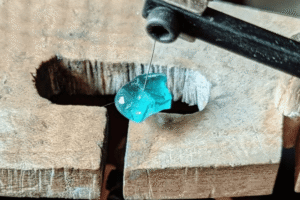
Diamond grit size refers to the granular measurement of the diamond particles which tool makers use to create their cutting and grinding and polishing equipment. Grit size uses particle dimensions to determine size classification because larger grit numbers result in finer particles while smaller grit numbers lead to coarser particles. Coarse grit serves as the primary choice for fast material removal and strong cutting operations, whereas fine grit enables accurate work and creates smooth surface results.
What is Grit Size?
Grit Size Measurement Standards
Grit size measures the amount of abrasive particles that sandpaper and other abrasive materials contain. The measurement system established by the Federation of European Producers of Abrasives (FEPA) and the Coated Abrasive Manufacturers Institute (CAMI) determines the quantity of abrasive particles that exist per square inch.
Coarse abrasives that enable heavy material removal show their properties through lower grit sizes which include 40 and 60 while finishing and polishing applications use higher grit sizes that show 400 and 600. The users need to select proper grit size because it works as essential step which helps them to accomplish their specific abrasive performance needs during material processing and surface texture development.
Importance of Diamond Grit in Glass Cutting
1
Precision in Cutting
The diamond grit material produces precise cutting results because its hardness enables it to cut through glass without any deviation from its intended path. This property is vital in industries such as optics and electronics, where tight tolerances are essential.
2
Reduced Material Waste
The diamond grit material maintains its sharpness while protecting against wear which results in less material waste during cutting operations. This process efficiency becomes more important when businesses operate their production lines at full capacity.
3
Tool Longevity
The extended tool lifespan results from diamond grit being embedded into tools because this material exhibits high durability. The tools sustain their operational performance across lengthy periods which results in reduced requirement for tool replacements.
4
Complex Shapes
Diamond grit enables the cutting of detailed patterns and complex glass shapes which architects and fine-art designers need for their work.
5
Enhanced Cutting Speeds
Diamond grit’s abrasiveness speeds up the cutting procedure which boosts productivity for industrial uses. This feature becomes especially important for manufacturing environments that require maximum efficiency.
Types of Diamond Grit
The classification of diamond grit takes place through its physical characteristics and structural features which enable its usage in specific industrial applications. The main classification system for diamond grit presents five different diamond grit types which serve various industrial purposes.
- Natural Diamond Grit: The irregular shape of natural diamond grit provides extreme hardness which enables it to execute demanding grinding and cutting operations. Natural diamond grit functions in environments which need materials that resist wear and secure thermal protection.
- Synthetic Diamond Grit: The creation of synthetic diamond grit arises from the HPHT process which produces diamonds with fixed dimensions and shape attributes through high-pressure and high-temperature conditions. The product finds extensive application within sectors that demand accurate results and constant performance levels.
- Resin Bond Diamond Grit: The grit functions only within resin bond systems. The material’s rounded structure together with its controlled friability properties enables smooth operations in cutting and polishing tasks which include tool sharpening and edge finishing work.
- Metal Bond Diamond Grit: Metal bond diamond grit develops its properties through engineered design which creates superior durability and thermal resistance together with high mechanical strength. The material serves grinding operations which involve metals and ceramics and granite.
- Coated Diamond Grit: This type features a layer of metallic coating which manufacturers apply to diamond particles using nickel or copper methods. The coating improves grit retention within the bond and enhances thermal conductivity which makes the product particularly suitable for high-speed machining tasks.
How Grit Size Affects Cutting Performance
The cutting efficiency of abrasive tools depends on their grit size because it determines three essential performance aspects: material removal rate and surface finish and tool durability. Operators use larger grit sizes which are shown by smaller grit number values (e.g., 24 or 36 grit) to perform rough grinding and shaping tasks that require strong material removal.
Coarse Grit Performance
The coarser grits provide effective cutting performance but they produce rough surface results which make them inappropriate for work that requires exact measurements.
Fine Grit Applications
The finishing process uses finer grit sizes which manufacturers express through higher numerical values (e.g., 100 or 200 grit) to create smoother surfaces that meet exacting specifications.
Industry Trends
Recent data indicates that industries focused on high-precision manufacturing, such as aerospace and electronics, increasingly favor finer grit sizes to meet the growing demand for enhanced surface quality.
Evaluating Grit Size for Different Glass Types
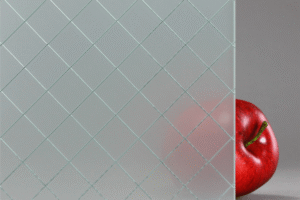
The evaluation of grit size for various glass types shows that coarse grits which range from 60 to 120 are effective for rough shaping while medium grits which range from 120 to 220 serve the purpose of edge refinement and fine grits which range from 320 to 600 create smooth surface finishes.
Advantages of Diamond Grit Saw Blades
Key Performance Benefits
1. Enhanced Cutting Precision
Diamond grit saw blades provide the best cutting performance because of their superior cutting precision. Their ability to cut with fine detail and tight tolerances makes them particularly valuable for industries such as aerospace, electronics, and automotive manufacturing. The diamond grit material reduces vibration while creating smoother cut surface finishes.
2. Superior Durability
The inherent hardness of diamond allows these blades to maintain their cutting efficiency over extended periods. The blades show outstanding resistance to wear because they can cut through challenging materials which include ceramics and composites and reinforced concrete, which extends their operational lifespan.
3. High Cutting Efficiency
Diamond grit saw blades cut materials at higher speeds than standard blades. This efficiency reduces operation times and improves productivity in high-performance environments. The cutting process benefits from reduced friction because it enables greater energy efficiency throughout production.
4. Versatility Across Materials
The blades can cut through multiple materials which include glass and granite and silicon and metals. The blades can handle multiple tasks without needing to change blades which helps to reduce downtime and streamline operations.
5. Reduced Heat Generation and Material Damage
Diamond grit application during cutting operations decreases heat accumulation which protects materials from thermal damage. The process creates fewer defects because of warping and microcracking, which helps produce a better quality surface that requires less secondary work.
Best Practices for Using Diamond Cutting Tools
Choose the Right Equipment Based on Material Requirements
Selecting the right diamond cutting tool needs to fit the specific material needs because this decision impacts both work performance and machine lifespan. Diamond tools need higher diamond content and tougher bond materials to cut through granite and concrete which are harder than other materials. Softer materials need softer bonds because this method enables ongoing material loss which creates new cutting surfaces.
Establish Cooling Systems and Lubrication Procedures
The process needs efficient cooling methods because these methods protect against overheating which damages materials and decreases tool efficiency. Water and approved coolant systems need to be used during cutting operations because these systems help remove operational heat. When cooling systems fail to operate correctly materials experience fast degradation while protective segments become detached from their base.
Adhere to Designated Operational Requirements
Diamond tools need to operate within designated speed and feed rate ranges to achieve their maximum performance capabilities. When equipment operates above design speed limits its performance decreases which results in worse cutting results and faster tool wear. Users need to follow manufacturer specifications to achieve the best operational results which include specific RPMs and feed rate settings.
Conduct Tool Inspections and Maintenance Activities
The process of inspecting diamond tools needs to take place at set times which allow for the detection of wear signs and damage and misalignment problems. The inspection process needs to identify all signs of uneven material wear and the existence of dull edges and any missing diamond segments. The tool maintenance process includes routine sharpening with specific abrasive materials which results in extended tool lifespan and reliable cutting function.
Implement Safety Procedures
Workers must follow safety protocols when using diamond cutting tools. Operators should always use appropriate personal protective equipment (PPE) including safety goggles gloves and dust masks. All tools must undergo secure mounting procedures while machinery guards need to maintain their operational status for accident prevention purposes.
Reference Sources
- Diamond Grit Size Guide: What It Means & Why It Matters – The article describes the method used to measure grit size and explains how this measurement affects cutting performance.
- Diamond Mesh Size Explained & How to Select the Best One – The article presents all available diamond grit sizes together with their respective cutting uses which include glass cutting.
- Recommend reading: Precision Glass Cutting Wire Saw for Industrial Excellence
Frequently Asked Questions
1. What Is Diamond Grit Size and How Is It Measured?
The measurement of diamond grit size refers to the size of diamond abrasives that have been electroplated or resin-bonded to the wire. The diamond size is expressed in the measurement system through diamond mesh numbers which indicate the size of diamonds. The mesh number indicates diamond particle size because a lower mesh number produces larger diamond particles. The higher mesh number (e.g., 400, 600) indicates that the diamond particle size has decreased to more fine dimensions. The selection of a specific grit size is a critical parameter that dictates both the material removal rate and the resulting surface finish.
2. How Does Grit Size Directly Impact Cutting Speed When Sawing Glass?
Grit size determines the speed at which the cutting process will advance. The coarser grits use lower mesh numbers to produce larger diamond particles which create a more powerful cutting effect. The resulting process achieves faster cutting speeds because it generates higher material removal rates. The use of finer grits produces smaller particles which result in reduced material extraction during each cutting operation, thus creating a slower and more controlled cutting process. The objective is to select a grit that maximizes speed without introducing unacceptable levels of subsurface damage.
3. What Is the Relationship Between Diamond Grit Size and Surface Finish of Cut Glass?
The primary determinant of final surface quality which includes roughness average measurement Ra is determined by grit size:
Coarse Grits (100-200 mesh): These grits create a rough, matte finish with visible striations. The material removal process of this method allows for fast material extraction but does not require a complete surface finish.
Medium Grits (200-400 mesh): This range offers a balance between efficient cutting speed and a smoother, semi-finished surface, suitable for many standard applications.
Fine Grits (600 mesh and higher): These grits produce a significantly smoother, finer surface with minimal chipping or subsurface damage. They are employed for precision applications where edge quality is paramount, such as in optics or electronics.
4. How Does One Select the Appropriate Grit Size for a Specific Glass Cutting Application?
The selection process is a trade-off between cutting speed and required surface finish. The primary considerations include:
Application Requirement: For applications requiring a pristine surface finish with minimal post-processing, such as optical lenses or delicate electronic components, a fine grit (400+) is necessary.
Material Thickness and Hardness: For sectioning thick blocks of standard glass where speed is prioritized over finish, a coarser grit (150-240) is more effective.
Subsequent Processes: A medium grit can be used to expedite the initial cut because the cut surface will undergo further lapping or polishing later as subsequent steps will refine the surface.
Material Brittleness: For highly brittle or sensitive glass types, a finer grit is recommended to reduce mechanical stress and minimize the risk of micro-cracking at the cut edge.
5. Can Using the Wrong Grit Size Damage the Glass?
An improper grit size can induce significant damage. The use of a grit that is excessively coarse for a delicate or thin piece of glass results in numerous chips and micro-fractures that develop along the cut edge, which subsequently leads to more extensive subsurface damage. The process creates critical structural damage which makes the part unusable for precise high-precision functions. The use of a grit that exceeds the required fineness for bulk material removal results in inefficient operation while producing excessive heat and leading to the premature wear of the diamond wire.
6. Does Grit Size Affect the Life of the Diamond Wire?
The wear rate of the diamond wire depends on both the grit size and the other parameters used in the cutting process. The cutting properties of coarser grits become more powerful because they create fewer active cutting points, yet this method increases the risk of faster particle removal through pull-out when cutting settings remain unadjusted. Finer grits distribute the load over more particles but may wear down faster if used with excessive wire speed or tension, causing the diamonds to be “scrubbed” away rather than cutting effectively. The correct alignment of grit size with process parameters is crucial for achieving optimal wire durability.
Related Posts


Trending Blogs

![Polysilicon Material: Properties, Grades & Uses [Guide]](https://wiresawcutter.com/wp-content/uploads/2026/08/polysilicon-material-featured-150x150.webp)