
Get in touch with DONGHE Company
-
Phone: +86 181-1645-5490
-
Email: Sales18@DongheScience.com

Cutting Specialty Glass: Borofloat and Gorilla Glass

Glass experts need to use precise cutting techniques because they must handle special glass materials which require different methods than standard glass. The glass Borofloat exhibits exceptional thermal resistance while maintaining its optical clarity. Gorilla Glass provides essential strength and scratch resistance, which makes it vital for use in both aerospace and consumer electronics industries. This blog will explore the intricacies of cutting these advanced materials, the challenges posed by their unique characteristics, and the innovative techniques that professionals use to achieve accurate and reliable results. The guide offers valuable insights about specialty glass cutting to all readers, including manufacturing experts, engineers, and people who want to learn about high-performance materials. For display and touch-interface projects, compare custom cover glass from SW Glass using the actual substrate grade, geometry, strengthening requirements and optical surface specification rather than assuming every specialty glass uses the same cutting method.
Introduction to Specialty Glass
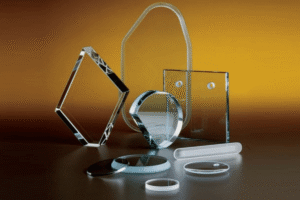
Specialty glass constitutes a specialized material category which manufacturers create to meet specific industrial needs through its exceptional properties of durability thermal resistance optical transparency and chemical stability. Specialty glass requires advanced processing methods which use proprietary chemical formulas to produce glass that meets specific requirements for industrial and medical and technological applications. Borosilicate glass serves laboratory equipment and cookware applications because of its thermal shock resistance while manufacturers use aluminosilicate glass in consumer electronics because of its high strength and scratch resistance. The particular characteristics of specialty glass serve as fundamental elements which various industries use to evaluate materials that need to withstand extreme operational conditions.
What is Specialty Glass?
Engineers create specialty glass through their development of different glass types which meet specific performance standards through their engineered mechanical and thermal and optical and chemical properties. Specialty glass production requires different methods and materials than standard glass production because manufacturers use specific techniques to create their products. The development of advanced glass products which demonstrate exceptional durability and heat resistance and optical clarity uses advanced methods that involve rare earth element doping and controlled crystallization and metal and oxide material addition.
Tempered glass undergoes thermal or chemical treatments to achieve enhanced strength while optical glass serves as a lens material in imaging systems because of its high refractive index and optical clarity. Specialized glasses such as borosilicate and aluminosilicate which maintain chemical inertness and withstand extreme temperatures are essential for industrial applications that range from pharmaceuticals to aerospace. The advanced capabilities of specialty glass products serve as fundamental components which modern industries depend on to drive their technological innovations and healthcare advancements and scientific research initiatives.
Importance of Glass Cutting Techniques
Glass cutting techniques need to achieve precise results because their quality determines whether products will meet design specifications and functional requirements. The techniques’ accuracy determines how well glass components maintain their structural integrity and optical performance and operational reliability throughout different industrial applications.
Essential Glass Cutting Techniques
1. Score-and-Break Method
This traditional technique involves scoring the surface of the glass with a diamond or carbide cutting wheel, followed by applying pressure to snap the glass along the score line. The method operates as an affordable solution with minimal user requirements because it enables users to handle flat glass panels.
2. Laser Cutting
Laser cutting uses a focused laser beam to melt glass material which evaporates along designated cut lines. The process enables precise results because it creates special glass designs which need complex design work for electronic products and optical equipment and decorative glass items.
3. Waterjet Cutting
The technique uses high-pressure water mixed with abrasive material to create glass cutting capabilities. The method shows impressive capabilities because it can handle thick glass and produce complex shapes while maintaining its high effectiveness for industrial and architectural needs.
4. CNC Machining
Computer Numerical Control (CNC) systems achieve high accuracy glass cutting because the system performs identical results multiple times. Advanced programming enables CNC machining to produce complex patterns and detailed edges which find common use in aerospace and medical device industries.
5. Ultrasonic Machining
Ultrasonic machining uses high-frequency vibrations with abrasives to create an efficient method for cutting glass. The technology best serves precision applications which include microfluidics and photonics.
Modern industries require multiple solutions from these techniques which serve to fulfill their complex operational needs. The selection of proper method requires consideration of glass type and application needs and tolerance requirements.
Overview of Borofloat and Gorilla Glass
Borofloat Glass
Borofloat glass is a borosilicate glass which shows both exceptional thermal resistance and complete optical transparency and chemical resistance. The material shows its usefulness through its application in optical systems which need to operate consistently under extreme environmental conditions that exist in laboratory equipment and solar panels and lighting systems.
Gorilla Glass
Gorilla Glass serves as an aluminosilicate glass which manufacturers strengthen through chemical methods to enhance its ability to resist damage and scratches. The product serves as a lightweight yet strong material which manufacturers use to create smartphones and tablets and wearable devices.
Understanding Borofloat Glass

Borofloat glass represents a specialized form of borosilicate glass which exhibits exceptional thermal resistance and optical clarity plus mechanical strength. The glass material was developed through a float glass manufacturing method which produces a unique product that exhibits low thermal expansion properties, thus making it suitable for high-precision applications that need to operate under different temperature conditions. The material finds its application in scientific equipment and architectural elements plus high-performance optics which require dependable and long-lasting performance ability. The material maintains its operational efficiency in extreme working conditions.
Properties of Borofloat Glass
- Thermal Resistance: Borofloat glass shows outstanding thermal resistance which enables it to withstand severe temperature changes without sustaining any damage.
- Optical Clarity: The product delivers exceptional optical clarity which enables it to maintain accurate light transmission while showing minimal distortion thus making it suitable for uses that demand exact optical performance.
- Mechanical Durability: The glass material demonstrates high mechanical strength which enables it to maintain its integrity when subjected to physical force or weight.
- Low Thermal Expansion: The material maintains its original dimensions during extreme temperature changes because of its low thermal expansion coefficient.
- Chemical Resistance: Borofloat glass displays exceptional resistance to chemical corrosion which includes protection against acids and all other reactive chemicals.
Applications of Borofloat Glass
1
Optical Technology
Borofloat glass serves optical systems because it provides excellent transparency together with minimal optical distortion. Its precise light transmission properties make it an ideal material for lenses, prisms, and high-performance optical components.
2
Aerospace Engineering
The aerospace industry uses Borofloat glass because it provides low thermal expansion together with high mechanical stability for optical windows and sensor protection covers and structural components that need to endure extreme conditions.
3
Medical Devices
Borofloat glass provides chemical resistance together with biocompatibility which makes it suitable for laboratory equipment and medical imaging systems and surgical instruments. It is frequently used in autoclave-compatible instruments and diagnostic equipment.
4
Industrial Equipment
Borofloat glass operates in high-temperature industrial applications which include industrial furnaces and reactors. It functions as viewing windows and protective shields and critical components in settings that demand both thermal and chemical protection.
5
Consumer Electronics
The glass is applied in the production of high-end touchscreens, optical displays, and protective covers for sensitive electronic components. The devices benefit from its durability and clarity which improve both functionality and aesthetic quality.
Techniques for Cutting Borofloat Glass
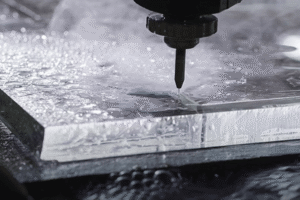
1. Diamond Wheel Cutting
The diamond-edged wheel operates as a precision tool which creates glass scores through its cutting process. The scoreline creates a fracture which moves through the material according to its intended path. The method achieves maximum precision because it produces minimal chipping and edge damage. Diamond wheel cutting serves as a suitable method for various thicknesses which range between 0.5 millimeters and 10 millimeters.
2. Laser Cutting
Laser systems use focused heat to establish a thermal stress line which enables accurate and clean cutting methods. This method works best for complicated designs because it provides non-contact processing, which prevents contamination. The common laser cutting wavelengths use CO2 lasers that operate at 10.6 µm and fiber lasers that function at 1.07 µm.
3. Water Jet Cutting
The method uses high-pressure water jets together with abrasive materials to achieve effective cutting through borofloat glass. The technique produces edge finishes while enabling cuts through multiple inches of material. The process allows multiple shape designs to be created without producing thermal distortion. Typical water jet pressures range from 30,000 to 90,000 psi which depends on how thick and complicated the material is.
4. CNC Machining
The process of Computer Numerical Control (CNC) machining uses diamond tools to precisely grind and shape borofloat glass. The process produces high-precision results that create sharp edges and intricate shapes while maintaining a measurement accuracy of ±0.1 mm. CNC machining serves as the ideal method for producing custom designs and prototype glass designs.
5. Scribe and Snap Technique
The scribe and snap technique is one of the most straightforward methods for cutting thin borofloat glass, often up to 5 mm thick. The tungsten carbide or diamond-tipped scribing tool produces a scoreline which requires light pressure to break the glass along its marked line. The method connects basic shape design through its economical solution which works for small projects.
The selection of a cutting method requires specific analysis between two factors which include required accuracy and glass material thickness and design complexity.
Exploring Gorilla Glass
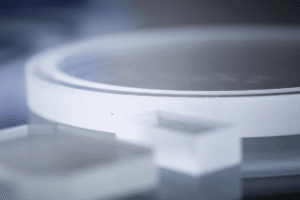
Gorilla Glass is a dedicated form of strengthened glass which designers developed to shield surfaces from both scratches and impacts and typical usage damage. The manufacturing process starts with an ion-exchange process which enhances glass strength through sodium ion replacement with potassium ions which have greater atomic size. The process increases the glass’s ability to withstand pressure because it raises the material’s compressive strength. Gorilla Glass provides electronic devices with a protective screen solution that combines thinness and durability and optical clarity for contemporary touchscreen technology. The product’s technological advancement enables it to preserve excellent optical performance during regular operational conditions.
Key Characteristics of Gorilla Glass
1. High Durability
The ion-exchange chemical strengthening process makes Gorilla Glass more durable because it protects against scratches and cracks and drops. The material has been designed to endure three times the normal glass pressure which results in permanent durability throughout its lifespan.
2. Thin and Lightweight Design
Gorilla Glass maintains its strong protection capabilities while existing in thicknesses which range from 0.4 millimeters to 2 millimeters. The system enables designers to create modern electronic devices which maintain their slim design because it does not create extra weight for users.
3. Superior Optical Clarity
The material’s refractive index produces optimal optical performance because it allows accurate color reproduction and light output and image detail. The component functions as an essential element for touchscreens and display panels which require exact visual representation.
4. Improved Resistance to Environmental Factors
Gorilla Glass maintains its functionality because it protects against water damage and temperature fluctuations. The material withstands manufacturing and operational conditions which reach temperatures of 400°C.
5. Enhanced Scratch Resistance
The testing process examines Gorilla Glass surfaces to determine their resistance against scratches which occur when people touch the surface with common items. The product has a hardness value of 9H which positions it among the most durable glass types that are sold in stores.
Uses of Gorilla Glass in Modern Technology
Modern technology needs Gorilla Glass because it delivers two essential features which protect against scratches and maintain optical clarity. Its primary applications occur in smartphones and tablets and laptops because it safeguards displays while enabling touch interaction and maintaining visual performance. The material provides scratch protection and temperature resistance for use in smartwatches and automotive touchscreens because of its exceptional durability. The combination of light weight and high strength properties makes this material ideal for flexible display systems and solar panel technologies which need advanced components.
Cutting Techniques for Gorilla Glass
The process of cutting Gorilla Glass needs special tools and exact execution because the material has both strong and fragile properties. The most common methods include laser cutting and diamond wheel scribing. The process of laser cutting uses powerful laser beams which heat glass material to produce cuts that follow exact lines while creating minimal micro-cracks. The process of diamond wheel scribing uses a diamond-tipped tool to create surface scores which operators then break under controlled conditions to shape the material. The two techniques need precise implementation together with specific environmental conditions to maintain the glass’s strength and visual properties.
Custom Glass Cutting Techniques
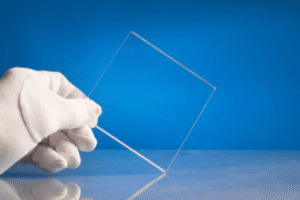
Custom Glass Cutting Methods
The field of custom glass processing employs waterjet cutting as its most sophisticated cutting method. The market requires precise cutting techniques that can prevent heat-related stress fractures from developing. Waterjet technology uses a cold cutting process which employs high-speed water streams that carry abrasive materials to create precise cuts while maintaining the original material shape.
The method delivers benefits to architectural and automotive and electronics industries because it needs exact cuts and complex shape design. The process functions across different glass thicknesses while meeting multiple client requirements which leads to improved customization options. Waterjet cutting technology stands as the top option for custom glass projects because it combines technical advantages with environmentally friendly waste production.
CNC Technology in Glass Cutting
The glass cutting industry has experienced a revolutionary transformation through CNC (Computer Numerical Control) technology because it provides exceptional accuracy and dependable performance and operational effectiveness. CNC systems have transformed glass cutting operations by permitting manufacturers to achieve their design goals while maintaining efficient manufacturing processes.
Essential CNC Benefits
1. High Precision Tolerances
The precision tolerances of CNC machines allow them to achieve measurements that reach ±0.001 inches. The specifications demand this degree of precision because aerospace and medical device applications require exact dimensional measurements for their components.
2. Automation and Reproducibility
The automation feature of CNC systems handles the cutting work, which produces identical outcomes throughout different design versions. The process allows for multiple design repetitions, which helps to reduce human mistakes while enhancing productivity during extensive production processes.
3. Complex Geometries
CNC technology enables the production of complex designs which include beveled edges and curved cuts and perforated patterns. The technology enables designers to create complex designs which traditional methods could not produce.
4. Versatility in Material Thickness and Types
CNC machines can work with glass that ranges from thin electronic glass to heavy safety and architectural glass. The CNC systems can process different glass types, which include tempered glass, laminated glass, and coated glass.
5. Integrated Software for Optimization
CNC machines operate through advanced CAD (Computer-Aided Design) and CAM (Computer-Aided Manufacturing) software, which streamlines the entire process from design through production. The software solutions enable users to create accurate digital models, perform nesting operations for material optimization, and make real-time modifications to cutting settings.
Best Practices for Cutting Custom Glass

- 1. Use High-Quality Glass Blanks: The selection of superior glass blanks functions as the essential element which enables production of exact cuts while decreasing all material faults. The various glass types which exist make it possible to identify both irregular glass borders and internal glass fractures.
- 2. Calibrate CNC Machines Regularly: The process of testing CNC machines through scheduled updates establishes both exact measurements and uniform cutting results. Equipment misalignment causes measurement errors that result in both structural damage and visual defects.
- 3. Optimize Cutting Parameters: The glass type and thickness need specific changes in feed rate, cutting speed, and spindle rpm because these factors determine the quality of the edges. The glass needs a slower feed rate to prevent damage.
- 4. Implement Effective Cooling Systems: The process of glass cutting produces high temperatures which create thermal stress and micro-cracking. Machining operations use cooling systems that include water jets and cooling lubricants to dissipate heat.
- 5. Prioritize Safety and Cleaning Procedures: All cutting areas require safety equipment which operators need to use for their protection while glass cutting requires systems which include guards and suction systems for debris removal.
Types of Glass and Their Cutting Requirements
Comparison of Tempered and Annealed Glass
Cutting Glass Panels: Techniques and Tools
The execution of glass panel cutting requires correct technique implementation and specialized tool usage to achieve precise results with clean outcomes. The precision of cutting work depends on three elements which include the type of glass being cut and the method of cutting and the existing environmental conditions.
1. Selecting the Right Tools
The choice of tool heavily influences the quality of the cut. Tungsten carbide or diamond glass cutters show glass cutting durability because they create precise scribe lines which work on all glass materials. Researchers note that diamond-tipped cutters offer superior performance for thicker or harder glass materials.
2. Scoring Techniques
Data highlights the importance of consistent pressure while scoring; uneven pressure can lead to chips, uneven edges, or complete failure during snapping. The use of a straightedge guide together with continuous motion execution results in scoring which maintains equal distribution.
3. Managing Environmental Conditions
Humidity and temperature variations can impact the brittleness of glass. Controlled environment cutting operations produce greater achievement results. Light-grade oil cutting lubricants provide scoring accuracy improvement because they reduce friction during the cutting process.
4. Automated Cutting Systems
The current manufacturing process uses automated glass cutters because they provide precision cutting through technological advancements. The systems use laser technology together with advanced algorithms to create cutting paths which minimize material loss while maintaining production standards.
Intricate Shapes and Thickness Considerations
The cutting equipment requires precise calibration to perform cutting operations on complex shapes and various glass thicknesses. Advanced glass cutters utilize adaptive technologies which enable them to adjust pressure levels and operate through their multi-axis control systems under difficult working conditions. The system allows operators to achieve exact results when working with irregular designs and special geometric shapes.
Architectural and electronic design industries require designers to create complex patterns for their product development process. Professionals must evaluate glass composition and thermal treatment and material properties when selecting cutting parameters to achieve optimal results. The method reduces edge chipping and stress concentrations while maintaining strict quality standards.
Reference Sources
- Borosilicate glass (Pyrex) – The article presents methods for cutting thin borosilicate glass through conventional glass cutting techniques.
- Help Cutting Borosilicate Glass! – The article recommends using a Dremel tool equipped with a diamond wheel for accurate borosilicate glass cutting.
- Cutting (Gorilla) Glass – The article investigates various techniques used to cut Gorilla Glass, which include heating methods and controlled cracking procedures.
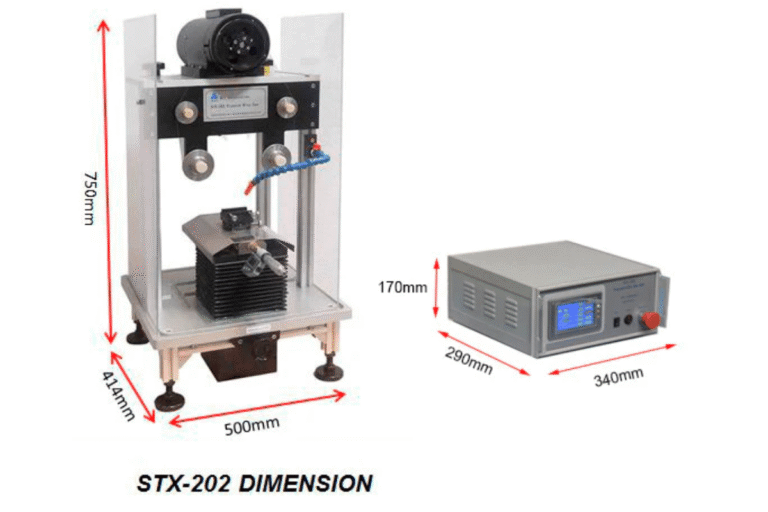
- Recommend reading: Precision Glass Cutting Wire Saw for Industrial Excellence
Frequently Asked Questions
1. What Are the Main Differences Between Borofloat and Gorilla Glass and Standard Soda-Lime Glass?
Borofloat stands as a top-tier borosilicate glass which displays outstanding thermal resistance and chemical resistance and maintains optical transparency. The material exhibits thermal shock resistance because of its low thermal expansion coefficient. Corning created Gorilla Glass as an alkali-aluminosilicate sheet glass through an ion-exchange process which enhanced its chemical strength. The process creates a surface compression layer which makes the material highly resistant to both scratches and impact damage. The two materials provide much greater strength than standard soda-lime glass.
2. What Makes It More Difficult to Cut Specialty Glasses Compared to Standard Glass?
The unique properties of Borofloat and Gorilla Glass create specific difficulties for cutting operations. The hardness of Borofloat requires operators to select specific tools which need precise control of operational parameters to avoid generating micro-fractures. The internal stress and surface compression of Gorilla Glass create a cutting obstacle that is more difficult to overcome. The compression layer prevents crack propagation through conventional score-and-snap methods and improper techniques lead to uncontrolled shattering which results in catastrophic damage instead of a tidy fracture.
3. What Methods Should Be Used for Cutting Borofloat Glass?
Borofloat offers multiple precision cutting methods for effective results:
Diamond Scribing: Standard glass cutting techniques require a diamond or carbide scoring wheel which must be maintained at a high level of sharpness. The application of consistent optimized pressure allows for the creation of a clean scribe line which results in a controlled break.
CNC Diamond Wire Saw: This method uses a fine diamond-impregnated wire to create low-stress cuts which achieve high-precision results. The solution excels at producing complex shapes while minimizing material costs.
Waterjet Cutting: Borofloat can be shaped into intricate designs by using high-pressure water streams that contain abrasive garnet particles. This cold-cutting method maintains thermal stress control but produces edges that are rougher than those obtained through wire saw cutting.
4. What Techniques Work Best for Cutting Gorilla Glass?
Advanced processing techniques must be used to cut Gorilla Glass because of its high surface compression:
Laser Cutting: Ultra-short pulse lasers serve as the primary technology which enables precise laser cutting through this advanced system. The laser process removes material through ablation while producing minimal heat transfer.
CNC Diamond Grinding: This method uses precision-engineered diamond grinding wheels to shape the glass. The system provides high process control but operates at a slower speed than laser cutting.
“Score-and-Snap” (Modified): For thinner sheets, a specialized process involving a very high-pressure scoring tool followed by a precisely controlled mechanical or thermal break can be used. This method is mainly used in industrial environments which require high-volume production.
5. Can These Glasses Be Cut with a Dremel Tool or Similar Rotary Devices?
Operators can perform basic cutting tasks on Borofloat through handheld rotary tools which use diamond wheels as long as they maintain a constant slow speed while applying sufficient coolant to prevent thermal stress. The method should not be used for Gorilla Glass. The rotary tool generates intense localized pressure which makes the glass highly susceptible to uncontrolled shattering. The processing of chemically strengthened glass requires both precision tools and industrial-grade equipment.
6. Is It Necessary to Perform Annealing Before Cutting Gorilla Glass?
The process of heating glass to remove internal stress will reverse the chemical strengthening which provides Gorilla Glass its durability. The process of cutting Gorilla Glass through annealing requires destruction of its original properties, which makes it impossible to execute. The process requires advanced technology to cut the material while it remains in its strengthened state.
Related Posts


Trending Blogs

![Polysilicon Material: Properties, Grades & Uses [Guide]](https://wiresawcutter.com/wp-content/uploads/2026/08/polysilicon-material-featured-150x150.webp)