
Get in touch with DONGHE Company
-
Phone: +86 181-1645-5490
-
Email: Sales18@DongheScience.com

Diamond Wire Saw vs. Grinding Wheel: Which is Better for Magnets?

Diamond Wire Saw vs. Grinding Wheel for Magnetic Material: Complete Comparison Guide
Precision Cutting Methods, Performance Analysis, and Best Applications
Magnets are very useful in various fields such as electronics, renewable energy, and even in the production of spare parts, just to name a few. It is important to understand that cutting or shaping a magnet needs to be done correctly in order to provide the best possible precision and performance. In this regard, two tools can be used, and even though they may supplement each other, they belong in different categories. The diamond wire saw and the grinding wheel are pieces of equipment that are quite effective; however, which one is most suitable? The focus of this paper is on the pros and cons of both techniques; such data can be useful in deciding which technique will be appropriate, economical, and most importantly, accurate. At last, you will be able to know the exact tool that satisfies your needs.
Introduction to Diamond Wire Cutting and Grinding Wheels

There are two methods of breaking down materials that can be employed; diamond wire and grinding stone wheels. Both methods have their own purpose that accentuates a particular perspective. On top of that, sometimes diamond wire is used in machining operations where high precision is required, like the cutting of hard surfaces such as stone and ceramic or silicon substrate, and this is because in sawing, this method can be used with contact minimized which in turn saves a lot of material, precision of sawing and less cutting heat. Nevertheless, grinding wheels accomplish fine finishing of surfaces, shaping or polishing of materials without heavy duty machining in general. The reason for this is that such devices can be applied to loads of various materials and are relatively cheap for rough or otherwise undemanding assignments. With regards to precise requirements, materials to be worked upon, and the cost of this whole endeavor, it is apparent that it is important to distinguish the appropriate tool for the appropriate job.
Overview of Diamond Wire Saw Technology
Over the years, the diamond wire saw technology has improved and it is now possible to cut any type of material including stone, concrete walls or any modern alloy structures. It is a rope that can carry sharp abrasive hard diamond segments that are designed for cutting and grinding. Indeed the wire under tension pulls it around several pulleys allowing cuts to be neat and balanced. This is due to the fact that these diamond segments help to cool the wire and improve its service life, providing for more productivity as compared to other cutting devices.
One of the most notable aspects of diamond wire saws is their ability to preserve the object being cut due to the minimal amount of kerf generation. They can cut into an object very precisely and at an appropriate angle, suiting them to complex and delicate tasks such as fabrication of semiconductors and quarrying. In addition, almost every motor and wire that has been designed since allows for better energy efficiency and environmental friendliness. As a result many other diamond wire saws are even further becoming used in industries where precision is needed and processes that do not harm the environment and provide economic benefit.
Understanding Grinding Wheels for Magnetic Materials
Wheels that are used for grinding magnets are very specific and have a high quality which is necessary when it comes to processing materials. For example, magnetic materials involve neodymium magnetism, ferrimagnets or metals such as rare earths metals which need the grinding wheel to have some features in order to reduce the waste, maintain tight dimensions and achieve superior finishes. Among the important features of the grinding wheels are the following:
Abrasive Composition
Wheels for grinding magnets usually incorporate strong and abrasive materials including CBN and diamond grit. These types of materials have extremely high wear resistance and can withstand high temperature without losses which makes them suitable for stock removal without compromising the precision in grinding tasks.
Classification of the Bonding Systems
The bonding agent inside the binding material holds the abrasive particles in place on the surface of the wheel. In the case of magnetic materials, resin bonded wheels are quite a common choice for they allow some amount of flexibility and resistance to impacts and they adhere well to the grinding surface which is functioning under extreme conditions.
Granulometry of The Working Wheel
The choice of the granule size is important for the final surface finish and for precision measurements. In the case of magnetic materials, to form smooth surfaces, eliminate burrs and narrow down dimensional tolerances lower grid sizes are usually the choice.
Thermal Management
Often there is a need for magnetic material tailored grinding wheels to have an incorporated cooling system. Application of cooling fluids such as oil-based fluids and water-based reduces heat transfers and thermal effects and as a consequence increases the grinding wheel longevity as well as avoids any kind of shape change on the machined part.
Wheel Dimensions and Configurations
A variety of different sizes and configurations are produced of these wheels to match the necessary geometry of the magnetic component being machined. Components’ designs provide easy integration in technological lines and ability to process complicated shapes.
All these examples interact with one another to provide better effectiveness of grinding to magnetic materials during processing, productivity increase, quality improvement and waste and defect elimination.
Importance of Choosing the Right Cutting Method
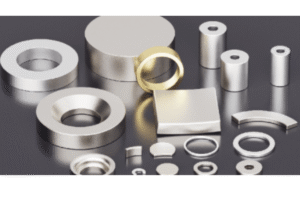
The choice of the cutting process is a very important concern when one considers the precision, economy and quality of the processing method for magnetic materials. The proper technique may enhance the production, reduce its waste and defect level and even increase the longevity of the devices. Let us enumerate five factors which explains the significance of selecting the appropriate cutting method:
Five Critical Selection Factors
- Material Type and Hardness: It is worthy to note that some magnetic materials can resist more wear than others and their composition can be different from each other. Soft alloys made of iron and silicon shall employ cutting strategies that have low deformation effects as opposed to hard ferrites cutting which may require the use of abrasives to attain accuracy in the cutting.
- The Finish of the Surface: The merited surface finish affects the type of cutting method. Finer surfaces may require finer methods such as grinding and cutting with precision saws, while coarser applications can use traditional cutting methods.
- Usefulness of Tools: The tools used in the cutting process must be appropriate for compatibility with the materials being cut. This is because some materials need specific cutting tools like diamond-tipped blades for tough materials to ensure that the tool works efficiently and lasts for long.
- Cutting Speed and Required Feed to Achieve Shape: This is because whereas faster speeds assure shorter cycle times, the feed rate has to be considered to ensure accuracy and to prevent overheating which may lead to loss of magnetic capabilities of the material.
- Production Volume Considerations: When it comes to mass production processes, it may be best to use automation techniques like water jet cutting and laser cutting as these provide very high levels of precision and scalability. Whereas one may consider, for low-level production, semi-manual or even manual techniques where cost minimization is paramount.
Taking the above mentioned in a spectacular way, the manufacturers will be able to perform their operations in an efficiently better manner, reducing costs, as well as obtaining the desired results in the utilization of magnetic materials.
Comparison of Cutting Precision
The basic techniques that will be investigated in this matter are laser and water-dependent works as they ensure the efficient production of the product. Of the existing tolerances, laser technique, thin parts including complex patterns, is sufficiently accurate inclusive of changes such the variation may be within ± 0.003 and ± 0.005 inches only, such pattern is beneficial. On the contrary, the water jet sure is compliant to the cut perimeter tolerance of the laser, which is also within the range of 0.003 inches. However, unlike laser-cutting, a water jet does not even distort a thin material when a thick one is in question. Both methods are applicable in the circumstances where the extreme detailed cutting is required; however in many instances; one or the other may be selected based on the material to be cut and the operation to be performed.
Precision of Diamond Wire Saw in Cutting Magnetic Materials
If you want high levels of precision with magnetic materials or components, contact diamond wire sawing. The precision levels attainable by this technique are between ±0.005 inches, provided the conditions are favorable. A more advanced method that eliminates, or reduces significantly, the amount of material waste caused when sawing with minimum, if any, chipping of the cut edges and therefore makes it possible to use fragile expensive materials. Moreover, it prohibits excessive heat generation, thus protecting the properties of a magnetic material. As a result, the dimensional and functional integrity again is retained.
Cutting Precision of Grinding Wheels
Precision material removal is achieved via grinding wheels, for which an increment in the thickness of the component may be adjusted up to 0.002 mm, provided that the programming is optimal. This technique works centered on naturally rough or coarse textured materials and avoids the streaking and distorting that happens so often when other tools are used on said materials. The effectiveness of a particular grinding composition is also dependent on the air speed, pressure as well as the components of the wheel also making the results reproducible under specified conditions.
Factors Influencing Precision in Both Methods
1. Substance of an Implement
The accuracy of universal grinds and cuts should be viewed in connection to the composition of the tool material. For instance, the harder materials like diamond and cubic boron nitride (CBN) minimize wearing while soft ones deteriorate over a short coverage extending excessive misalignment within a relatively short period.
2. The Machining Speed and Feed Rate
No advantageous condition will exist where temperatures are reached without the corresponding speeds in cutting. In case the spindles spin too much, there is a danger of the tools and the machined material being deformed and there is a direct effect on the performance of cutting and grinding. Such parameters depend on the material properties, the tool wear, the surface roughness required among the various factors.
3. Rigidity of the Tooling Structure
It is essential to understand the aspect of the machine, i.e. the rigidity of the machine, as these two parameters, namely vibration and thermal growth, will have a bearing on the achieved tolerances. A rigid and well-controlled machine in terms of vibration will hold the tolerances for a long time unlike a flexible machine.
4. Use of Coolant
When machining or grinding, heat generation occurs which can lead to destruction of the tools or the workpiece. Proper application of the coolant helps in alleviating this energy. Restoration features include restoration of the flow of energy in the places where any given element of flow is taken and additional modification of the fluid composition to include that element.
5. Workpiece Clamping and Alignment
Once the workpiece is in place, it must be adequately oriented and clamped to ensure accuracy is retained during the process. A cut that results in an uneven appearance is due to misalignment, and this is going to rely on tolerance issues and not cutting where a burr is being preserved.
Material Waste and Efficiency

To manage machining most efficiently a considerable amount of effort is required as well as pre-planning, constructive tool path and material optimization. In this aspect where efficient processing is expected, meaning loss of material should be minimized, those most common simple examples of measurement facilitated by software, are slightly more enhanced implementations applied to multi-functional design. Not to mention that any form of remains brought about by coring or cutting metals are also optimized as they are normally stored for secondary use. Every efficient method of machining will include, as part of operational activities done within the remit, the reduction in waste and distribution, and increased output of the machinery and thus production that is available without over-usage of resources.
Material Waste with Diamond Wire Cutting
Diamond wire saw was made explicitly to minimize material waste. The exact cut diamond wire has embedded diamond which enables cutting of the magnetic material without the saw getting deformed. It has been discussed that certain designs of machines have been developed with the consequence of them shifting from the traditional use to over 95% efficiency in some instances. In other words, the use of material in the activity is very minimal. Incorporation of motion speed controllers and various sensors to react to wire wear within the present therapy makes diamond wire cutting favorable for areas where engineers aim for environmental protection to achieve extreme precision.
Waste Generated by Grinding Wheels
The utilization of a grinding wheel is quite frequent but, like all other things in activities, there is saving as well as wasting excess material; most wastes gathered are torn particles and the worn down material, swarf etc. Depending on the type of wheel, use of the wheel and the degree of toughness, it is estimated that, on an average, thirty percent of such hard cutting implements contain waste. The wear of the wheel also produces micro fines, which, favorable as they may be, have to be removed and collected before disposal. Thanks to the attention to environment, traditional wheel management has been subjected to research and development and more so to wheel recycling. An example is the provision of new vitrified-bonded wheels in which the development of more environmentally friendly options, where most parts of the wheels assembly made of recyclable materials and washing away of any residual dust is done by the use of an improved coolant system with high performing filtering especially micron filters.
Efficiency and Productivity in Material Usage
Various aspects seem related to the material and its utilization, including but not limited to the application of manufacturing processes, new technologies being aimed at the information society. Some of these advances in so many ways hint at possible directions towards eco-responsibility. One of the most famous ones nowadays is the idea of lean manufacturing in which any wastes of materials should be avoided and supplemented by activities such as reasonable resource consumption through management and control and enrichment of methods with less expensive and more environmentally friendly materials. In addition, the current developments in the field of data analysis allow companies to evaluate the costs incurred in the various divisions and re-assign them where possible to optimize the production processes and remove any obstacles within the organization.
Surface Finish Quality

Advancement of technology is oriented towards human growth and development, and at some given point, there is satisfaction in increasing the amounts consumed of commodities. Technology that focuses on environmental cleanliness is aimed at decreasing environmental pollution or damage. It ensures moderation in resource use through proper techniques, concepts, and practices which aim at curbing excessive turnover and consumption of resources in the society today. Application of the above strategies allows the plant to have a comprehensive understanding of the raw material processes and the barriers associated with each operation of production without touching the quality of the product and general improvements in the process of production such as Big Data are applied together with the processes.
Surface Quality Achieved by Diamond Wire Saw
Certainly, in cases where this is particularly significant; one of the many other cutting devices that will undoubtedly be better suited for cutting the above mentioned materials is a diamond wire saw. This is because, a diamond wire saw is another name for the device due to the fact that small diamond particles are bonded on the surface of the cutting wire which is used to cut hard materials. What is good about this machine is that instead of cutting the surface, requiring high mechanical pressure on the surface, it instead maintains its quality. This is because of the factors that make cutting of materials which are brittle and hard such as silicon, quartz and ceramic almost possible without damage. Creation of sharp cut in this way minimizes probability of development of cracks, chips, and sharp edges. Heat-producing material removal and process cooling is also incorporated by use of the designed coolant or slurry system which ensures cutting surface quality. However, attempts have been made to show that the cutability and cleanliness of these surfaces depend on factors such as wire tension, the feed rate and cutting speed. In some of the past studies, against the conventional ones, diamond wire process has shown significant development in terms of the surface roughness created. And this is why it is mostly found in semiconductor industries and optics.
Surface Finish from Grinding Wheels
The shape and function of this wheel distinguishes it from any types of cutting or grinding tools. Usually, cutting tools, and grinding tools for that matter, are used for application of cutting force to the shearing of materials, but in the case of wheel, it is all about merger of surfaces with abrasive cutting involving removal of a portion of the workpiece surface. Apart from the grain characteristics, good extent of the achieved smoothness also depends on the binding of the grain on the wheel and the speed of rotation and the particular abrasives used. Generally, the use of the smaller granules gives better result, while coarser granules are used to remove more material, nonetheless sacrificing the quality of the surface finish. Either way, a dressing operation or conditioning procedure enhances the functions of the wheel towards uniform result exhibited. In the automotive engineering, aerospace, and tooling industries of the global market trends, for example, such practices are a must as increasing accuracies are preferential standards in many instances.
Impact of Surface Finish on Magnetic Material Properties
Surface finish plays a crucial role in influencing the magnetic properties of materials. The quality of the surface impacts domain alignment, magnetic flux distribution, and overall performance of the material in various applications. Below are five key ways surface finish affects magnetic material properties:
Surface Roughness and Magnetic Hysteresis
Higher surface roughness can lead to increased magnetic hysteresis losses due to localized distortion in the magnetic domain structure. This effect is particularly significant in soft magnetic materials used in transformers and motors.
Eddy Current Losses
Imperfections such as rough surfaces or scratches on magnetic materials can exacerbate eddy current losses by creating uneven magnetic fields. Smooth finishes are critical in reducing these losses, especially in applications involving high-frequency alternating currents.
Coating Adhesion and Corrosion Resistance
When metallic coatings meant to protect magnetic materials are uniformly applied on a surface with no defects, they adhere better and withstand corrosion and factors maintaining performance for a long term.
The Capacity of the Material to Conduct
Heterogeneous conditions, in terms of surface finish in particular including pitting and roughness also modifies the even passage of the magnetic field. This is commonly noticed over a long use period in components such as transformers or magnetic element receptors.
Residual Stress
Many surfaces which are machined have a rough surface and retaining a rough surface creates more residual stresses, which affect the magnetic behavior of the material by changing coercive force or retentivity. Irrespective of material properties, excessive surfacing or grinding is not advisable because it could cause dimensional changes because of stress induced.
This is a piece of evidence which clearly shows how important proper surface finishing of magnetic material during its manufacture and processing is, as any such processes are likely to create even the least destructive deviations which hinder the performance and criticality of the material.
Operational Costs and Economic Considerations
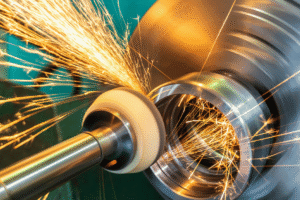
The running expenses of getting desired quality finishes are mostly dependent on capital costs, labor costs and costs related to raw materials. High-precision machining or sharpening machines are expensive to purchase and, moreover, require constant maintenance to keep them functional. Labour costs also increase since only operators who are qualified for such processes are required. On account of consumables, bigger savings can be incurred as abrasives of finer grit or cutting blades of higher quality might need to be employed in order to reach certain finishes.
Nonetheless, achieving the optimal surface finish can yield long-term economic advantages particularly those associated with attenuation of wear, improvement in product reliability, and reduced incidents of failure when in operation. Such timesaving benefits may sometimes be more than the initial costs because there will be no schedule slippage and the need for maintenance will be significantly reduced, especially regarding tasks that demand excellent performance as well as long-life retention. Evaluating the cost vs. yield relation is crucial in ensuring smooth operation and economic gain.
Cost Analysis of Diamond Wire Saw Operations
Operating a diamond wire saw machine entails incurring two types of costs, namely, fixed costs and variable costs. The assessment of the fixed and variable costs is essential in assessing the economic feasibility of operating a diamond wire saw machine. The structure of the fixed costs includes the cost of acquisition of diamond wire saws, setting up of the machine and the surrounding facilities. The structure of the variable costs, on the other hand, is dominated by the prices of the consumption goods, which include diamond wire, consumable parts, and electricity consumed in the process of operation.
The biggest component of these costs is usually the diamond wire, because its wear rate is the most important factor that affects the overall cost. By applying appropriate cutting parameters, that is, value of velocity, and amount of tension it is possible to increase the utilization of the wire without wasting a lot of material. The other tools include the types of materials that are cut as well as their cutting medium and the processing per cost production for every unit.
Simultaneously maintaining accuracy and cutting costs achieves an equilibrium in diamond wire saw use when applied industrially, which is the goal meaning operators regulate the factors and extend the service limit and usage periods of the tools.
Economic Aspects of Using Grinding Wheels
The economic cost of employing grinding wheels mostly relies on how effective operating parameters are, the type of materials which are used and even care of the tools. The use of grinding wheels that have greater durability also reduces the replacement intervals, a strategy that would ultimately bring down the cost of the tools per unit. Furthermore, the choice of the most appropriate wheel for the object to be ground helps to prevent frequent stops and many times material removal because of mishaps. The optimal usage of grinding wheels also entails wearing dressing from time to time so as to ensure sharpness, and avoiding frequent wearing, this cuts down on the number of downtimes and increases efficiency. With proper management, industries can achieve considerable cost savings without compromising on the quality of products.
Long-term Financial Implications of Each Method
| Financial Factor | Description & Impact |
|---|---|
| Cutting Down Machine Inactivity | Several proven strategies can potentially assist in achieving reduced activity of machines. Building consistent maintenance culture and ensuring that the right methodologies are applied appropriately helps avert downtime of equipment. Research reveals that this kind of upkeep decreases downtime costs by about 25%. |
| Elimination of Unnecessary Waste | A shift to appropriate grinding wheels will help to do away with mistakes related to the grinding of inappropriate material. This leads to a reduction in expenditure on raw materials with roughly a 15–20% gain in material utilization’s cost. |
| Increase Energy Savings | The cost of energy to cut and grind different materials to their desired shapes is not significantly changed by the use of Diamond Wire Saw. The use of grinding technology should be avoided for thin or soft materials as it extends high amount of energy in transforming the materials. |
| Improved Quality of Products | Capacity building in efficient grinding helps in increasing the quality of production and lowers the risks of having defects. This impacts positively in minimizing returns, repair, as well as labor expenses. Industries focusing on quality can save up to 18% annually in waste management costs. |
| Cost-Effective Maintenance | Performing preventive maintenance on grinding wheels and ensuring maintenance remains on schedule can prevent components from wearing out prematurely. Effectiveness in maintenance is increased by about 10% to 15% over a period. |
Suitability for Different Types of Magnetic Materials

The magnetic properties of a given material will most likely rule out or imply a particular type of wheel. Resin-bonded or vitrified, hard magnetic materials, such as samarium-cobalt or neodymium-iron-boron are suggested for some applications. This is due to the fact that it is able to grind such materials which are extremely brittle and hence chip easily. On the other hand, ferrites are classified as soft magnetic materials and as a result, they are mostly ground using diamond cutting tools or CBN tools. This is done so as not to allow grinding chipping after the surface has been polished. By the same token, it becomes decisive to choose the proper wheel grit size and the correct wheel bond for each type of material in order to achieve high efficiency and finishing well.
Best Applications for Diamond Wire Saw
Diamond wire saws are very effective machines which are used in the various industries for cutting materials in a perfect way. Due to their sophisticated structure and the function of applying diamond powder, they are able not only to cut effectively but also to cut efficiently even the toughest and the brittle materials. The following five uses of diamond wire saws as outlined below are what I consider the most significant:
Semiconducting Substrates and their Cutting Processes
This is because diamond wire saws are most efficient in cutting semiconductor materials such as silicon and gallium arsenide. They have very minimal kerf loss, high accuracy and top-notch surface finish – making them ideal for the electronics world.
Quarries of Stone and Fabricates of Brick or Slates
Diamond wire saws are commonly applied in this area as they ensure clean and straight cutting of granite, marble and sandstone amongst other hard materials. Due to their properties which significantly minimizes the production of scraps and enhance production rate therefore becomes favourable for this cutting application in the quarry.
Solar Panel Production
With regard to the diamond cutting wire, the most important area to be addressed is that of slicing thin wafers from crystalline silicon blocks for PV cell fabrication. The saw has the ability to cut planes with equal precision without sacrificing much of the cutting medium, a feature that is rather critical for ensuring a sustainable manufacturing process.
Machining of Glass and Ceramics
Such tools are suitable for cutting ceramic and fragile glass which are brittle but also tough materials. The absence of chipping and cracking improves the processing capability for many industries including aerospace and medical products where machined parts are needed.
Nuclear Decommissioning and Concrete Demolition
In the context of decommissioning or of heavy demolition of structures containing reinforced concrete and other massive materials, diamond wire saws are used for controlled cutting thereof. This is because they can perform with precision and produce minimum vibrations that make the tasks safer and more effective.
When to Use Grinding Wheels
Precision material removal with grinding wheels is recommended to achieve a certain surface profile or a dimensional precision. I use them for forming, sharpening, or polishing of hard materials such as metals, ceramics, and composites. They are especially useful in applications with high-quality and high-tolerance requirements such as tool production and finishing.
Comparative Suitability Analysis
When it comes to selecting grinding wheels over other similar tools which, for example, include cutting tools or abrasive belts, such consideration is based on the nature of the application in terms of precision, tolerances, and surface finishes. On the one side, abrasive belts have a positive effect on surfaces or parts where a lot of material has to be removed, they cannot be compared with grinding wheels because these are more for details and are long lasting especially when working with hard materials like for example hardened steel or even ceramics. Since they are rigid and various grit and bond combinations are available, these tools find applications in the sharpening and shaping processes where precision is required. On the other hand unlike cutting tools which are designed to remove material in a straight line or to form neat and deeper cutouts. Hence, the decision of using grinding wheels must be a function of the degree of precision as well as the type of material and finished workpieces.
Frequently Asked Questions (FAQ)
1. How Will I Differentiate a Diamond Wire Saw from a Diamond Grinding Wheel?
To explain this more clearly, first, it’s important to note that the first method and the second method are very different in how they interact with the material and how the tool is designed. In diamond wire sawing, there is a tiny diamond particle-impregnated wire which rolls around moving in a band saw fashion slicing every material it encounters. A typical cut is thin and does not entail too much cutting debris. On the other hand, in grinding, a wheel covered with diamond or CBN particles is used, incurring a thicker cut, with more material produced in the process. In addition, the dimensional cut of the diamond wire may be narrower, hence grinding wheels may not be used or may only be applied around non-sticking surfaces.
2. Should I Use It for Any Processing of Precious Magnetic Materials Such as Rare-Earth Magnets?
Diamond wire sawing has a higher material utilization i.e. efficiency. Because this type of wire is very thin (usually around 0.1 up to 0.3mm), there is also almost no kerf loss. In such expensive rare-earth materials as Neodymium (NdFeB) or Samarium Cobalt (SmCo), saving material becomes the main cost factor. On the other hand, grinding wheels cause larger waste removal since they cause more dust formation during the cutting process making effective production out of blocks lower.
3. How About Surface Quality or Any Other Damage That May Be Associated with the Two Methods?
The importance of comparing the two methods becomes high in areas where the work involves beams from magnetic materials. The surface quality produced by the diamond wire sawing process presents fewer irregularities and induces decreased subsurface damage. A linear cut affects the workpiece with a lesser degree of mechanical energy and heat as opposed to that aggressive friction which occurs in a case of a grinding wheel. Thus the effect of this is a limited amount of micro-cracks and there is no excessive heat-affected zone (HAZ) as well as retention of the magnetic condition of the material. Grinding wheels provide a better degree of flatness and surface texture as well; however, if the selection of parameters is poor, cutting forces are often elevated resulting in both thermal damage and surface chipping.
4. Which of the Two Technologies Meets the Requirements of High-Output Manufacturing Faster?
Through-cuts in large blocks are best achieved by using multi-wire sawing systems, as they are faster and execute the cut in volumes. These machines can be equipped with many wires, making multi-wire cutting very attractive because the whole block is divided into many slices in a single motion. In general, grinding wheels tend to be faster than single cuts and operations that need complex profiling, chamfering, or any other kind of surface grinding where material is removed faster from a localized place rather than by cutting it.
5. Is There Any Restriction in the Application of Diamond Wire Saws with Respect to Magnetic Materials?
Yes, diamond wire saws are mainly meant for straight or simple arc surface improvements. They are hardly for preparing blind bores, complicated 3D-surface textures as well as planarization where the influence of tribological action is more necessary. What is more, the wires may break because for the given hardness of a given magnet, the right process parameters such as tension, speed or feed speed have not been set, thereby leading to downtime.
6. It is Recommended to Use the Grinding Wheel in the Following Cases:
- Surface Flattening: When there are very thin and very specific thicknesses of a block or a wafer.
- Profiling: When there is an extreme material removal from an external surface to form internal and external details such as chamfers and radii, among others.
- Non-recurring or low volume production: In the case of only one, the single cut is needed, and there is no reason to complicate the process with the installation of multi-wire systems.
Reference Sources
- •Diamond Wire Saw vs. Grinding Wheel for Magnetic Material – Covers the main particularities of material cutting methods, such as non-contact and abrasive approaches, highlighting the use of diamond wire cutting against grinding wheels.
- •Use of Diamond Wire Cutting for Magnetic Materials – Contains various aspects of wire cutting using diamond for magnetic materials and helps to solve problems experienced by traditional methods.
- •Diamond or CBN Wheels: Which Are Best for Magnet Manufacturing – Is about diamond and CBN-coated wheels, and their applicability for NdFeB magnets processing. Recommend reading: Diamond Wire Saw Cutting Machine for Magnetic Materials: The Complete Guide
Related Posts


Trending Blogs

![Polysilicon Material: Properties, Grades & Uses [Guide]](https://wiresawcutter.com/wp-content/uploads/2026/08/polysilicon-material-featured-150x150.webp)